Why It Matters
It exposes how U.S. foreign aid directly finances Israel’s war capability, raising fiscal and strategic accountability questions. The controversy could reshape congressional oversight of military financing and influence future defense‑budget decisions.
Key Takeaways
- •$17.8 B of Israel arms purchases funded by US taxpayers.
- •81% of $22 B sales (2021‑2024) are aid‑subsidized.
- •Senators filed resolutions to block $659 M bomb sale.
- •FMF acts as a “gift card” for Israeli weapons.
- •Military aid job‑creation argument lacks economic evidence.
Pulse Analysis
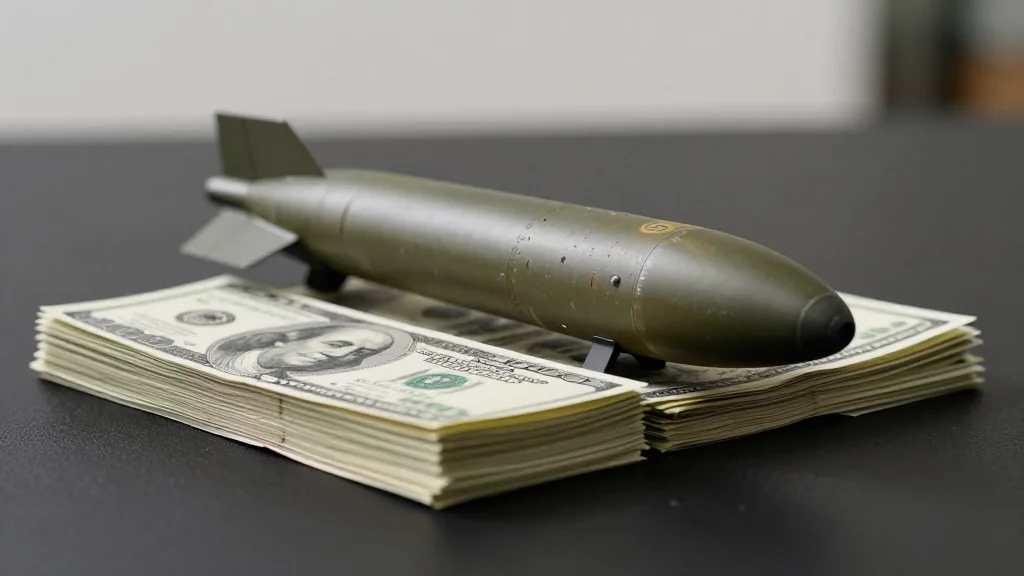
The United States’ Foreign Military Financing (FMF) program channels roughly $3.3 billion annually to Israel, effectively operating as a prepaid voucher for American‑made weapons. Between 2021 and 2024, FMF covered about $17.8 billion of the $22 billion in arms transactions, including armored personnel carriers, tactical vehicles, and attack helicopters. By labeling these transfers as “sales,” the Defense Security Cooperation Agency masks the true subsidy nature of the deals, obscuring the fact that American taxpayers, not Israeli defense budgets, foot the bulk of the bill.
Congressional scrutiny has intensified as senators introduced joint resolutions to block a $659 million bomb package approved under the Trump administration. Lawmakers argue that continuing to fund Israel’s military operations—particularly amid the Gaza conflict—conflicts with U.S. fiscal responsibility and strategic interests. The resolutions underscore a growing bipartisan willingness to challenge the status quo of FMF, demanding greater transparency and accountability for how aid dollars translate into combat capabilities abroad.
The debate also revives the contested claim that military aid spurs domestic job growth. Historical data shows that despite an 18 percent real rise in the U.S. defense budget since 1985, employment in the arms industry fell by more than half. As policymakers reassess the economic justification for foreign arms subsidies, the focus shifts toward evaluating national‑security benefits versus the opportunity cost of allocating billions of taxpayer dollars to overseas conflicts.
The gift card Israel uses to buy US weapons
Comments
Want to join the conversation?
Loading comments...