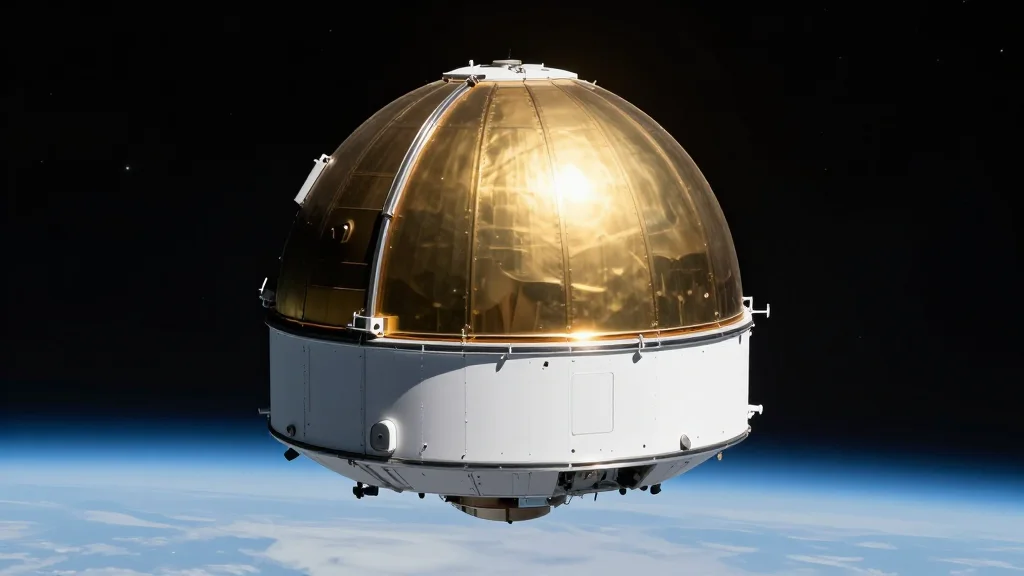
Why It Matters
Golden Dome could redefine missile defence by moving interception to orbit, creating new markets for commercial space firms and reshaping North‑American security cooperation.
Key Takeaways
- •Golden Dome budget: $24.4 B initial, $175 B total estimate.
- •Kepler Communications demoed air‑to‑satellite optical links in 2024.
- •Telesat reallocates 25% Lightspeed spectrum for military Ka‑Band.
- •MDA Space wins IDIQ contract under U.S. SHIELD program.
- •Canada lifts air‑missile defence restrictions, readies 3 CSD for integration.
Pulse Analysis
The Golden Dome initiative marks a strategic pivot from traditional ground‑based missile shields to a space‑centric architecture. By leveraging swarms of low‑cost sensor satellites and potential on‑orbit interceptors, the program seeks to detect launches in the boost phase and engage threats before decoys appear. This approach builds on the legacy of Cold‑War “Star Wars” concepts but is now feasible thanks to cheaper launch services, high‑throughput optical links, and advances in directed‑energy weapons.
Canadian aerospace players are already lining up to fill critical gaps in the architecture. Kepler Communications demonstrated air‑to‑orbit optical links that could stitch together a data‑layer for rapid targeting, while Telesat is dedicating a quarter of its Lightspeed LEO spectrum to military Ka‑band traffic, enhancing bandwidth for command‑and‑control. MDA Space’s IDIQ award under the SHIELD program positions it to contribute AI‑driven threat simulation and integration of land, sea, air and space assets. Parallel investments in Maritime Launch Services and the RCAF’s 3 CSD signal Canada’s intent to become a launch‑capable, space‑aware partner.
The broader implications extend beyond the U.S. budget line. A functional Golden Dome could set a new standard for NATO’s Integrated Air and Missile Defence, prompting allies to adopt interoperable satellite constellations and shared data protocols. For commercial vendors, the program opens a multi‑billion‑dollar market for satellite manufacturing, optical communications, and on‑orbit servicing. As political winds shift, the success of Golden Dome will hinge on sustained U.S. funding, seamless U.S.–Canada coordination, and the ability of private firms to deliver reliable, low‑latency space assets at scale.
The Golden Dome’s northern footprint
Comments
Want to join the conversation?
Loading comments...