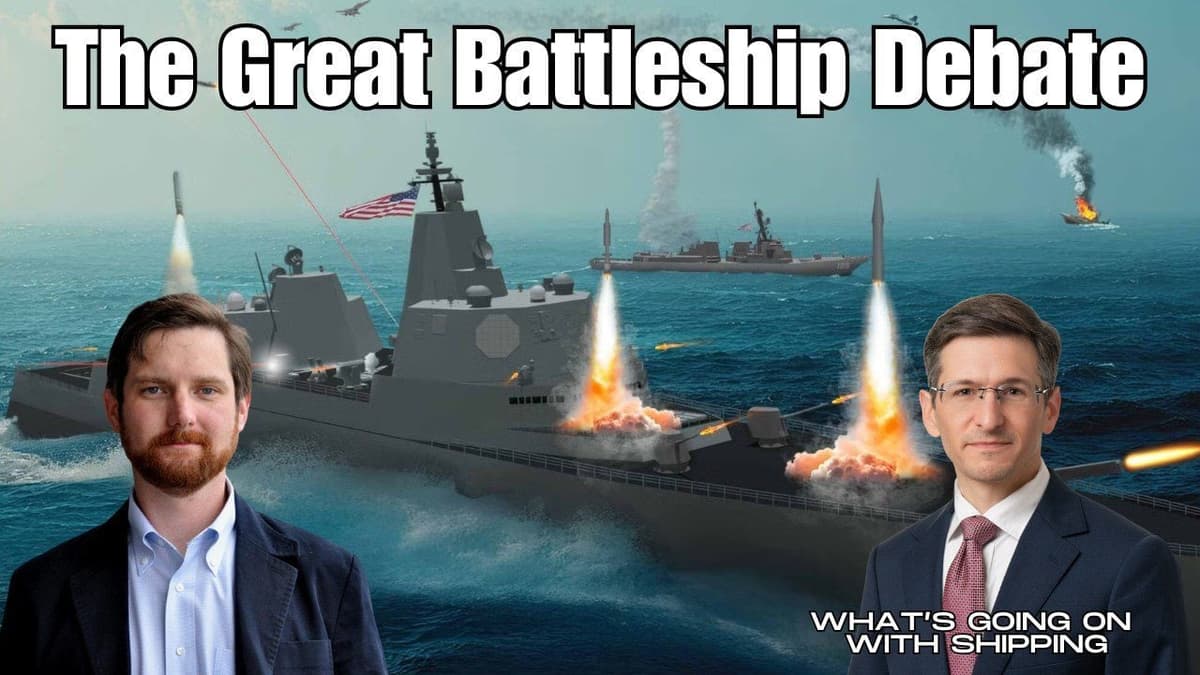
The Great Battleship Debate: GCaptain’s Konrad Takes On AEI’s Zack Cooper
Why It Matters
If pursued, the BBG(X) could reshape U.S. naval power projection while diverting billions from other critical platforms, and its feasibility tests the limits of the American shipbuilding industrial base.
Key Takeaways
- •Trump proposes up to 25 new 35,000‑ton battleships
- •BBG(X) could cost more than a nuclear carrier, exceeding $13 billion
- •Major shipyards lack capacity to meet BBG(X) timelines
- •Critics warn the ship is a high‑value target for China’s missiles
- •Proponents say larger magazines and fuel boost sustainment in choke points
Pulse Analysis
The push for a new generation of battleships reflects a broader political desire to showcase American military might, but the numbers tell a sobering story. A 35,000‑ton hull equipped with railguns, hypersonic missiles and directed‑energy weapons would likely exceed $13 billion, outspending the latest Ford‑class carrier. Existing shipyards—Bath Iron Works and Ingalls—are already stretched by destroyer and frigate contracts, and emerging players such as Hanwha’s Philly Shipyard won’t deliver comparable large‑scale vessels until the late 2020s. This capacity gap raises serious questions about whether the Navy can field the BBG(X) without sacrificing other programs.
Strategically, the debate centers on whether a single, heavily armed platform can offset the growing missile threat from China’s People’s Liberation Army Rocket Force. AEI’s Zack Cooper argues that a 35,000‑ton ship would become a lucrative target, advocating instead for distributed lethality through more numerous, smaller vessels. John Konrad counters that current destroyers exhaust ammunition and fuel quickly in high‑intensity scenarios, and a battleship’s deeper magazines and fuel stores could sustain operations in choke points like the Strait of Hormuz or the Red Sea. Both agree the Navy faces a looming missile‑cell shortfall in the early 2030s, but differ on the optimal architectural response.
For policymakers, the BBG(X) debate underscores a classic procurement dilemma: balancing breakthrough capability against fiscal reality and industrial readiness. Approving a battleship program could lock in multi‑billion dollars for a platform that may never achieve full operational tempo, while neglecting it could leave the fleet without a robust, survivable firepower reserve. A pragmatic path may involve incremental upgrades to existing destroyers, accelerated development of unmanned surface combatants, and a clear timeline for any new hull class. Aligning acquisition strategy with realistic shipyard capacity will be essential to avoid the costly overruns that have plagued past large‑scale naval projects.
The Great Battleship Debate: gCaptain’s Konrad Takes On AEI’s Zack Cooper
Comments
Want to join the conversation?
Loading comments...