The Iran War May Be the Best Argument Against Buying US Weapons
Why It Matters
Canada’s defence budget and sovereignty depend on reliable equipment; US weapon failures could force costly re‑equipment or compromise national security.
Key Takeaways
- •Iran downed multiple US F‑15E, F‑35 and A‑10 jets with cheap missiles
- •$300 million rescue mission cost highlights expense of US high‑tech losses
- •Canadian defence spending tied to $14 billion US‑Canada industrial revenue
- •Low‑tech tactics in Millennium Challenge sank 16 US warships, exposing vulnerability
- •MANPADS cost $250k vs $100 million per F‑35, showing cost imbalance
Pulse Analysis
The Millennium Challenge exercise, a $250 million war game run by U.S. Joint Forces Command in 2002, demonstrated that low‑tech communication and massed missile attacks could cripple a technologically superior force. Lieutenant General Paul Van Riper’s enemy force used motorcycle couriers, lanterns and simple missile salvos to sink sixteen American warships, a result that foreshadowed the vulnerability of modern platforms when faced with asymmetric tactics. This lesson has resurfaced as Iran’s relatively inexpensive surface‑to‑air missiles and MANPADS have repeatedly neutralized U.S. aircraft that were marketed as virtually invulnerable.
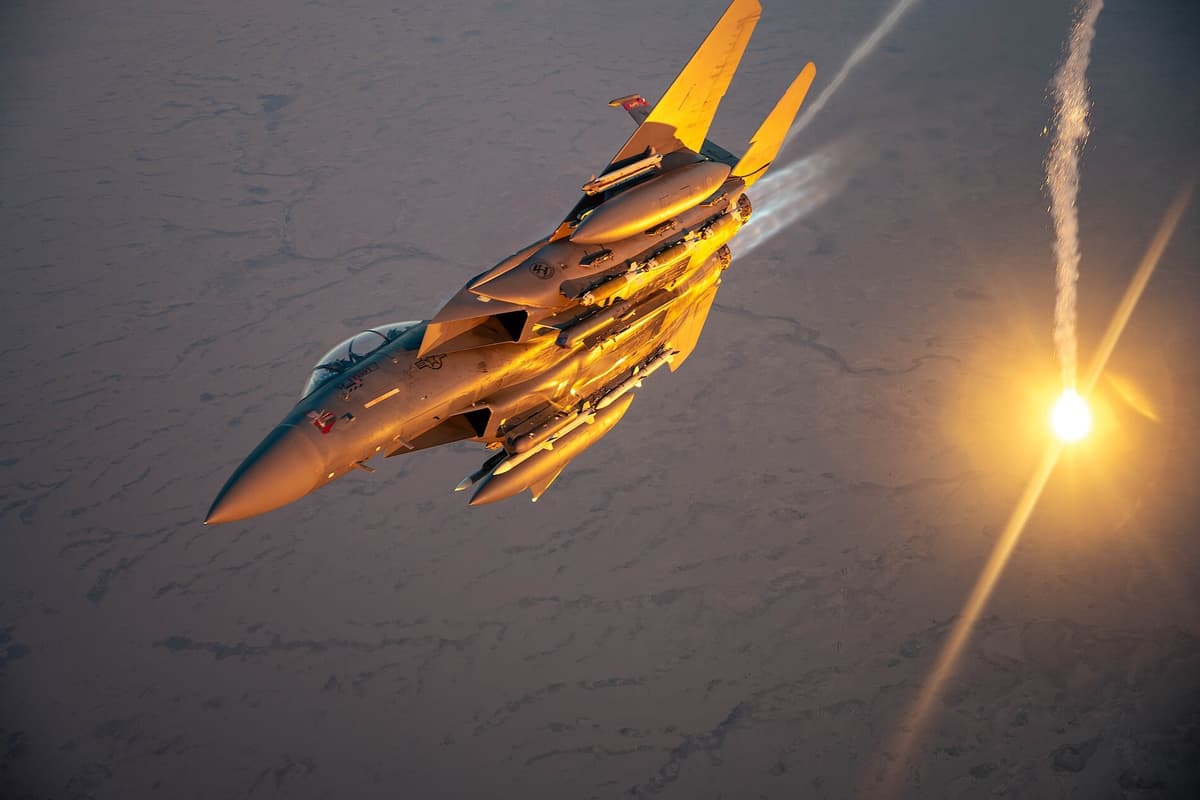
In the current Iran war, the United States has lost at least four high‑profile aircraft—including an F‑15E, an A‑10, and an F‑35—each worth roughly $100 million, while the missiles that downed them cost a fraction of that price, often under $250,000. The rescue operation that followed a downed pilot cost an estimated $300 million in destroyed MC‑130J and AH‑6 assets, underscoring how a single engagement can erode billions in defense spending. These losses challenge the assumption that cutting‑edge technology guarantees battlefield dominance and raise questions about the cost‑effectiveness of continuing to purchase such systems.
For Canada, the stakes are amplified. Over 60 percent of Canadian defence exports flow to the United States, and the integrated North American defence industrial base generates about $14 billion in annual revenue. Yet the same U.S. platforms Canada plans to acquire—F‑35s, Reaper drones, and Aegis‑equipped ships—are now proving susceptible to low‑cost threats. An independent performance review of American systems, coupled with a diversification of procurement sources, could safeguard Canadian fiscal resources and ensure that Arctic sovereignty and NATO commitments are supported by equipment that offers genuine resilience rather than perceived superiority.
The Iran War May Be the Best Argument Against Buying US Weapons
Comments
Want to join the conversation?
Loading comments...