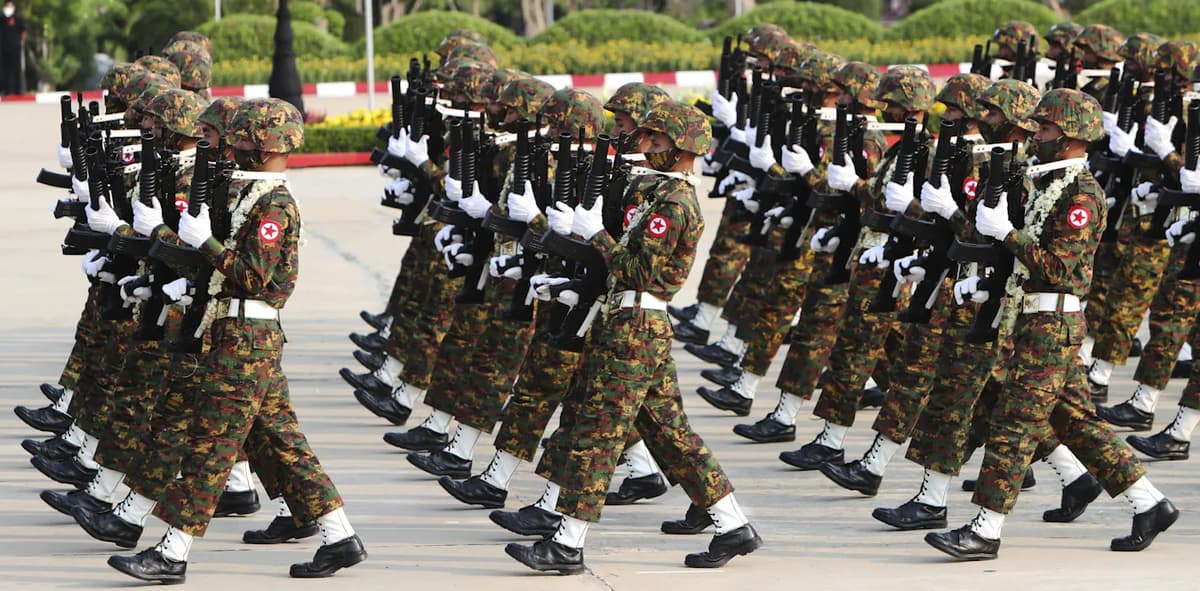
The Myanmar Civil War Is at Stalemate – but Anti-Junta Forces May Be Gaining the Upper Hand
Why It Matters
The conflict’s trajectory will shape Southeast Asian security, humanitarian conditions, and the strategic calculus of China and Russia in the region.
Key Takeaways
- •Junta controls ~20% of Myanmar, holds major towns
- •Russian drones give junta air superiority over rebels
- •Ethnic groups' disunity hampers anti‑junta coordination
- •New steering committee unites 16 resistance groups
- •China’s support could pivot if rebels gain momentum
Pulse Analysis
The Myanmar civil war, ignited by the February 2021 coup, has evolved from a rapid power grab into a protracted, multi‑front conflict that has claimed over 90,000 lives and displaced more than three million people. While the military retains a foothold in key urban centers, its grip on the broader landscape has eroded, leaving it dependent on a narrow corridor along the Irrawaddy Valley. This stalemate reflects deep‑seated ethnic tensions dating back to the 1950s, but the current crisis is amplified by modern technology and foreign involvement, raising the stakes for regional stability.
A decisive factor in the junta’s resilience is its access to advanced Russian‑made aircraft and drones, which outmatch the relatively rudimentary aerial capabilities of most rebel groups. The air superiority allows the military to retake strategic towns shortly after they fall, creating a revolving door of territorial control. Meanwhile, Ukraine‑trained advisers have begun supporting some resistance factions, introducing new tactics but still falling short of neutralising the junta’s sky dominance. This asymmetry underscores how external patronage—particularly from Russia and, to a lesser extent, China—has transformed a conventional insurgency into a high‑tech battlefield.
The opposition’s biggest hurdle remains internal fragmentation. Historically, ethnic militias have pursued independent war economies, from timber to illicit trade, which complicates unified command structures. However, the recent formation of a steering committee that brings together roughly 16 major groups signals a turning point. If coordination improves, the rebels could mount sustained offensives that force the junta into a defensive posture, potentially prompting China to reassess its support. A realignment of Chinese backing would not only alter the conflict’s dynamics but also reshape geopolitical influence in the Indo‑Pacific, making the next few months critical for Myanmar’s future governance and regional power balances.
The Myanmar civil war is at stalemate – but anti-junta forces may be gaining the upper hand
Comments
Want to join the conversation?
Loading comments...