Companies Mentioned
Why It Matters
The test proves the Navy can project lethal force and gather actionable intelligence using remotely commanded drones and edge AI, reducing crew exposure and accelerating decision cycles. It signals a strategic shift toward networked, unmanned combat platforms that could redefine naval power projection and acquisition priorities.
Key Takeaways
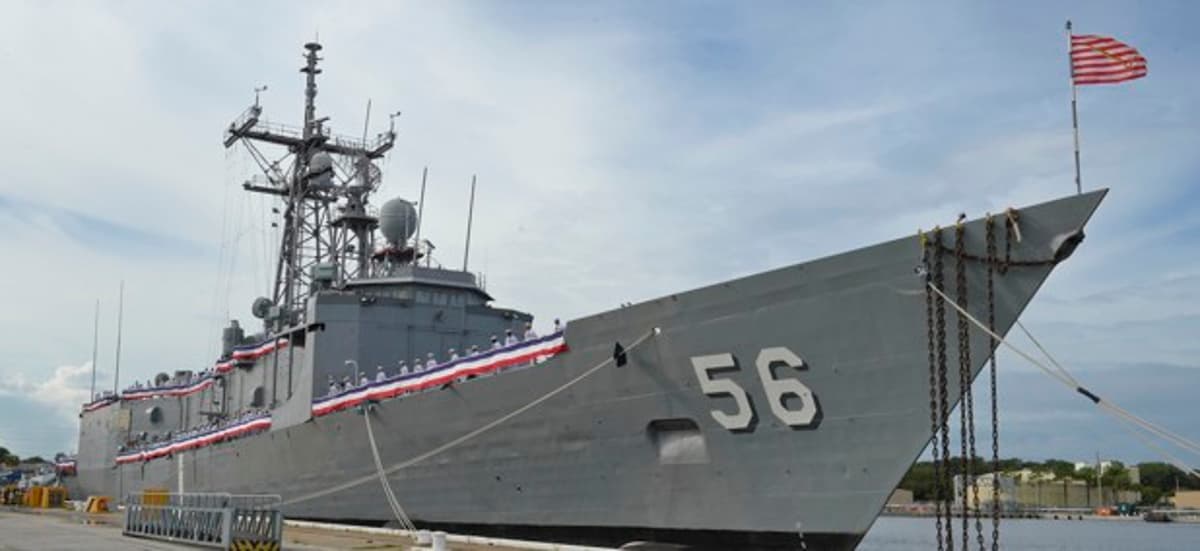
- •Four UAVs and one USV sank decommissioned USS Simpson in Atlantic
- •Shore‑based Maritime Operations Center commanded all unmanned strikes remotely
- •Deployable AI data center provided edge computing for real‑time targeting
- •Navy plans dedicated robotics officer role to streamline future drone missions
Pulse Analysis
The sinking of USS Simpson by a swarm of drones illustrates how the U.S. Navy is moving beyond traditional man‑in‑the‑loop warfare. By leveraging a littoral combat ship as a "robot mothership," the service demonstrated that kinetic strikes can be executed from a shore‑based Maritime Operations Center, cutting latency and freeing crew for other tasks. This remote‑command model aligns with broader Department of Defense goals to integrate unmanned systems across domains, offering a template for future surface‑fleet operations where drones handle high‑risk engagements while manned platforms focus on command and control.
A critical component of the exercise was the deployment of a portable data center equipped with AI and machine‑learning tools from Armada. The edge‑computing hub processed sensor feeds from the UAVs and USV in near real‑time, delivering targeting data that accelerated the training of computer‑vision models for crowded maritime environments. Lawmakers have earmarked $10 million in the FY 2027 defense bill for similar deployable data centers, underscoring the Pentagon’s commitment to embed AI at the tactical edge. This capability not only enhances situational awareness but also reduces the bandwidth burden on satellite links, a key advantage for contested littoral zones.
Looking ahead, the Navy acknowledges operational gaps revealed during the test, notably the absence of an onboard robotics specialist and limited ship‑wide connectivity. Plans to create a dedicated robotics warfare officer rating aim to centralize expertise and streamline mission planning for unmanned assets. As procurement pipelines adapt to incorporate more USVs and UAVs, the service will need to refine acquisition strategies, standards for autonomous behavior, and training curricula. The successful drone‑only sink exercise signals that future naval battles may be fought largely by coordinated swarms, reshaping doctrines, force structures, and the industrial base that supplies next‑generation maritime robotics.
The Navy used drones to sink a retired warship
Comments
Want to join the conversation?
Loading comments...