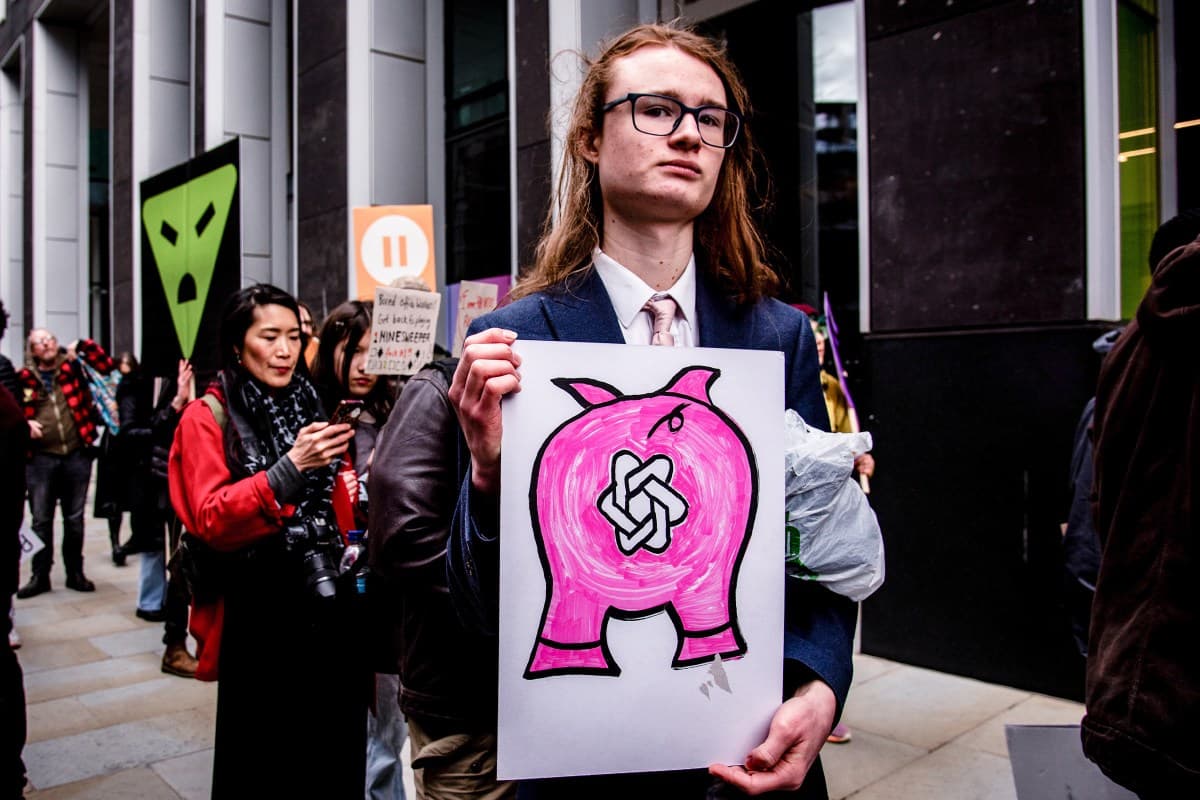
The Rage at OpenAI Has Grown So Immense That There Are Entire Protests Against It
•March 5, 2026
0

Why It Matters
The backlash highlights growing public and employee demand for ethical AI governance, pressuring OpenAI to reconsider military collaborations that could shape industry standards and regulatory scrutiny.
Key Takeaways
- •OpenAI Pentagon deal triggers massive user backlash
- •ChatGPT uninstalls jump 300%, Claude tops app store
- •QuitGPT protests in San Francisco and London demand ethical AI
- •OpenAI employees sign letter opposing military surveillance use
- •Altman promises to bar AI surveillance of US citizens
Pulse Analysis
The controversy surrounding OpenAI’s Pentagon agreement underscores a broader shift in how society views artificial intelligence. While the company touts its technology as a catalyst for productivity, the partnership raised alarms about dual‑use applications, especially in surveillance and autonomous weapons. Users, wary of their data being weaponized, migrated to Anthropic’s Claude, a move that not only reshaped app‑store rankings but also sent a clear market signal: ethical considerations now directly influence product adoption.
Protest actions in both the United States and the United Kingdom illustrate the trans‑national nature of AI ethics concerns. The “QuitGPT” rallies combined grassroots environmental arguments with fears of job displacement, reflecting a coalition of activists, journalists, and even tech workers traditionally disengaged from political demonstrations. Such public pressure amplifies calls for transparent policy frameworks, prompting lawmakers to scrutinize existing export‑control regimes and consider new safeguards for AI deployed in defense contexts.
Internally, OpenAI faces a talent retention challenge as nearly a thousand engineers and researchers signed an open letter demanding a halt to military‑grade deployments. Sam Altman’s rapid damage‑control—hosting an AMA and revising contract language to prohibit surveillance of U.S. citizens—demonstrates the company’s responsiveness but also its vulnerability to reputational risk. The episode may accelerate industry‑wide moves toward clearer red‑line policies, influencing venture capital decisions and shaping the competitive landscape between firms willing to engage with defense clients and those, like Anthropic, that adopt stricter ethical stances.
The Rage at OpenAI Has Grown So Immense That There Are Entire Protests Against It
0
Comments
Want to join the conversation?
Loading comments...