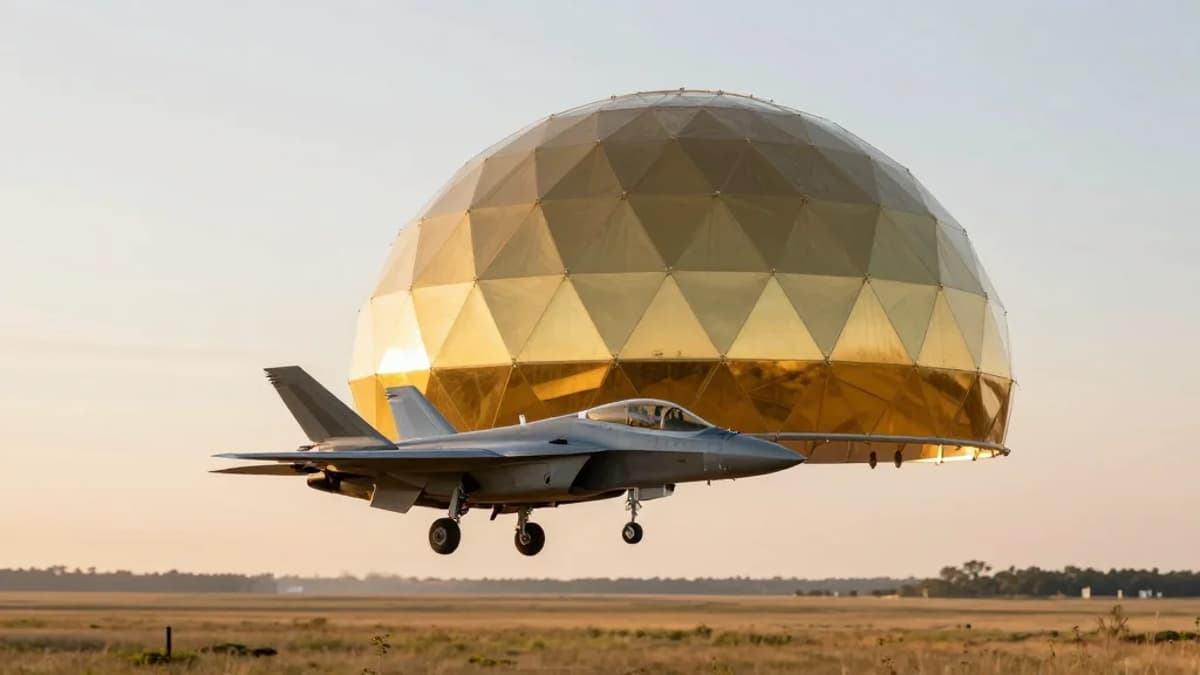
The R&D Decisions that Will Shape the Success of Golden Dome
•March 10, 2026
0
Why It Matters
Early R&D choices directly affect the program’s cost, timeline, and operational credibility, shaping the United States’ missile‑defense posture. Aligning research with production and testing reduces taxpayer risk and ensures timely fielding.
Key Takeaways
- •Early R&D shapes cost, schedule, and capability
- •Prototype criteria must include production readiness
- •Integrated testbeds essential for system‑of‑systems validation
- •Standards enable legacy integration and scalable workforce
- •Congressional oversight should focus on R&D maturity
Pulse Analysis
The Golden Dome for America initiative represents the Pentagon’s most ambitious attempt to weave space‑based sensors, interceptors and terrestrial layers into a unified missile‑defense architecture. As the program exits the conceptual stage, the focus shifts to concrete research and development investments that will lock in design tolerances, supply‑chain footprints, and workforce skill sets. Past acquisition efforts—such as the F‑22 Raptor’s soaring unit costs, the Ground‑Based Midcourse Defense’s rushed fielding, and the F‑35’s early low‑rate production—demonstrate how deferring these decisions inflates budgets and erodes readiness. Consequently, the timing and scope of Golden Dome’s R&D effort have become a decisive factor in its eventual success.
To mitigate technical uncertainty, the program should adopt a prototype‑driven R&D model that evaluates not only performance but also manufacturability, qualification pathways, and sustainment logistics. Integrated digital‑engineering testbeds and realistic simulation environments can provide early feedback on system‑of‑systems interactions, reducing the “valley of death” between development and full‑rate production. Standardizing interfaces and modular architectures will enable legacy components to interoperate with new space‑based interceptors while simplifying workforce training and scaling. By embedding these criteria into early contracts, the Department of Defense can capture production knowledge before it becomes costly to retrofit.
Congressional oversight must move beyond headline funding numbers and examine the maturity of Golden Dome’s R&D framework. Metrics such as prototype transition readiness, test‑bed synchronization, and workforce pipeline alignment offer early warning signs of cost growth and schedule risk. Targeted reporting on these indicators will allow legislators to steer the program toward affordable, credible capability rather than reacting after overruns materialize. In sum, disciplined early R&D, coupled with robust testing, standards, and proactive oversight, can transform Golden Dome from an aspirational concept into a sustainable, operational shield for the nation.
The R&D Decisions that Will Shape the Success of Golden Dome
0
Comments
Want to join the conversation?
Loading comments...