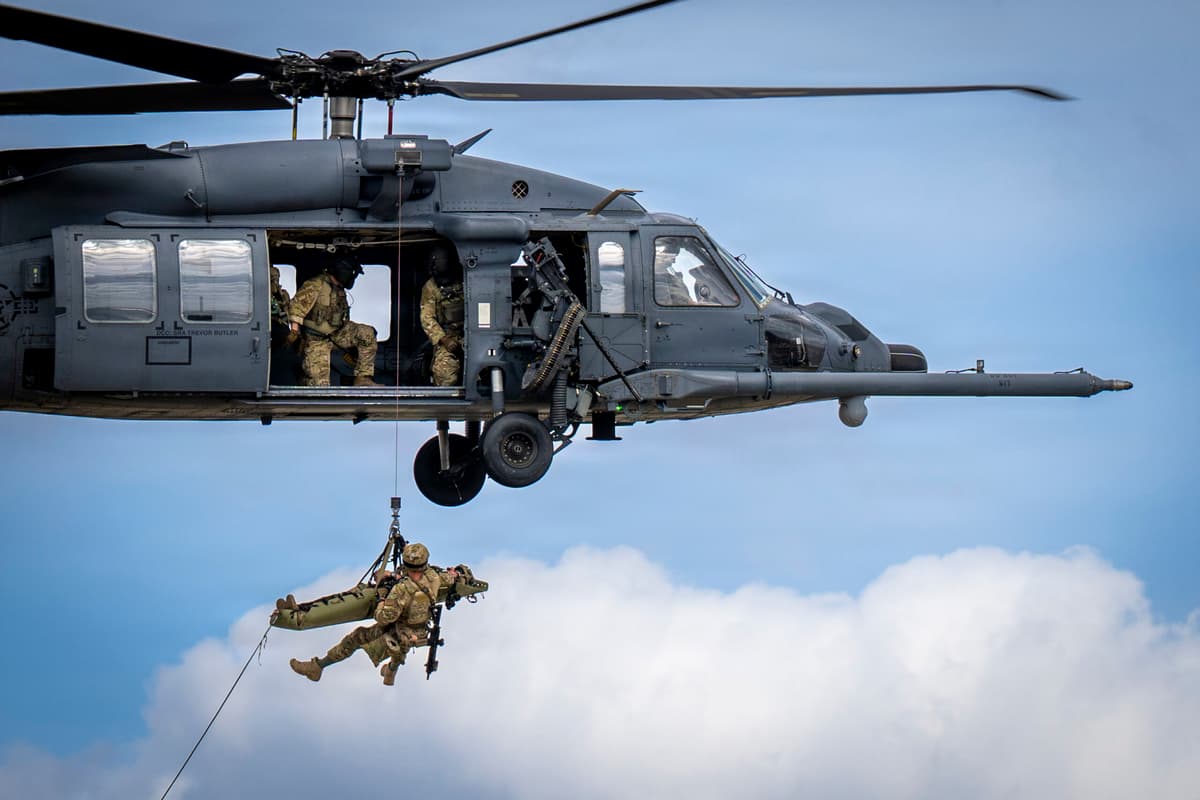
The Rescue of DUDE 44: Inside the Massive Operation to Save Two Downed Airmen In Iran
Why It Matters
The operation proves the United States can project rapid, coordinated CSAR power even in hostile, denied airspace, reinforcing deterrence and the "no‑one‑left‑behind" promise to service members.
Key Takeaways
- •21 aircraft rescued pilot in daylight, faced small‑arms fire
- •155 aircraft, including bombers, rescued WSO after 48‑hour evasion
- •CIA deception confused Iranian forces, aided extraction
- •A‑10 “Sandy” missions provided close‑air support for rescuers
- •Operation showcased U.S. “no‑one‑left‑behind” doctrine
Pulse Analysis
The downing of DUDE 44 highlighted the growing risk of high‑performance fighters operating near contested borders. Modern combat search‑and‑rescue (CSAR) doctrine emphasizes rapid isolation of downed aircrew, integration of air‑ground intelligence, and the use of dedicated rescue platforms. In this case, the F‑15E’s ejection over Iranian territory triggered a joint response that leveraged legacy assets like the HH‑60W and newer capabilities such as the HC‑130 refuelers, underscoring the layered approach the Air Force has cultivated over decades of conflict.
Scale and coordination defined the rescue. Within hours, a first wave of 21 aircraft—including A‑10s delivering "Sandy" close‑air fire—penetrated hostile airspace, extracting the pilot under direct small‑arms fire. The subsequent 155‑aircraft sortie combined four strategic bombers, dozens of fighters, and a fleet of tankers to sustain prolonged night operations. Simultaneously, the CIA orchestrated a deception campaign, broadcasting false coordinates and dispersing decoy flights to dilute Iranian focus. This blend of kinetic force and information warfare exemplifies how U.S. agencies now fuse intelligence, special‑operations expertise, and conventional air power to achieve mission success in complex environments.
Beyond the immediate heroics, the mission sends a strategic signal to adversaries and allies alike. Demonstrating the ability to recover personnel from deep within hostile territory reinforces the credibility of the "no‑one‑left‑behind" pledge, a cornerstone of morale for U.S. service members. It also showcases the interoperability of joint forces, from Air Force rescue squadrons to Army special‑operations aviation, setting a benchmark for future CSAR planning. As geopolitical tensions persist, the DUDE 44 rescue will likely inform doctrine revisions, investment in survivability technologies, and the continued emphasis on rapid, multi‑domain response capabilities.
The Rescue of DUDE 44: Inside the Massive Operation to Save Two Downed Airmen In Iran
Comments
Want to join the conversation?
Loading comments...