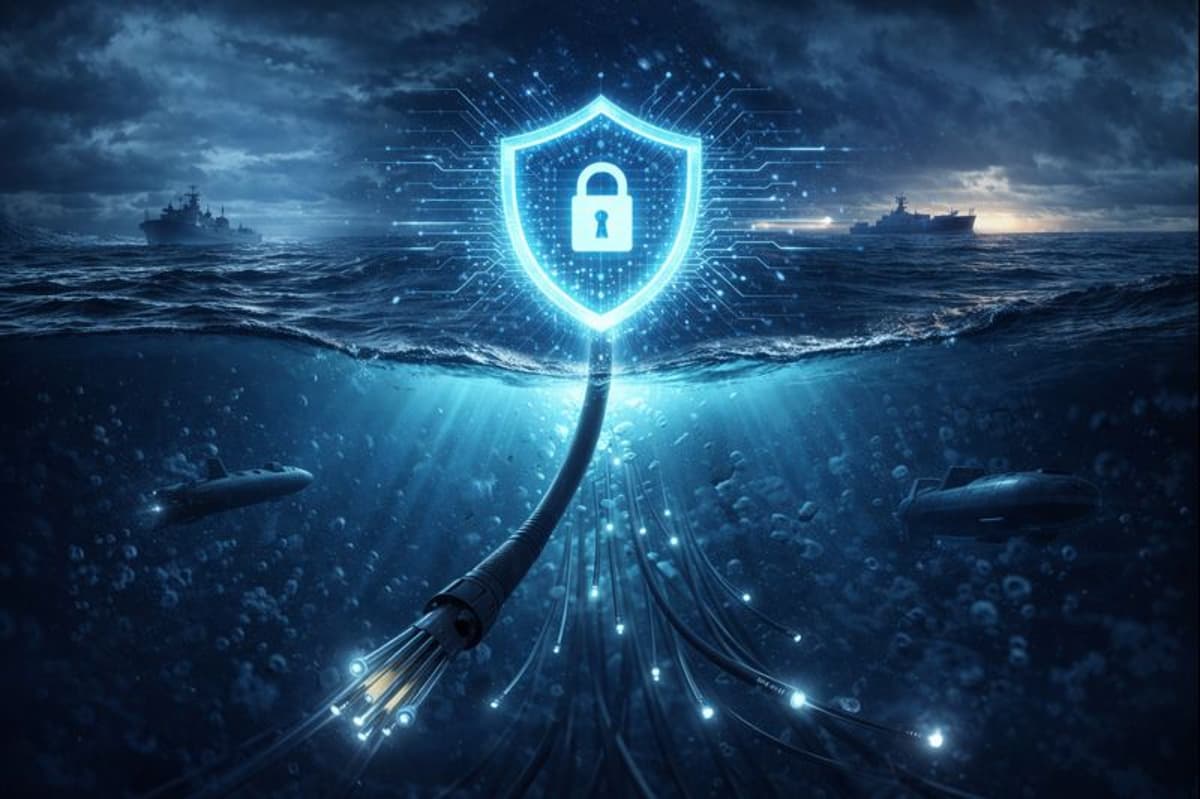
The Resilience Series – The West’s Greatest Vulnerability: Amphibious Critical and Defensive Infrastructure (ACADI)
•February 24, 2026
0
Why It Matters
Disrupting ACADI could cripple economies, governance and defense, reshaping power balances in any future conflict. Strengthening this infrastructure is essential for Western resilience against hybrid and kinetic threats.
Key Takeaways
- •900,000 miles of fiber carry $22.4 trillion daily
- •One day of internet outage costs $33 billion globally
- •Only ~60 cable‑repair ships exist, many aging
- •Russia’s “shadow fleet” now exceeds 300 vessels
- •NATO lacks unified defense against ACADI attacks
Pulse Analysis
The undersea fiber‑optic network that powers the modern Internet is a hidden yet vital artery for global commerce and security. With roughly nine hundred thousand miles of cable linking continents, daily data flows represent more value than the GDP of every nation except the United States. When these cables fail, the economic shock is immediate: a single day without connectivity translates into over thirty‑three billion dollars in lost transactions worldwide. This dependence makes the physical layer of the Internet a strategic asset that rivals traditional military infrastructure.
Threats to ACADI span peacetime accidents, hybrid sabotage, and outright kinetic warfare. Natural events cause only a fraction of the 150‑200 annual cable faults, while deliberate human interference—often deniable—remains the primary risk. Russia’s expanding "shadow fleet" of over three hundred vessels, coupled with elite deep‑sea units like the GUGI, illustrates a growing capability to target both the wet (subsea) and dry (land‑based) segments of the data supply chain. The scarcity of specialized repair ships—about sixty globally, many aging—further amplifies vulnerability, as restoration can take months.
The strategic implications are stark: prolonged internet outages could erode national budgets faster than traditional defense spending, forcing governments to confront a new kind of warfare where information flow is the battlefield. Policymakers must prioritize hardening landing stations, diversifying routing paths, and investing in sovereign repair capacities. Coordinated public‑private initiatives to monitor, protect, and rapidly restore ACADI will be essential to preserve economic stability and maintain deterrence in an era where hybrid and kinetic threats converge on the digital backbone of the West.
The Resilience Series – The West’s Greatest Vulnerability: Amphibious Critical and Defensive Infrastructure (ACADI)
0
Comments
Want to join the conversation?
Loading comments...