Companies Mentioned
Why It Matters
Japan’s defense renaissance reshapes regional security dynamics and introduces a new, affordable supplier into a market dominated by the United States, potentially altering global arms‑trade balances. It also ties Japan’s economic revitalization to its strategic posture, linking industrial growth with deterrence.
Key Takeaways
- •Japan aims to double defense budget to $60 bn by 2027
- •Mitsubishi Heavy Industries developing hypersonic glide vehicle, Japan's first ballistic missile
- •Mogami‑class frigates sold to Australia mark Japan's first overseas warship export
- •Sanae Takaichi's electoral win gives political mandate for defense industry overhaul
- •Japan seeks to supply affordable, mass‑producible weapons to Southeast Asian allies
Pulse Analysis
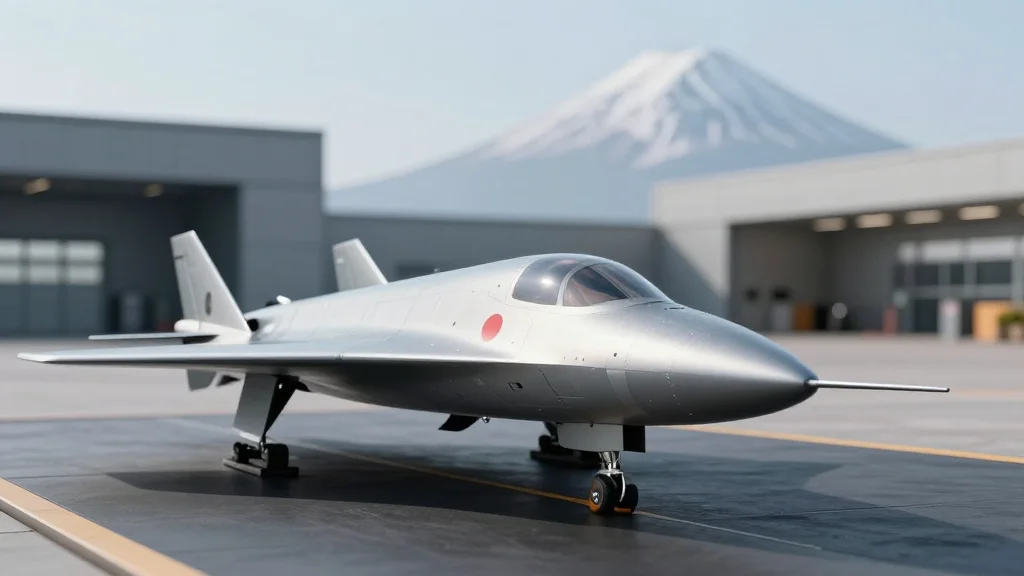
Japan’s defense turnaround is rooted in a strategic pivot away from post‑war pacifism toward a more assertive security posture. The five‑year budget plan, which will lift annual spending to roughly $60 billion, reflects deepening concerns about Chinese assertiveness and the perceived erosion of U.S. guarantees after the Ukraine war. By lifting export bans and channeling funds into next‑generation platforms—such as a sixth‑generation stealth fighter partnership with Italy and the UK, and Mitsubishi’s hypersonic glide vehicle—Tokyo is building a modern, export‑ready arsenal that can support both domestic deterrence and allied needs.
The industrial implications extend far beyond Japan’s borders. With the United States strained by supply‑chain bottlenecks and Europe scrambling for reliable munitions, Japanese firms offer a middle‑ground: high‑tech yet cost‑effective systems that can be produced at scale. Early successes, like the sale of Mogami‑class frigates to Australia and growing interest from the Philippines, Indonesia, Malaysia and Vietnam, signal a nascent market for Japanese hardware among U.S. partners in Southeast Asia and Europe. This diversification could compress delivery timelines, introduce competition, and reduce reliance on legacy American platforms that are often prohibitively expensive.
However, the path is fraught with challenges. Decades of underinvestment have left Japan short on engineering talent, cyber‑defense capabilities, and a domestic venture‑capital ecosystem to fund rapid capacity expansion. Persistent reliance on Chinese components for critical subsystems raises supply‑chain security concerns, while Japanese firms lack experience in aggressive overseas lobbying. Overcoming these hurdles will require coordinated financing—potentially from Silicon Valley investors or U.S. government programs—and a decisive push to harden cyber‑infrastructure. If Japan can navigate these obstacles, its defense renaissance could become a cornerstone of both regional stability and a more resilient global arms market.
The Return of Japanese Hard Power
Comments
Want to join the conversation?
Loading comments...