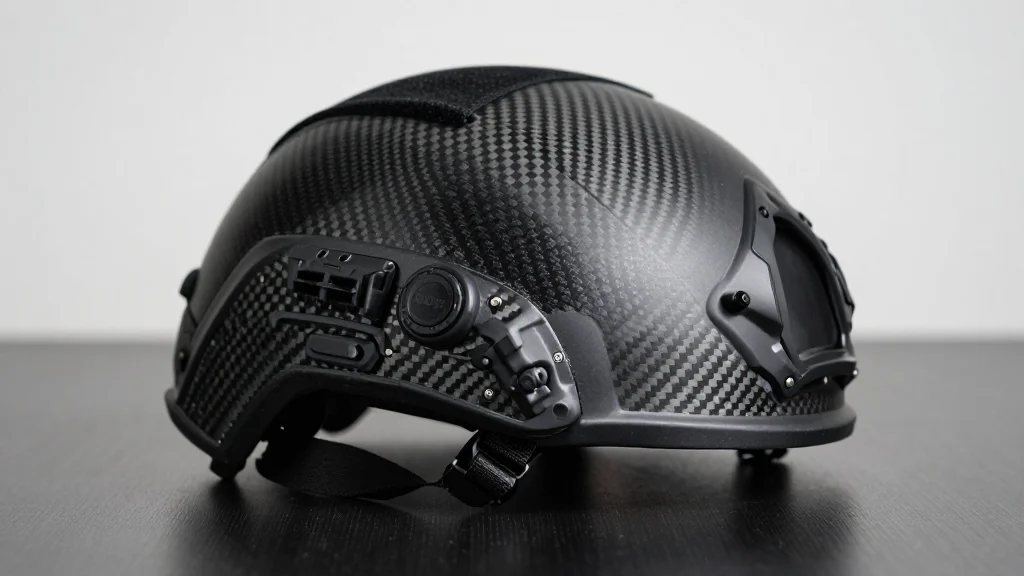
The Science of Soldier Safety: How Team Wendy Is Reinventing the Modern Military Helmet
Why It Matters
By addressing both blunt‑impact and rifle threats, Team Wendy’s new helmets improve soldier survivability and reduce long‑term brain injury risk, reshaping procurement priorities for armed forces worldwide.
Key Takeaways
- •RECON Tactical bump helmet reduces neck strain with carbon‑fiber hybrid shell
- •Zorbium foam adapts stiffness to impact speed, enhancing brain protection
- •RIFLETECH stops 7.62 mm rifle rounds at muzzle velocity, V50 1,350 m/s
- •Seamless Shell eliminates weak points, improving structural integrity
- •Team Wendy’s PANTHER research integrates sensor data to reshape helmet standards
Pulse Analysis
The modern battlefield demands protection that goes beyond stopping bullets. Bump helmets like Team Wendy’s RECON Tactical target the most frequent injuries—collisions, falls, and vehicle impacts—by combining a lightweight carbon‑fiber crown with Zorbium® viscoelastic foam that dynamically adjusts its hardness. Integrated CAM FIT and BOA adjustment systems enable one‑handed fitting, while universal mounting points streamline the addition of night‑vision goggles, communication headsets, and lighting, reducing overall load and fatigue for soldiers on extended missions.
Ballistic threats have also evolved, prompting the development of RIFLETECH, a rifle‑rated helmet that meets NIJ RF1 and Level III standards at true muzzle velocities. Its ultra‑high‑molecular‑weight polyethylene shell delivers a V50 of 1,350 m/s—more than double the performance of conventional Aramid IIIA helmets—while a seamless shell design eliminates structural weak points created by traditional bolt‑through holes. Coupled with an Air Fit liner featuring cooling channels and breathable fabrics, RIFLETECH offers high protection without sacrificing comfort, a critical factor for close‑quarter combat where rifle rounds are a realistic danger.
Underlying both product lines is Team Wendy’s PANTHER research initiative, a collaboration with U.S. Naval Research and leading academic labs. By embedding sensors that capture linear and angular accelerations into helmet liners, the program generates real‑world data that challenges legacy drop‑test standards and informs next‑generation blast‑mitigation strategies. Early blast‑tube and live‑explosion testing under the Army’s SBIR program suggest pathways to materials that attenuate shockwaves, potentially reducing primary blast‑induced brain trauma. As militaries worldwide reassess helmet procurement, the blend of lightweight ergonomics, verified rifle protection, and data‑driven design positions Team Wendy as a pivotal player in the future of soldier safety.
The science of soldier safety: How Team Wendy Is reinventing the modern military helmet
Comments
Want to join the conversation?
Loading comments...