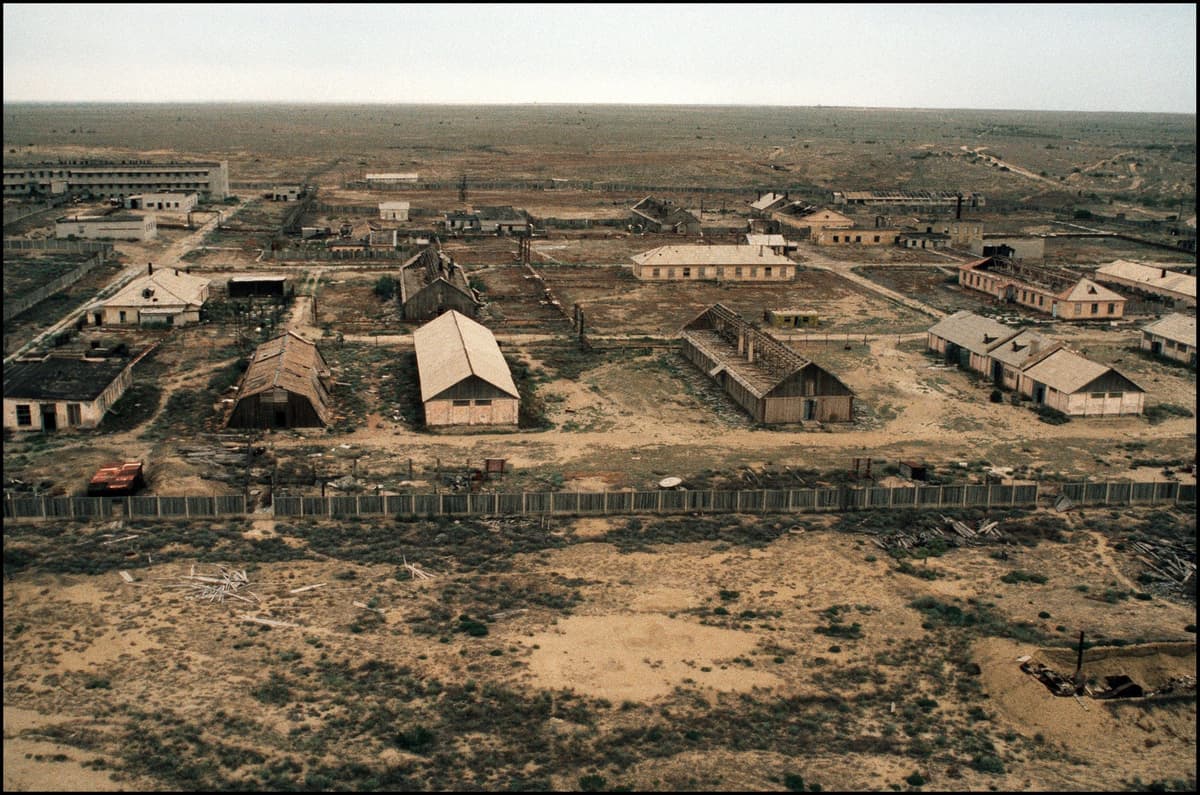
The Soviets Abandoned a Top-Secret Bioweapons Testing Ground. 34 Years Later, ‘Anthrax Island’ Is Waking Up.
Why It Matters
The site illustrates the long‑term hazards of abandoned bioweapon stockpiles and underscores the need for vigilant monitoring and international cooperation to prevent resurgence of deadly pathogens.
Key Takeaways
- •Soviet Aralsk‑7 stored ~200 tons anthrax slurry in underground pits
- •2002 U.S.–Uzbek team decontaminated 11 anthrax pits and demolished 20 structures
- •Island became a peninsula in 2001, exposing the former secret site
- •Past accidents killed dozens, underscoring dangers of industrial‑scale bioweapon programs
- •Desertified Aral Sea leaves toxic sand, complicating long‑term monitoring
Pulse Analysis
The Soviet Union’s bioweapon program was one of the most extensive in history, and Aralsk‑7 on Vozrozhdeniya Island served as its remote nerve center. Built in 1954, the facility housed laboratories, animal pens and open‑air testing grounds where pathogens such as anthrax, plague and smallpox were weaponized. Estimates suggest up to 200 tons of anthrax slurry were dumped in underground pits, a scale that dwarfs most modern biodefense stockpiles. The secrecy of the location, coupled with a series of fatal accidents—including a 1971 smallpox case and a 1972 plague outbreak—highlighted the inherent risks of large‑scale biological weapons development.
Environmental change transformed the strategic calculus. Decades of Soviet irrigation drained the Aral Sea, turning the once‑isolated island into a peninsula by 2001 and exposing the abandoned complex to land‑based access. Recognizing the potential for rogue actors to exploit the site, the United States partnered with Uzbekistan in 2002 to dismantle 20 buildings, neutralize 11 anthrax pits and remove residual contamination. The operation demonstrated a rare instance of post‑Cold‑War cooperation on bio‑security, yet the harsh, saline dust that now blankets the former island continues to pose monitoring challenges for regional authorities.
The legacy of Aralsk‑7 offers a cautionary tale for contemporary bio‑security policy. As climate change reshapes landscapes, formerly secure locations may become accessible, reviving dormant threats. Ongoing surveillance, transparent decontamination reporting and international frameworks are essential to mitigate the risk of accidental release or deliberate theft of residual pathogens. The Vozrozhdeniya case underscores that the costs of neglecting abandoned bioweapon sites extend beyond environmental damage, potentially endangering global public health for generations.
The Soviets Abandoned a Top-Secret Bioweapons Testing Ground. 34 Years Later, ‘Anthrax Island’ Is Waking Up.
Comments
Want to join the conversation?
Loading comments...