The US Navy Is Full Speed Ahead on Building a Laser Fleet
Companies Mentioned
Why It Matters
Laser weapons could replace costly missile interceptors, dramatically increasing the Navy’s strike capacity and survivability. The timeline and funding decisions will shape the U.S. surface fleet’s relevance against evolving missile and drone threats.
Key Takeaways
- •Navy needs new power‑dense ships to host high‑energy lasers
- •Current Flight III destroyers lack capacity for megawatt‑class lasers
- •Containerized laser programs like LOCUST and JLWS aim to bridge gap
- •Battleship or next‑gen frigate to host laser fleet in 2030s
- •JLWS R&D budget totals $676 million through FY2031
Pulse Analysis
The Navy’s push for directed‑energy weapons stems from a stark operational dilemma revealed during Operation Epic Fury: each Vertical Launch System (VLS) cell used for missile defense removes a potential Tomahawk or SM‑6 strike. As adversaries field ever‑more sophisticated ballistic missiles and swarming drones, the service sees lasers as a cost‑per‑shot solution that can protect ships without depleting finite missile magazines. By shifting defensive responsibilities to a beam of light, the fleet could maintain a higher offensive posture and reduce logistical burdens associated with reloading VLS at sea.
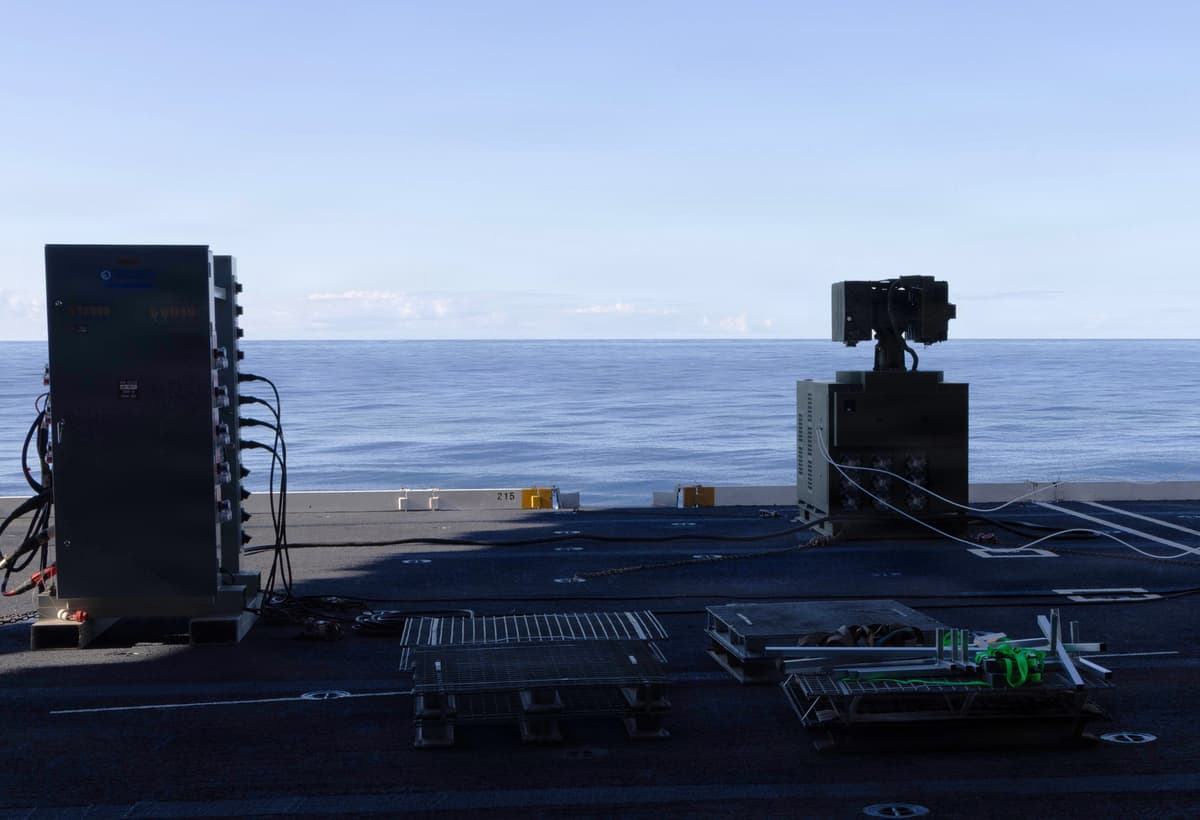
However, the physics of high‑energy lasers demand power and thermal management far beyond what today’s surface combatants can provide. The Flight III Arleigh Burke destroyers are already maxed out feeding the AN/SPY‑6 radar, leaving no margin for megawatt‑class lasers. To overcome this, the Navy is betting on two parallel tracks: a long‑term redesign of future warships—potentially nuclear‑powered battleships or next‑generation frigates slated for the 2030s—and a short‑term containerized approach. Recent live‑fire tests of the 30 kW LOCUST system from an aircraft carrier and the development of a palletized HELIOS variant demonstrate that portable lasers can draw power from existing nuclear reactors, offering an immediate capability against drones and low‑cost missiles.
Funding signals the seriousness of this transition. The Joint Laser Weapon System (JLWS), a collaborative Army‑Navy effort, targets 150‑300 kW power levels and is backed by $675.93 million in R&D through FY 2031. If successful, JLWS could deliver a containerized, high‑energy missile‑defense laser before the first laser‑ready battleship is commissioned. This hybrid strategy promises to keep the surface fleet relevant while the infrastructure for true megawatt lasers matures, positioning the U.S. Navy to dominate future maritime battlespaces.
The US Navy is full speed ahead on building a laser fleet
Comments
Want to join the conversation?
Loading comments...