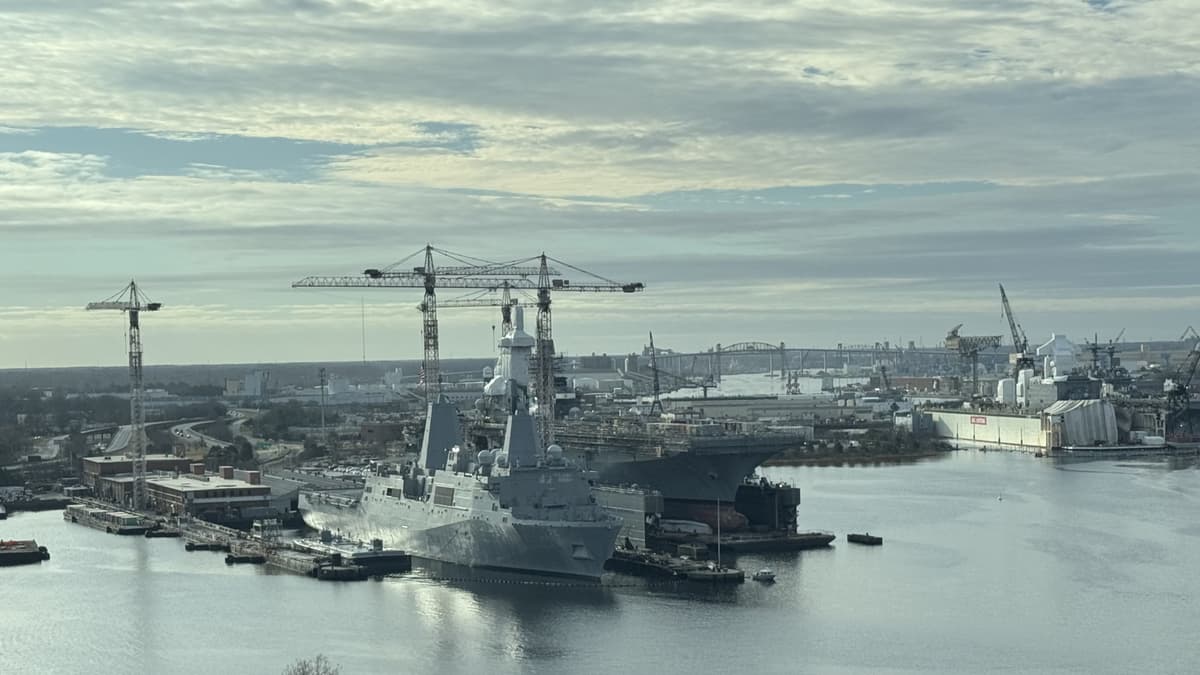
The US Navy May Choose Foreign Shipyards To Help Build The 'Fleet Of The Future'
Why It Matters
Outsourcing construction could quickly augment fleet size and mitigate the U.S. shipyard workforce shortage, but it also raises questions about strategic reliance on foreign industrial bases.
Key Takeaways
- •Navy may outsource up to two auxiliary ships to foreign yards FY27.
- •South Korea and Japan identified as primary shipbuilding partners.
- •US hull count at historic low, lagging behind China’s capacity.
- •Workforce shortage and closed shipyards drive need for overseas construction.
- •Proposal requires FY27 NDAA legislative changes to permit foreign fabrication.
Pulse Analysis
The United States faces a shipbuilding bottleneck that threatens its naval dominance. Decades of shipyard closures and a dwindling skilled labor pool have left the fleet with fewer hulls than any time since the interwar period. By contrast, China’s shipyards can produce tonnage at a scale 230 times larger than U.S. facilities, a disparity that could erode strategic advantage if not addressed. The Navy’s latest plan acknowledges that domestic capacity alone cannot meet the ambitious "Golden Fleet" vision, prompting a search for external solutions.
The FY27 NDAA proposal seeks to authorize construction of up to two auxiliary vessels abroad and to allow key combat‑module fabrication in allied yards. South Korea and Japan emerge as logical partners, boasting modern facilities and proven experience building Aegis‑equipped warships. Leveraging these allies could shave years off delivery schedules and bypass the labor crunch that has forced shipyards to compete with high‑paying sectors like e‑commerce. However, the shift raises policy concerns: reliance on foreign supply chains may expose critical defense programs to geopolitical risk and complicate export‑control compliance.
Beyond immediate capacity gains, the move signals a broader transformation of the U.S. defense industrial base. If successful, it could catalyze a hybrid model where design and final assembly remain domestic while high‑precision components are sourced overseas. This approach may preserve strategic autonomy while fostering deeper defense cooperation with key allies. Yet lawmakers must balance speed with security, ensuring that any legislative changes embed robust oversight, technology‑transfer safeguards, and a clear roadmap for revitalizing American shipyards in the long term.
The US Navy May Choose Foreign Shipyards To Help Build The 'Fleet Of The Future'
Comments
Want to join the conversation?
Loading comments...