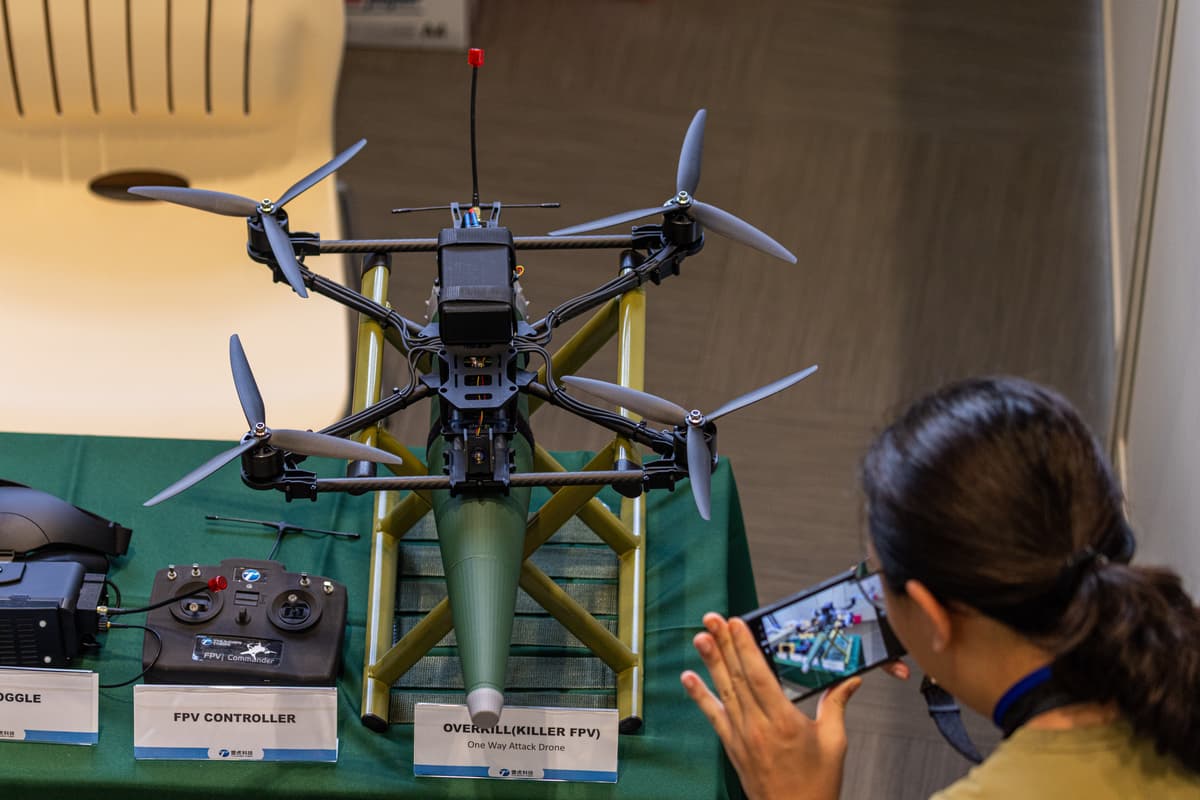
The US Usually Sells Weapons to Taiwan – with Drones, Expect the Reverse
Companies Mentioned
Why It Matters
U.S. reliance on Taiwanese drones reduces exposure to Chinese components, bolstering supply‑chain security and expanding allied defense manufacturing capacity. The partnership also accelerates Taiwan’s emergence as a strategic defense exporter.
Key Takeaways
- •Taiwan's drone sector hit $410 million revenue in 2025
- •Exports reached $92 million, with U.S. as third‑largest buyer
- •U.S. seeks non‑Chinese UAVs for security and supply‑chain resilience
- •Taiwan aims for $1.2 billion drone production by 2030
- •Partnerships with Anduril and AVUSI signal deeper defense collaboration
Pulse Analysis
The shift from a one‑way arms flow to a reciprocal defense partnership reflects broader geopolitical realignments in the Indo‑Pacific. While the U.S. has supplied Taiwan with advanced fighter jets, missiles and radar systems for decades, Taiwan’s homegrown drone ecosystem—rooted in its 1980s high‑tech manufacturing base—offers a low‑cost, secure alternative to Chinese‑dominated UAVs. Recent memoranda of understanding between Taiwan’s Industrial Technology Research Institute and U.S. entities such as the Association for Uncrewed Vehicle Systems International and Anduril underscore a strategic intent to integrate Taiwanese platforms into American operational concepts, especially for swarm and maritime missions.
The market data underscores the viability of this pivot. In 2025, Taiwan’s drone industry recorded NT$12.9 billion (about $410 million) in sales, a 2.5‑fold increase from the previous year, and exported NT$2.95 billion (roughly $92 million). The United States ranked third in imports, purchasing $2.58 million worth of units in Q1 2026. U.S. lawmakers have proposed expanding domestic UAV production to one million units annually, but the lack of a robust commercial base means allies like Taiwan can provide an interim “bridge” solution, delivering both small‑batch agility and larger‑scale output.
Strategically, the partnership serves multiple purposes. For Washington, sourcing Taiwanese drones mitigates data‑security risks associated with Chinese components, a concern amplified by recent espionage allegations. For Taipei, securing U.S. contracts accelerates its ambition to reach NT$40 billion (approximately $1.2 billion) in drone production by 2030, positioning the island as a critical node in allied supply chains. As China watches the performance of these systems in potential conflict scenarios, Taiwan’s ability to deliver cost‑effective, China‑free UAVs could reshape the balance of power in the region and set a precedent for other allies seeking to diversify their defense procurement sources.
The US usually sells weapons to Taiwan – with drones, expect the reverse
Comments
Want to join the conversation?
Loading comments...