The War in Ukraine Has Become the World’s Largest Live Test of Autonomous Drone Warfare — and What Both Sides Have Learned in Four Years Is Quietly Rewriting How Every Military on Earth Thinks About the Future of Combat
Why It Matters
The shift to cheap, mass‑produced autonomous drones forces militaries to overhaul procurement, doctrine, and force structure, redefining how future wars will be fought and won.
Key Takeaways
- •Ukraine produced over 4.5 million drones in 2025, outpacing NATO
- •Russia manufactures 50,000 fiber‑optic‑guided drones monthly as of Sep 2025
- •U.S. Army mandates squad‑level unmanned systems by end‑2026
- •NATO struggles to integrate drone‑dense tactics despite Ukraine’s lessons
Pulse Analysis
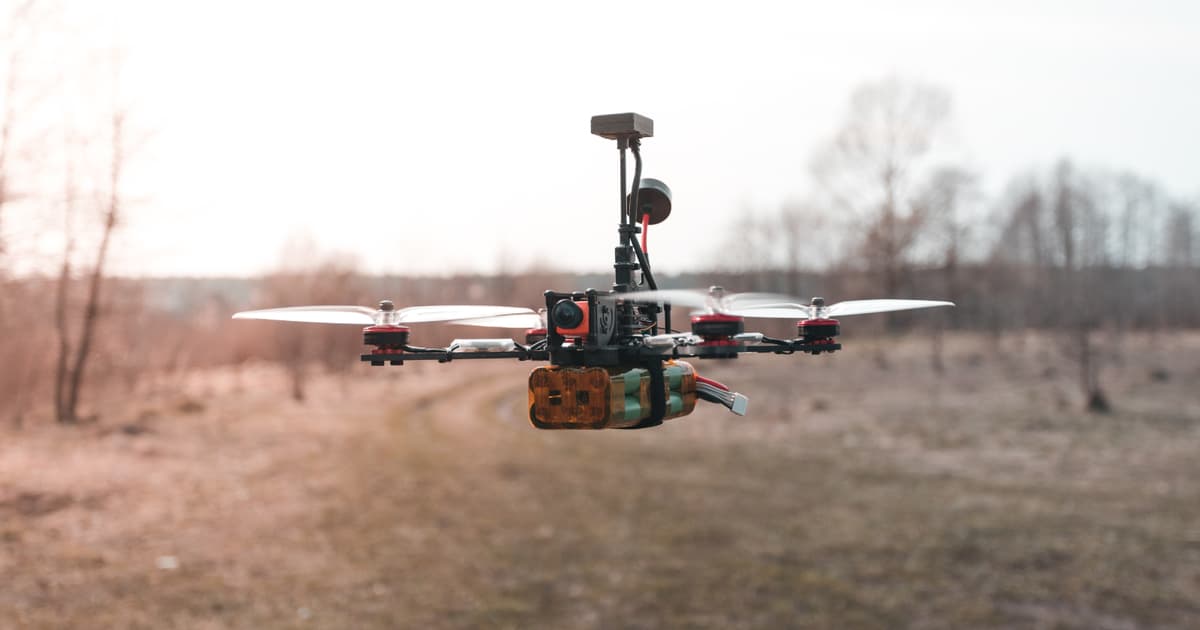
The four‑year conflict in Ukraine has turned the battlefield into a real‑time laboratory for autonomous drone technology. Production figures illustrate the scale: Kyiv’s domestic industry is set to exceed 4.5 million UAVs in 2025, dwarfing NATO’s combined output, while Moscow’s factories are delivering more than 50,000 fiber‑optic‑guided drones each month. These inexpensive, expendable systems have become the primary weapon for both sides, accounting for up to 90 percent of Russian battlefield losses according to Ukrainian officials. The rapid evolution—from simple reconnaissance platforms in 2022 to partially AI‑coordinated weapons by 2025—has forced a continuous loop of tactical adaptation and counter‑adaptation, compressing doctrinal learning into a matter of weeks rather than years.
Beyond the hardware, the war has exposed a fundamental flaw in legacy procurement models built around costly, long‑life platforms such as the F‑35 or Abrams tank. Ukraine’s creation of a separate acquisition budget, managed outside traditional defence channels, enabled direct contracts with commercial drone makers and slashed development timelines dramatically. The U.S. Army has taken notice, issuing a 2025 directive that every squad must field unmanned systems by 2026 and reclassifying drones as consumable munitions. This re‑categorisation reshapes logistics, maintenance and training pipelines, while NATO’s slower institutional response highlights the risk of misreading Ukraine’s lessons and lagging behind in a drone‑saturated environment.
The implications are global. China, North Korea, Serbia and other militaries are already accelerating their own FPV and swarm‑drone programs, and the emergence of AI‑driven platforms like Ukraine’s Saker Scout hints at a future where autonomous systems can select and engage targets without human input. Such "affordable precise mass" could overturn traditional attrition calculations, making low‑cost, high‑volume drones the decisive factor in future conflicts. As defence establishments worldwide grapple with this paradigm shift, the next decade will likely see procurement cycles shortened, force structures re‑engineered, and strategic doctrines rewritten to accommodate an era where autonomous, expendable systems dominate the battlespace.
The war in Ukraine has become the world’s largest live test of autonomous drone warfare — and what both sides have learned in four years is quietly rewriting how every military on Earth thinks about the future of combat
Comments
Want to join the conversation?
Loading comments...