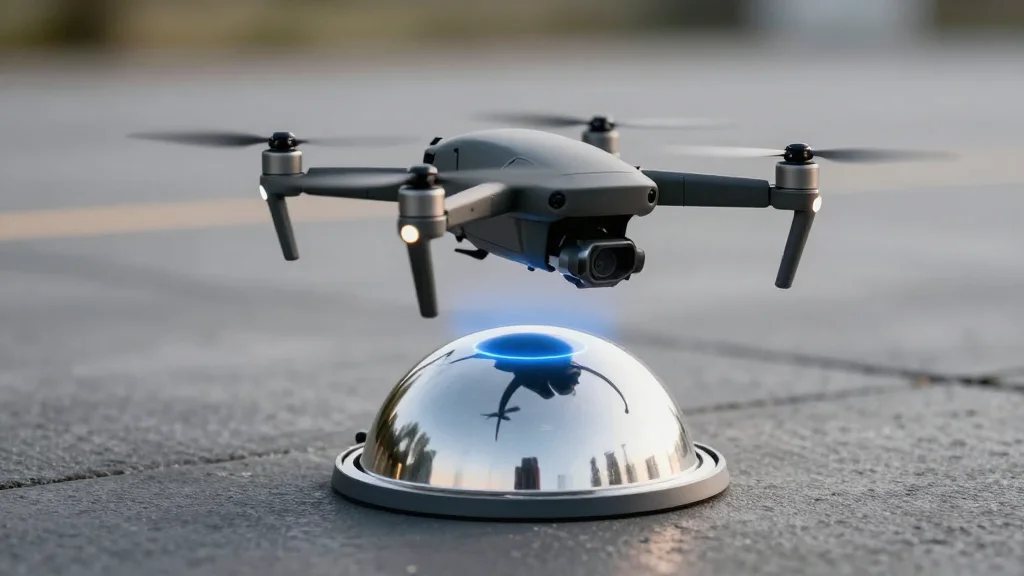
This Is the Defense Sector’s Fastest Grower — and a $20 Billion Trade Most Investors Are Missing
Why It Matters
Counter‑UAS solutions are becoming a strategic priority for governments worldwide, creating a high‑growth, less‑crowded investment niche within the broader defense sector.
Key Takeaways
- •Counter-UAS market projected $20 B by 2030, 25% CAGR
- •Demand stems from military, homeland security, commercial sectors
- •Investment in drone makers now crowded; counter-drone space less saturated
- •Companies offering detection, jamming, and neutralization see rising contracts
- •Growth driven by geopolitical tensions and urban infrastructure protection
Pulse Analysis
The rapid proliferation of commercial and tactical drones has forced defense planners to rethink traditional air‑space security. Counter‑UAS systems—ranging from radar‑based detection to directed‑energy interceptors—are now a distinct line item in defense budgets, reflecting a shift from offensive to protective capabilities. Analysts estimate the market will reach $20 billion by 2030, driven by a 25% CAGR that outpaces many other defense sub‑segments. This growth is anchored by three converging demand shocks: modern militaries seeking to safeguard forward bases, homeland‑security agencies protecting critical infrastructure, and private operators needing to secure airports, pipelines, and urban venues.
Investors have largely chased the visible drone manufacturers, inflating valuations in a crowded space. In contrast, the counter‑drone ecosystem remains fragmented, with a mix of legacy defense contractors and agile startups developing specialized sensors, electronic warfare suites, and kinetic interceptors. Companies that can integrate detection, classification, and neutralization into a single platform are winning multi‑year contracts from the Pentagon, the Department of Homeland Security, and allied foreign ministries. The competitive landscape is still forming, offering early‑stage investors the chance to back market leaders before consolidation accelerates.
For portfolio managers, the counter‑UAS niche presents a compelling risk‑adjusted return profile. The sector benefits from recurring government spend, long procurement cycles, and a clear strategic imperative that is unlikely to wane amid rising geopolitical tensions. However, investors should monitor regulatory developments around electromagnetic emissions and export controls, which could affect technology rollout. Overall, the convergence of military, security, and commercial needs positions counter‑UAS as the defense sector’s fastest‑growing, under‑appreciated trade opportunity.
This is the defense sector’s fastest grower — and a $20 billion trade most investors are missing
Comments
Want to join the conversation?
Loading comments...