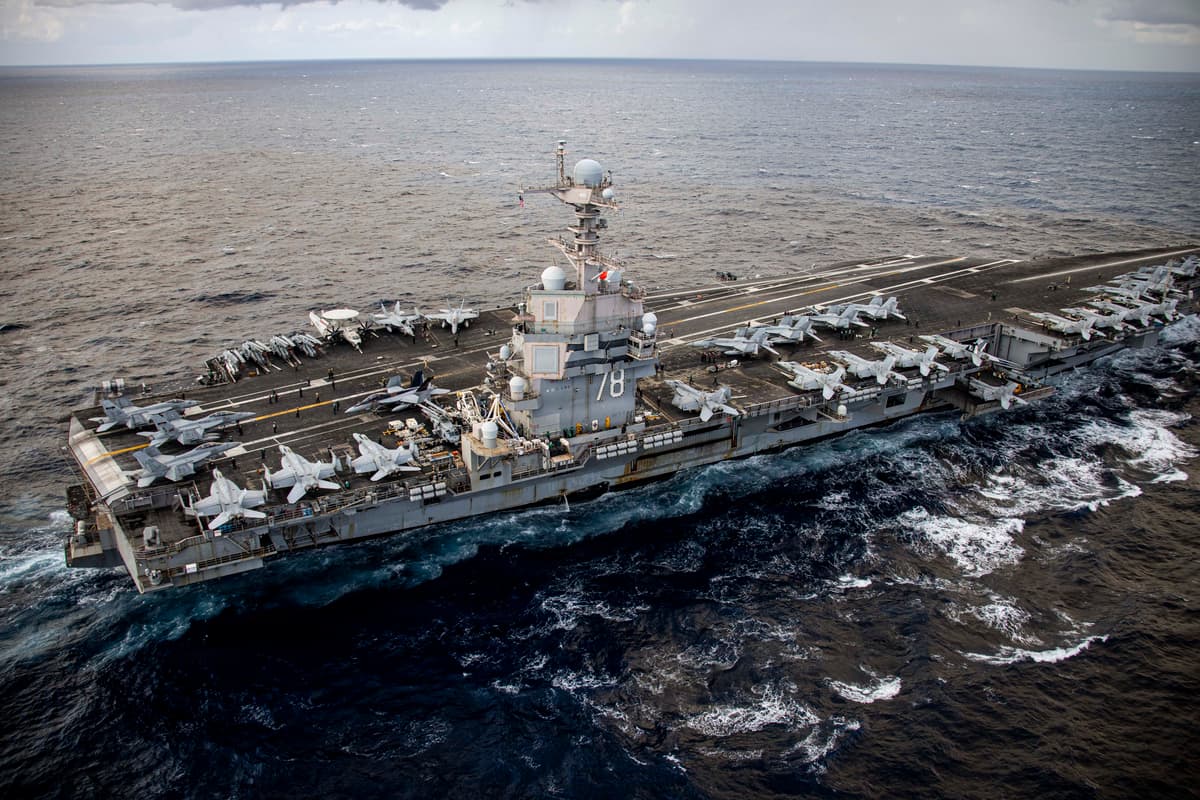
Three’s Company: Trio of US Carriers Operating in Middle East for First Time in Decades
Why It Matters
The unprecedented carrier concentration signals a robust U.S. deterrence posture, potentially reshaping regional security calculations and constraining Iran's maritime strategy.
Key Takeaways
- •Three carriers operate together in Middle East for first time since 2003.
- •Over 200 aircraft and 15,000 personnel deployed across strike groups.
- •Blockade since April 13 has redirected 34 Iranian ships.
- •Deployment underscores U.S. commitment amid escalating Iran tensions.
Pulse Analysis
The simultaneous deployment of the USS Abraham Lincoln, USS Gerald R. Ford and USS George H.W. Bush marks a historic return of heavyweight carrier power to the Middle East. Since the last multi‑carrier presence in 2003, the U.S. Navy has largely relied on dispersed assets, but the current concentration of three nuclear‑powered platforms, each supporting a full complement of strike fighters, electronic‑warfare aircraft and logistics vessels, dramatically expands operational flexibility. Analysts note that this posture enables sustained air operations without host‑nation basing, a critical advantage given the volatile environment around the Strait of Hormuz.
Strategically, the carriers arrive as Washington escalates a maritime blockade against Iran, a move that has already forced the redirection of 34 Iranian ships. By projecting power directly over key shipping lanes, the carrier strike groups serve both as a deterrent and as a rapid response platform should Iranian forces threaten commercial traffic or regional allies. The presence also sends a clear signal to other regional actors—Saudi Arabia, Israel and the United Arab Emirates—about the United States’ willingness to back diplomatic pressure with kinetic capability, potentially influencing negotiations over nuclear enrichment and proxy conflicts.
The broader geopolitical ripple effects extend to global energy markets and defense procurement. A stable flow through the Strait of Hormuz underpins roughly 20% of worldwide oil consumption; any disruption could trigger price volatility, prompting investors to reassess risk premiums. Simultaneously, the deployment showcases the operational readiness of the Ford‑class carriers, reinforcing the defense industrial base’s narrative around next‑generation naval platforms. As the situation evolves, businesses and policymakers will watch for signs of de‑escalation or further escalation, both of which could reshape trade routes, insurance costs, and regional security architectures.
Three’s company: Trio of US carriers operating in Middle East for first time in decades
Comments
Want to join the conversation?
Loading comments...