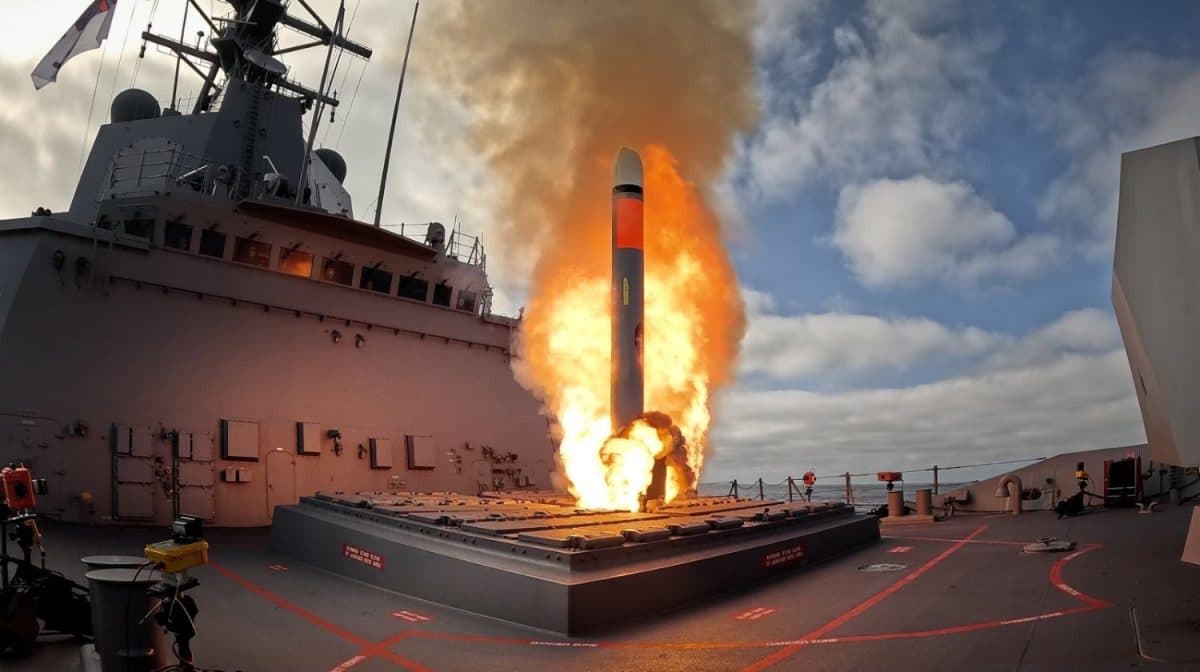
Tomahawk BGM-109 or UGM-109 — Which U.S. Missile Could Be Behind Deadly Strikes on Iran’s Girls School?
•March 9, 2026
0
Why It Matters
The strike raises the specter of a major civilian casualty in a high‑intensity U.S.–Israel conflict, threatening diplomatic fallout and potential war‑crime accountability. It also highlights the risks of precision‑strike weapons in densely populated areas.
Key Takeaways
- •Tomahawk missile likely hit IRGC base near school
- •165 schoolchildren killed, global outrage follows
- •U.S. denies involvement, Trump blames Iran
- •Bellingcat video and satellite data support missile identification
- •Incident could trigger war‑crime investigations and diplomatic strain
Pulse Analysis
The February 28 strike marks one of the deadliest civilian incidents of the 2026 U.S.–Israel campaign against Iran. Open‑source investigators, including Bellingcat, released footage showing a cruise missile with the distinctive silhouette of a Tomahawk descending toward an IRGC facility, followed by a plume of smoke over the adjacent girls’ school. Satellite imagery from Planet Labs corroborates the damage footprint, pinpointing two structures within the impact zone—a clinic and a likely bunker—while the school suffered extensive collateral damage. This convergence of visual, geospatial, and expert analysis strengthens the case that a U.S.‑origin Tomahawk was involved, despite official denials.
Tomahawk cruise missiles have become the backbone of U.S. long‑range precision strikes, deployed from ships and submarines to neutralize high‑value targets with minimal exposure. Their modular warheads, GPS‑inertial guidance, and mid‑course datalink enable dynamic retargeting, a capability that can both enhance mission flexibility and increase the risk of misidentification in complex battlefields. The Minab incident underscores how the weapon’s lethality, combined with densely populated surroundings, can produce catastrophic civilian harm, raising questions about rules of engagement, target verification protocols, and the adequacy of existing safeguards against unintended casualties.
Internationally, the alleged use of a Tomahawk against a civilian school threatens to erode the credibility of the United States and its allies in upholding humanitarian norms. Calls for independent investigations are mounting, and any findings of war‑crime violations could lead to sanctions, legal proceedings, or a recalibration of coalition strategies in the Middle East. Moreover, the episode may prompt policymakers to reassess the deployment of cruise missiles in urban or semi‑urban theaters, balancing operational effectiveness against the imperative to protect non‑combatants and maintain global legitimacy.
Tomahawk BGM-109 or UGM-109 — Which U.S. Missile Could Be Behind Deadly Strikes on Iran’s Girls School?
0
Comments
Want to join the conversation?
Loading comments...