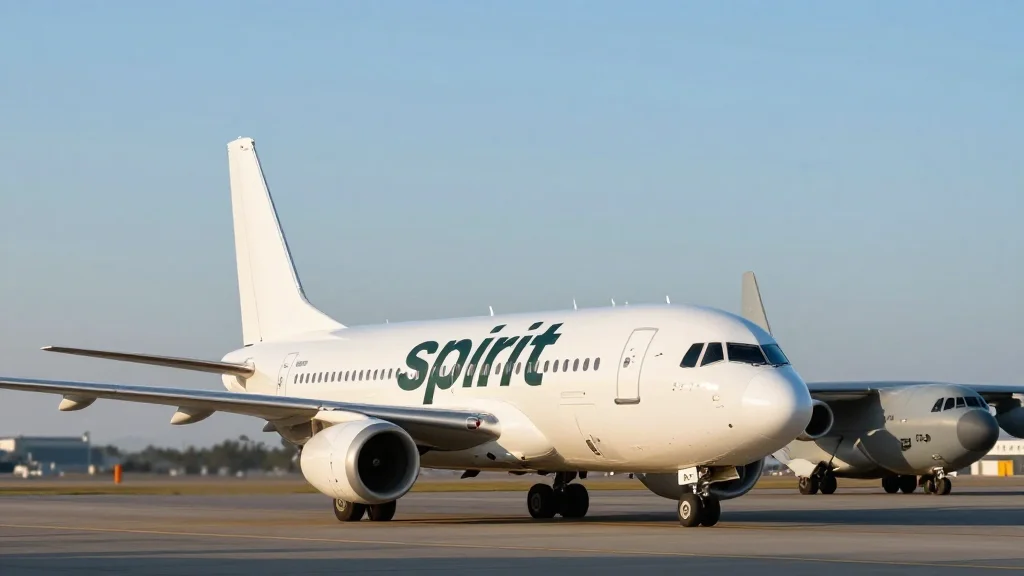
Trump Administration Mulls Purchase of Spirit Airlines for Military Transport

Companies Mentioned
Why It Matters
The potential purchase of Spirit Airlines underscores a growing willingness within the Trump administration to blur the lines between civilian and military assets in order to address capability gaps. By tapping a commercial fleet, the Department of Defense could achieve faster, more flexible airlift without waiting for new aircraft programs to mature, a critical advantage in an era of near‑peer competition. However, the move also raises constitutional and statutory questions about the scope of the Defense Production Act, the appropriate use of taxpayer funds, and the impact on the commercial aviation market. How the administration navigates these issues will shape future public‑private partnerships for national security. Moreover, the proposal signals a strategic shift toward leveraging existing commercial infrastructure to meet defense logistics demands, a model that could be replicated for other services such as cyber‑security and satellite communications. The decision will therefore influence not only immediate airlift capacity but also the broader architecture of U.S. defense procurement and industrial policy.
Key Takeaways
- •White House confirms it is exploring a bailout or purchase of Spirit Airlines for military transport
- •Defense officials cite a need for additional airlift capacity amid global commitments
- •Legal experts warn the Defense Production Act may not cover commercial airline assets
- •Congressional approval and potential DPA legislation will be required
- •Deal could set a precedent for future public‑private logistics collaborations
Pulse Analysis
The Spirit Airlines proposal reflects a pragmatic, if controversial, approach to a chronic shortfall in U.S. strategic airlift. Historically, the Department of Defense has relied on a handful of dedicated cargo aircraft—C‑5s, C‑17s, and C‑130s—to move troops and materiel. Those platforms are aging, and new procurement cycles are plagued by budget overruns and schedule delays. By turning to the commercial sector, the Pentagon hopes to shortcut the acquisition pipeline, leveraging the high utilization rates and modern avionics of Spirit’s narrow‑body fleet.
Yet the strategy is not without risk. The Defense Production Act, while a powerful tool, has never been used to commandeer a passenger airline for military missions. Any attempt to do so would likely trigger legal challenges from the airline industry and consumer advocates, potentially delaying the very capability the administration seeks to secure. Moreover, the financial exposure to taxpayers could be significant if Spirit’s balance sheet proves weaker than anticipated. A lease‑back model could mitigate some of that risk, but it would also require a robust oversight framework to ensure the aircraft are mission‑ready and that civilian service is not unduly disrupted.
From a market perspective, the move could catalyze a wave of similar deals, prompting carriers to design aircraft with dual‑use capabilities in mind. This could drive innovation in modular interior configurations and rapid conversion kits, benefiting both defense and commercial operators. However, it may also create a competitive disadvantage for airlines that choose to remain purely civilian, potentially reshaping the low‑cost carrier landscape. In sum, the Spirit deal is a litmus test for how far the administration is willing to push the envelope on civil‑military integration, and its outcome will reverberate across defense procurement, legal doctrine, and the airline industry for years to come.
Trump Administration Mulls Purchase of Spirit Airlines for Military Transport
Comments
Want to join the conversation?
Loading comments...