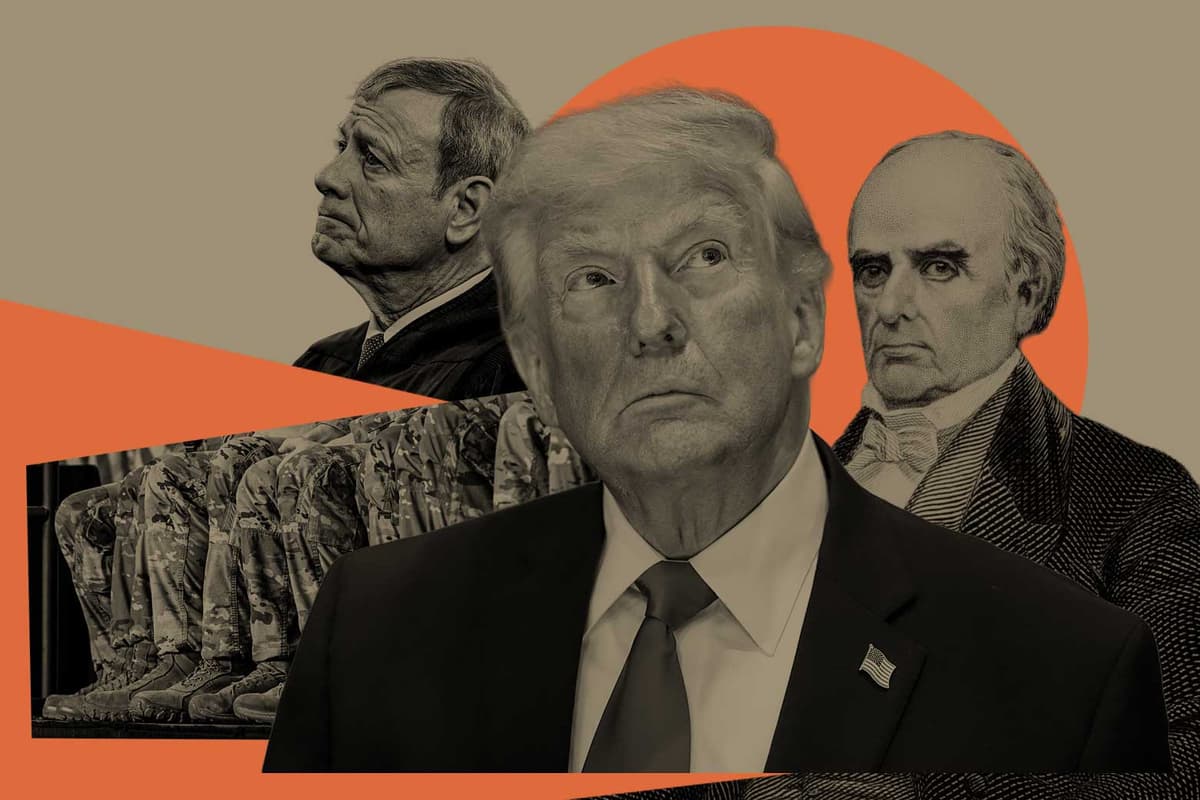
Trump Just Automated Draft Entry. It’s Time for the Supreme Court to Step In.
Why It Matters
Automatic registration lowers the barrier to a draft, potentially expanding presidential war‑making authority. A Supreme Court review could reshape the balance between executive power and constitutional limits on conscription.
Key Takeaways
- •Automatic draft registration proposed for men 18‑26 under new rule
- •Roberts Court now weighs history‑and‑tradition over stare decisis
- •Founders feared standing armies, limiting federal conscription power
- •Selective Draft Law Cases upheld conscription despite original‑era opposition
- •Potential legal challenge could force Supreme Court to revisit draft precedent
Pulse Analysis
The push to automate draft registration reflects a broader shift in how the federal government prepares for large‑scale conflicts. By moving from a voluntary, paper‑based system to automatic enrollment, the administration reduces administrative friction and creates a ready pool of potential draftees. This procedural change, however, is more than bureaucratic efficiency; it signals a willingness to expand the executive’s war‑making toolkit at a time when President Trump is openly threatening actions ranging from a Strait of Hormuz blockade to incursions in the Western Hemisphere. The legal foundation for such a move rests on the 1917 Selective Draft Law Cases, which upheld conscription despite the founders’ wariness of standing armies.
The Supreme Court’s recent embrace of a “history and tradition” analytical framework adds a fresh constitutional dimension to the debate. In overturning Roe v. Wade, the Roberts Court demonstrated a willingness to discard precedent when it conflicts with an originalist reading of the Constitution. Applying that lens to conscription raises a paradox: the early Republic lacked a national draft, and the framers explicitly limited federal authority over militia service. If the Court prioritizes historical practice, the absence of a draft in the founding era could render the modern conscription regime constitutionally suspect, despite decades of judicial deference.
For policymakers and businesses, the stakes are tangible. An active draft would reshape labor markets, increase defense‑related spending, and potentially trigger public resistance reminiscent of the 1917 and 1970s protests. Companies with significant government contracts may face heightened scrutiny, while sectors reliant on a stable workforce could see recruitment challenges. Moreover, a Supreme Court ruling that curtails the draft would reinforce limits on executive power, preserving a check on unilateral military escalation. Stakeholders should monitor both the OIRA rule’s progress and any emerging litigation, as the outcome will reverberate across national security, constitutional law, and the broader economy.
Trump Just Automated Draft Entry. It’s Time for the Supreme Court to Step In.
Comments
Want to join the conversation?
Loading comments...