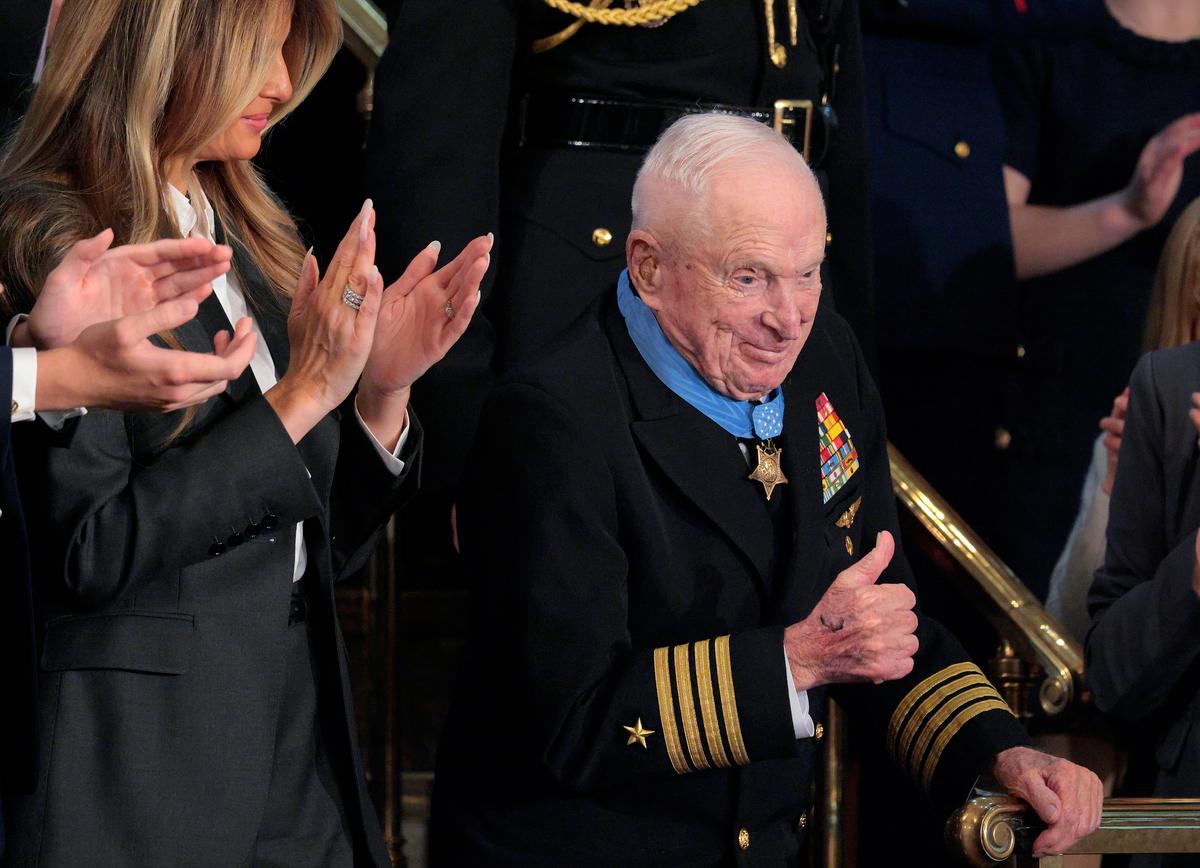
Trump Presents Medal of Honor to 100-Year-Old Korean War Veteran During State of the Union
•February 25, 2026
0
Why It Matters
The recognition underscores how legislative changes can retroactively honor historic military heroism, while the bipartisan applause signals political capital in veteran reverence.
Key Takeaways
- •Royce Williams, 100, gets Medal of Honor at State Union
- •1952 dogfight: downed four MiGs, survived 35‑minute combat
- •Valor Has No Expiration Act removes five‑year award limit
- •Medal also awarded to helicopter pilot Eric Slover
- •Bipartisan applause highlights unity around veteran recognition
Pulse Analysis
The State of the Union moment provided a rare convergence of politics and military history, as President Trump highlighted a century‑old act of aerial bravery. Royce Williams’ 1952 engagement, long classified to protect Cold War intelligence, illustrates the hidden depth of U.S. air operations during the Korean conflict. By elevating his 1953 Silver Star to a Navy Cross in 2023 and now awarding the Medal of Honor, the administration reinforced the narrative that valor transcends time, offering a compelling story for both defense analysts and historians.
Legislatively, the Valor Has No Expiration Act represents a significant shift in how the United States honors its service members. By eliminating the five‑year statute of limitations for Medal of Honor nominations, the law creates a pathway for previously overlooked or classified deeds to receive the nation’s highest military distinction. This change not only rectifies historical oversights but also signals to current service members that extraordinary actions will be recognized, regardless of bureaucratic delays, potentially influencing morale and recruitment.
Beyond the individual accolades, the bipartisan applause during the address highlights a strategic use of veteran recognition to foster unity in a polarized political climate. The simultaneous honoring of Army Chief Warrant Officer Eric Slover, wounded in a recent Venezuelan operation, ties past heroism to contemporary conflicts, reinforcing the administration’s broader foreign‑policy narrative. For policymakers and industry observers, the episode underscores how symbolic gestures can shape public perception, drive legislative momentum, and reinforce the United States’ commitment to honoring military sacrifice across eras.
Trump presents Medal of Honor to 100-year-old Korean War veteran during State of the Union
0
Comments
Want to join the conversation?
Loading comments...