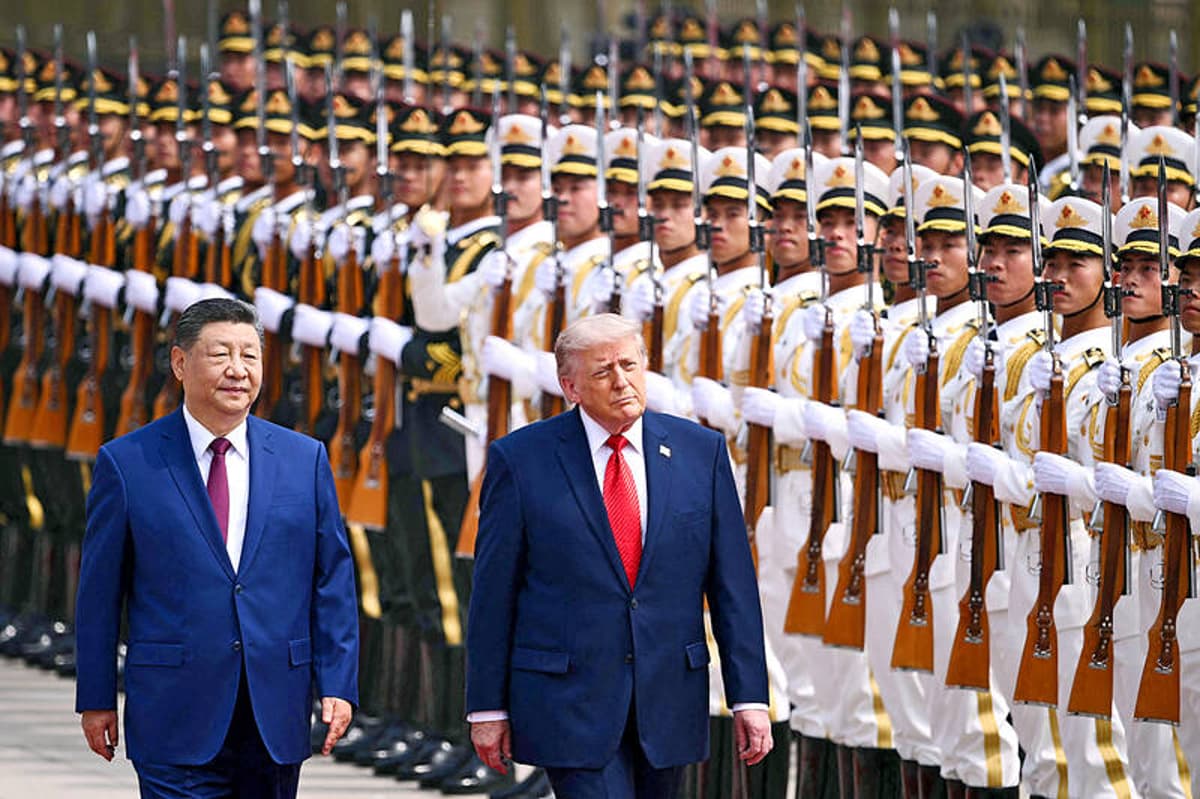
Trump Refuses to Let Xi Haggle over Arms Sales
Why It Matters
The stance signals a firm U.S. commitment to Taiwan’s defense while drawing a clear line with China, preserving regional stability and influencing global defense markets. It also underscores the diplomatic tightrope Washington walks between supporting allies and avoiding direct confrontation with Beijing.
Key Takeaways
- •Trump barred Xi from discussing Taiwan arms sales
- •U.S. policy on Taiwan remains unchanged, status‑quo priority
- •Arms deal value discussed exceeds $10 billion, decision pending
- •Secretary of State Rubio confirmed consistent U.S. stance
- •Trump emphasized avoiding conflict, not endorsing Beijing’s position
Pulse Analysis
The recent Trump‑Xi summit in Beijing revived the long‑standing flashpoint of Taiwan, a democratic island that Washington has backed with arms sales for decades. While the meeting covered trade, climate and regional security, the most consequential moment came when Trump explicitly told Xi that any weapons deals with Taipei would be negotiated solely with Taiwan, not China. This reaffirmation aligns with the United States’ long‑standing "One China" policy that tolerates a separate defense relationship, a stance that has been reiterated by multiple administrations and now echoed by Secretary of State Marco Rubio.
By refusing to haggle, Trump sent a dual message: first, that the United States will not be coerced into altering its Taiwan strategy under Beijing’s pressure; second, that Washington remains wary of being drawn into a direct conflict over the island’s status. The official’s reference to potential sales exceeding $10 billion highlights the scale of the defense partnership, which includes advanced fighter jets, missile systems and naval equipment. Such transactions not only bolster Taiwan’s deterrence but also feed the U.S. defense industrial base, reinforcing supply chains that have become increasingly strategic amid broader geopolitical tensions.
Looking ahead, the ambiguous "may do it, may not do it" response leaves room for diplomatic maneuvering. Analysts expect Washington to monitor Chinese military activity closely and may condition future sales on Beijing’s behavior in the Taiwan Strait. For investors and policymakers, the episode underscores the importance of stability in East Asia, as any shift could reverberate through global markets, defense budgets, and the broader U.S.-China rivalry.
Trump refuses to let Xi haggle over arms sales
Comments
Want to join the conversation?
Loading comments...