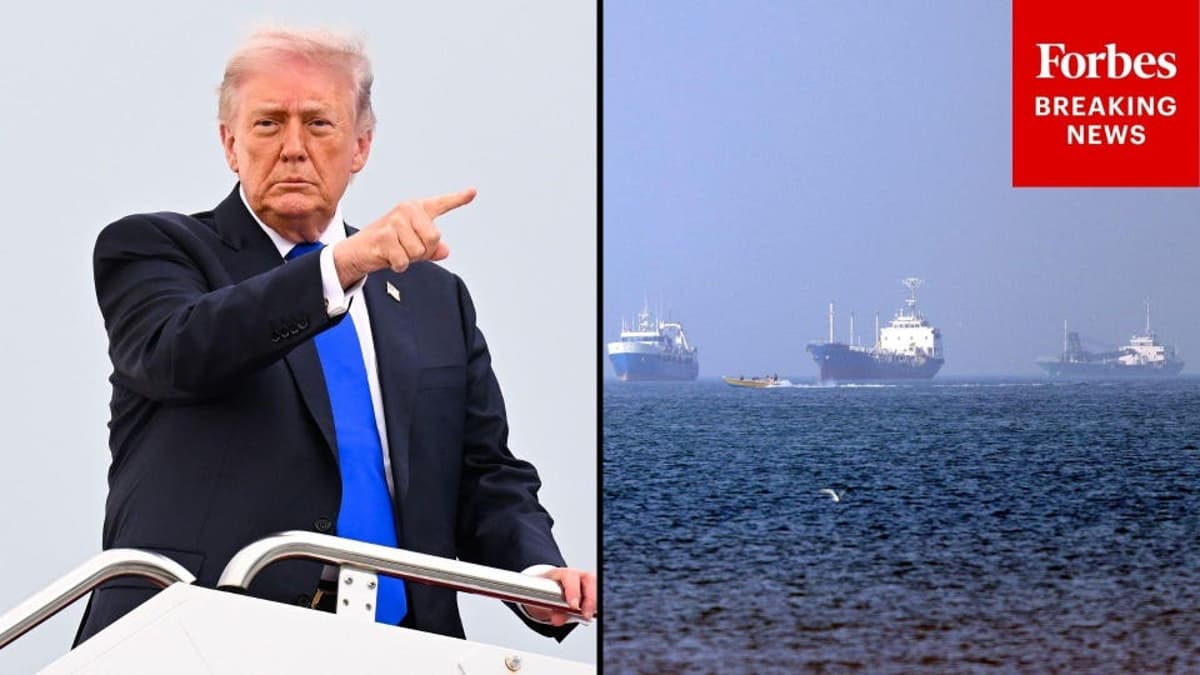
Trump Says US Will 'Guide' Ships Through Strait Of Hormuz— What Happens Next? Analyst Weighs In
Why It Matters
Ensuring navigation through the Hormuz chokepoint safeguards global oil supplies and stabilizes freight markets, while signaling a robust U.S. commitment to maritime security in a volatile region.
Key Takeaways
- •Trump announced Project Freedom to escort vessels through Hormuz
- •U.S. Navy will coordinate navigation for stranded commercial ships
- •Analyst warns escalation could disrupt global oil flow
- •Regional powers may challenge U.S. escort operations
- •Market analysts predict short‑term freight rate spikes
Pulse Analysis
The Strait of Hormuz remains one of the world’s most critical maritime arteries, funneling roughly 20% of daily global oil shipments. Any disruption can reverberate across energy markets, prompting price spikes and supply chain bottlenecks. Historically, the narrow passage has been a flashpoint for geopolitical confrontations, with Iran periodically threatening to close the waterway in response to sanctions or regional disputes. Understanding its strategic weight helps explain why any U.S. policy shift garners intense scrutiny.
Project Freedom, unveiled by President Trump, marks a decisive escalation in U.S. naval posture. By committing to physically guide commercial vessels, the United States moves beyond passive deterrence to an active escort role, leveraging its carrier strike groups and maritime patrol aircraft. The plan promises real‑time coordination with ship owners, satellite tracking, and rapid response to hostile actions. However, operational challenges loom, including the need for precise rules of engagement, the risk of miscalculations with Iranian forces, and the logistical strain of sustaining continuous escort missions.
Financial markets have already reacted, with freight indices climbing and oil traders pricing in a short‑term premium for Hormuz‑bound cargoes. Regional actors such as Iran, the United Arab Emirates, and Saudi Arabia are likely to issue diplomatic statements, while NATO allies may weigh joint patrols to share the burden. If successful, the escort could reassure investors and stabilize oil prices; if it escalates into confrontation, the repercussions could ripple through global supply chains, prompting a reassessment of energy security strategies worldwide.
Trump Says US Will 'Guide' Ships Through Strait Of Hormuz— What Happens Next? Analyst Weighs In
Comments
Want to join the conversation?
Loading comments...