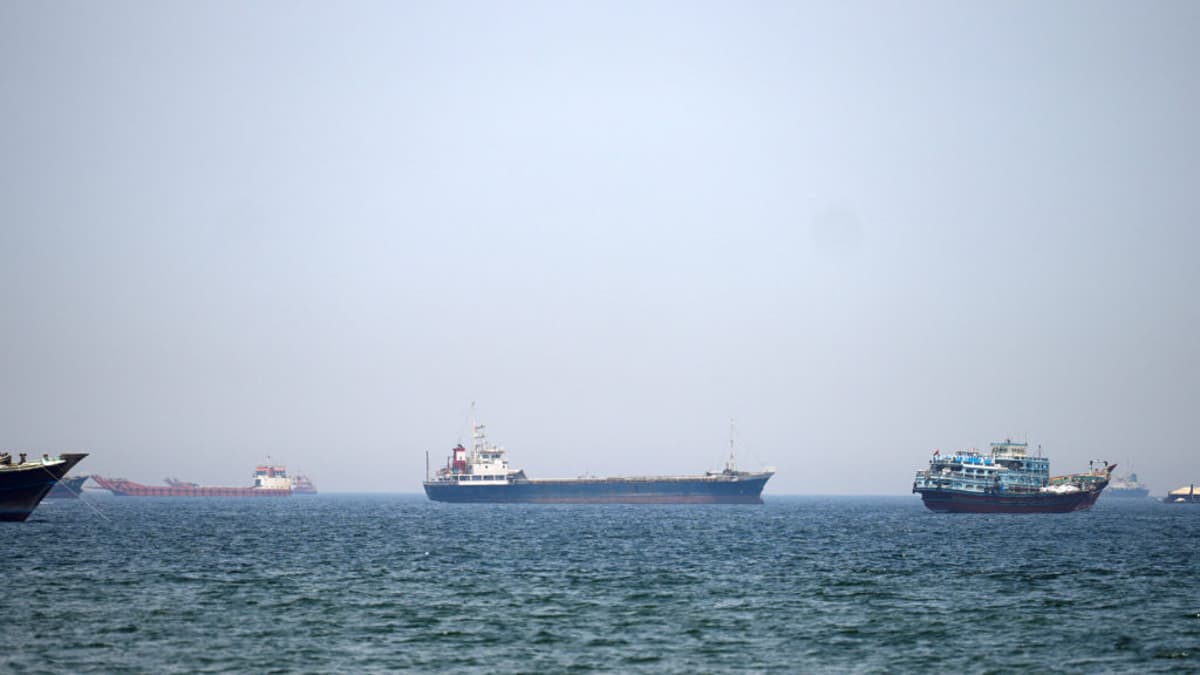
Trump Says U.S. Will Help 'Guide' Stranded Ships From Strait of Hormuz Starting Monday
Why It Matters
Reopening the Hormuz corridor could restore critical oil flow and alleviate a humanitarian crisis for thousands of crew members, while also reshaping U.S.–Iran diplomatic leverage.
Key Takeaways
- •Project Freedom targets hundreds of vessels stuck in Hormuz
- •Approximately 20,000 seafarers have been stranded since the war
- •Iran’s tolls generate under $1.3 million daily, negligible revenue
- •Recent cargo ship attack underscores persistent security threats
- •U.S. warns of forceful response if humanitarian aid is blocked
Pulse Analysis
The Strait of Hormuz, a chokepoint through which roughly 20% of the world’s oil and natural gas passes, has been effectively sealed off by Iran following the U.S.-Israel strike on Feb. 28. The closure has forced commercial tankers and cargo ships into the Persian Gulf, leaving crews—many from India and Southeast Asia—without adequate water, food, or safety. Global markets have felt the ripple effect, with oil prices spiking and supply chains scrambling for alternatives. Understanding the strategic importance of this narrow passage helps explain why any effort to restore navigation carries outsized economic weight.
Trump’s "Project Freedom" is presented as a humanitarian operation to guide stranded ships safely out of the restricted waters. While the U.S. emphasizes the protection of neutral and innocent nations, the move also serves a diplomatic purpose: it creates a bargaining chip in the fragile cease‑fire talks and signals willingness to engage Iran on broader issues. However, the initiative faces real risks; a recent cargo vessel near Sirik was attacked, and Iranian patrol boats continue to pose a detection challenge. The U.S. has warned that any obstruction of the effort will be met with force, underscoring the delicate balance between humanitarian aid and military deterrence.
If successful, Project Freedom could quickly unfreeze a segment of global energy trade, easing price pressures and reducing the humanitarian toll on thousands of sailors. Conversely, a failed or contested operation could exacerbate tensions, potentially prompting harsher sanctions or renewed naval confrontations. For shipping companies, the announcement introduces a tentative pathway to resume operations, but they must still navigate the threat of Iranian tolls—now yielding less than $1.3 million daily—and the possibility of further attacks. The outcome will likely influence the next round of U.S.-Iran negotiations, shaping both regional stability and worldwide commodity markets.
Trump says U.S. will help 'guide' stranded ships from Strait of Hormuz starting Monday
Comments
Want to join the conversation?
Loading comments...