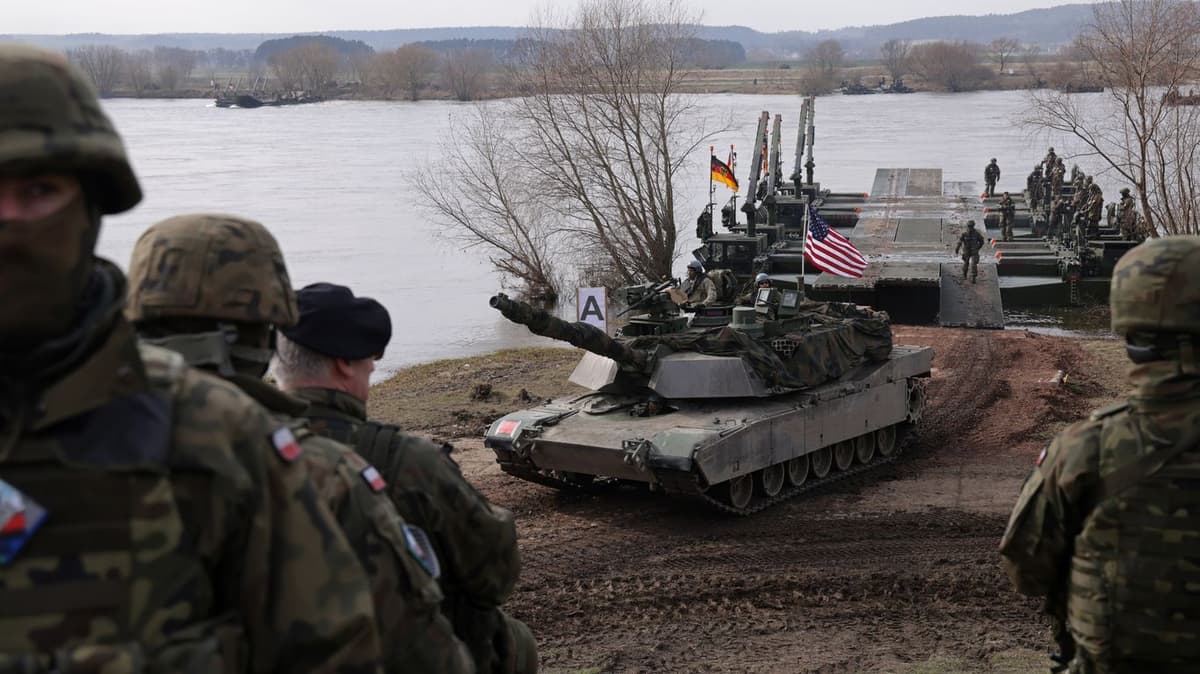
Trump Says U.S. Will Send 5,000 More Troops to Poland
Why It Matters
The reinforcement signals a sharp policy reversal, bolstering NATO’s eastern flank while complicating U.S. efforts to reduce its European footprint. It underscores how domestic political alliances can drive strategic military deployments.
Key Takeaways
- •Trump announced 5,000 extra U.S. troops to Poland
- •Announcement follows Pentagon's cancellation of 4,000‑troop deployment
- •Move counters earlier plan to pull 5,000 troops from Germany
- •Poland faces heightened Russian threats, including drone incursions
- •U.S. now has about 10,000 troops stationed in Poland
Pulse Analysis
The latest troop surge marks a notable pivot in the Trump administration’s European security strategy. After months of signaling a drawdown of forces in Germany and broader Europe, the president’s decision to send 5,000 additional soldiers to Poland reverses that trend. The announcement, made via Truth Social, ties directly to Poland’s recent election of a pro‑U.S., conservative leader, highlighting how political alignment can shape defense postures. Analysts note that the U.S. already fields roughly 10,000 troops in Poland, a figure that now represents a significant share of the alliance’s forward presence on NATO’s eastern border.
From a strategic standpoint, the reinforcement addresses escalating Russian activity near the Baltic and Polish airspace. Recent incidents, including Russian drones violating Polish skies and the detention of suspected Russian spies, have heightened Warsaw’s security concerns. By bolstering its forces, the United States signals a commitment to deter further aggression and reassure NATO allies that the transatlantic bond remains robust. However, the move also raises questions about the sustainability of U.S. force levels in Europe, especially as the Pentagon balances competing priorities in the Indo‑Pacific and domestic budget constraints.
The broader implications for U.S.–European relations are mixed. While allies in Central Europe may welcome the added troops, partners in Germany could view the shift as a departure from previously agreed‑upon force reductions, potentially straining diplomatic coordination. Moreover, the decision illustrates how domestic political considerations—such as endorsing foreign leaders—can intersect with long‑term security planning. Observers expect that future deployments will be evaluated against both the evolving Russian threat landscape and the United States’ strategic need to maintain a flexible, globally distributed force posture.
Trump says U.S. will send 5,000 more troops to Poland
Comments
Want to join the conversation?
Loading comments...