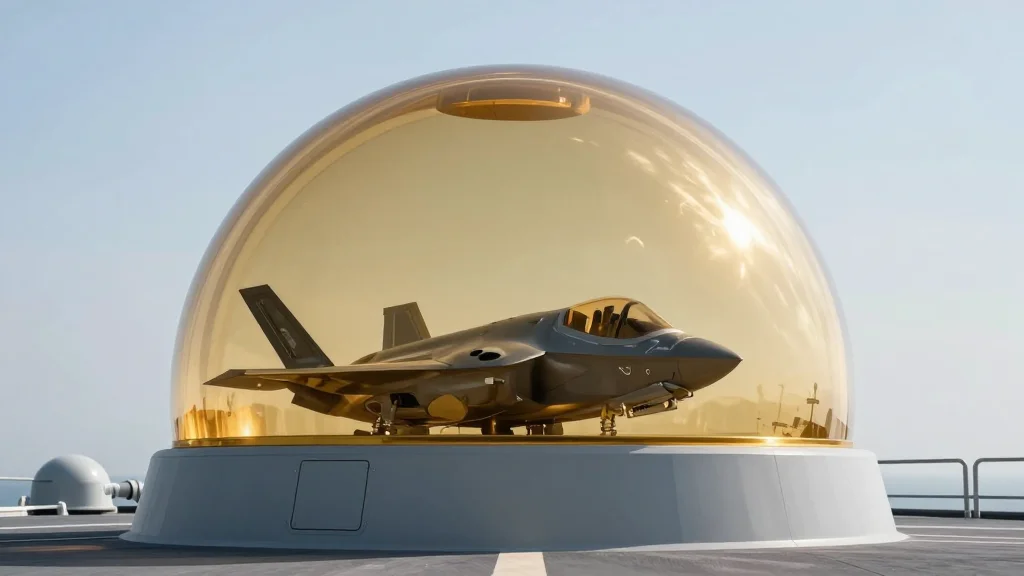
Trump’s $1.9 Trillion Defence Budget Includes Ships, Jets and Golden Dome
Companies Mentioned
Why It Matters
The budget signals a historic surge in U.S. military capability, prioritising next‑gen platforms and industrial capacity while reshaping force structure and personnel costs. Its scale will drive massive contracts for major defence firms and reshape the global security landscape.
Key Takeaways
- •Golden Fleet request $65B for 34 new war and support ships
- •F‑35 buys rise to 85 jets annually, $102B for aircraft R&D
- •Drone funding jumps to $53.6B, Defense Autonomous Warfare Group gets $54B
- •Pay raises up to 7% for junior enlisted, 44K new troops added
- •Presidential priorities create $350B supplemental request, excluding Iran conflict
Pulse Analysis
The FY2027 defence budget unveiled by the Pentagon marks an unprecedented fiscal commitment, with a $1.5 trillion request that dwarfs previous post‑World War II increases. By carving out a "presidential priorities" category, the administration is signaling a strategic pivot toward missile defence, artificial intelligence, and a resilient industrial base. This approach not only consolidates funding for high‑visibility programs like Golden Dome missile systems but also streamlines congressional negotiations by bundling disparate initiatives under a single umbrella.
Shipbuilding and aviation receive the most visible boosts. The $65 billion allocation for the "Golden Fleet" will deliver 18 new warships and 16 support vessels, the largest shipbuilding request since 1962, reinforcing naval dominance in contested regions. Simultaneously, the F‑35 program expands to 85 aircraft per year, backed by a $102 billion investment in aircraft procurement and R&D, while next‑generation platforms such as the Boeing F‑47 and Northrop Grumman B‑21 bomber secure substantial funding. These procurements are expected to generate a cascade of contracts for prime contractors and their supply chains, reshaping the defence industrial ecosystem.
Perhaps the most transformative element is the $53.6 billion earmarked for autonomous drone platforms and the dramatic increase for the Defense Autonomous Warfare Group, which jumps from $225 million to $54 billion. By focusing on mature technologies rather than basic research, the budget aims to accelerate fielded capabilities in drone warfare and counter‑drone systems. Coupled with a 7% pay raise for junior enlisted personnel and a planned expansion of 44,000 service members, the proposal underscores a comprehensive strategy to modernise forces, sustain industrial capacity, and maintain U.S. strategic advantage.
Trump’s $1.9 trillion defence budget includes ships, jets and Golden Dome
Comments
Want to join the conversation?
Loading comments...