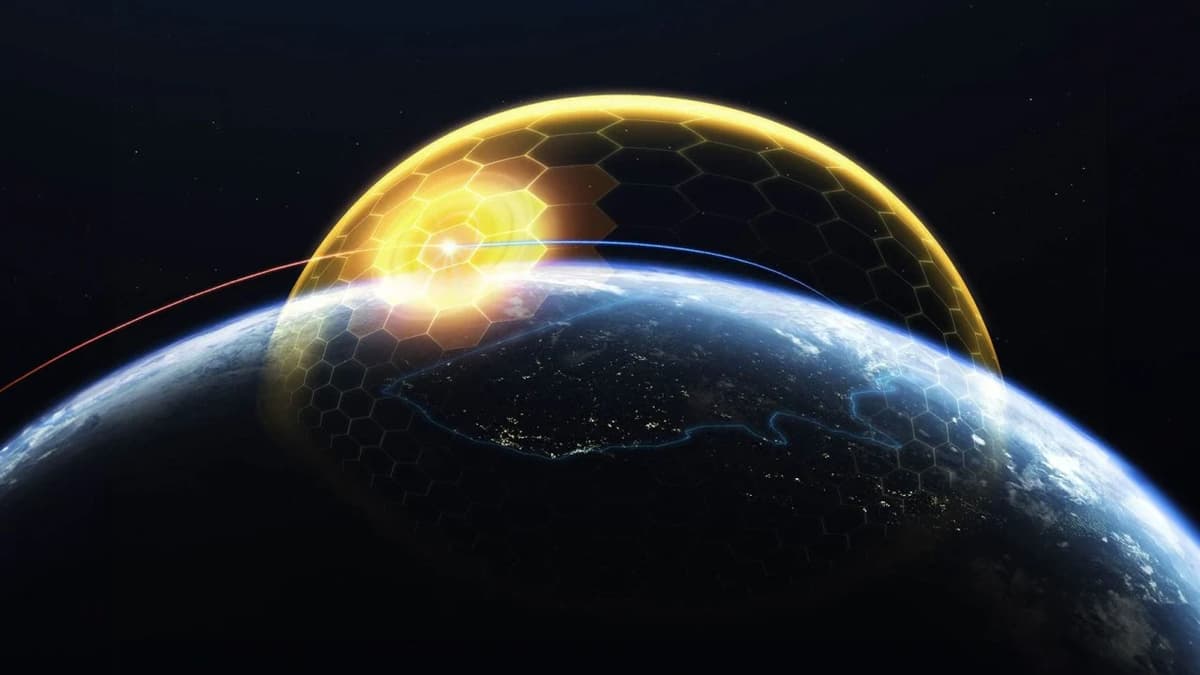
Trump’s Golden Dome Aimed at Combating China’s ‘Hypersonic Weapons, Cruise Missiles’
Companies Mentioned
Why It Matters
Golden Dome represents the United States’ first large‑scale attempt to counter hypersonic threats, a capability gap that could reshape strategic stability. Its massive cost and reliance on reconciliation also test congressional oversight of defense spending.
Key Takeaways
- •Golden Dome budget rises to $185 billion through 2035
- •US seeks $17.9 billion for Golden Dome FY2027
- •Space Force contracts $3.2 billion with SpaceX, Lockheed Martin
- •Pentagon cites no defense against hypersonic or cruise missiles
- •China identified as primary pacing competitor for missile defense
Pulse Analysis
The emergence of hypersonic glide vehicles and advanced cruise missiles has left the United States without a credible intercept capability, a vulnerability that senior defense officials highlighted in a recent Senate hearing. These weapons travel at speeds exceeding Mach 5 and can maneuver unpredictably, rendering traditional radar and missile‑defence systems ineffective. As China and Russia rapidly expand their arsenals, the strategic calculus in Washington has shifted toward developing a layered, space‑based shield that can detect, track, and neutralize threats before they breach U.S. airspace.
Trump’s Golden Dome program aims to fill that gap by integrating satellite sensors, AI‑driven trajectory analysis, and next‑generation interceptors deployed from orbit. The budget, now $185 billion through 2035, includes a $17.9 billion request for FY 2027, largely funneled through a budget‑reconciliation vehicle to avoid the 60‑vote threshold. Early contracts totalling $3.2 billion have been awarded to industry leaders such as SpaceX and Lockheed Martin, signaling a rapid move from concept to prototype. The plan also bundles other “presidential priorities” like drone dominance and AI, creating a $750 billion line item that underscores the administration’s focus on high‑tech warfare.
While the technology promises a decisive edge, it also raises geopolitical and fiscal concerns. Critics argue that a space‑based shield could accelerate a new arms race, prompting adversaries to develop counter‑measures or weaponize space themselves. Congressional skeptics warn that using reconciliation to fund the project sidesteps normal oversight, setting a precedent for future defense spending. The outcome of these debates will shape not only the U.S. missile‑defence architecture but also the broader balance of power in the Indo‑Pacific and beyond.
Trump’s Golden Dome aimed at combating China’s ‘hypersonic weapons, cruise missiles’
Comments
Want to join the conversation?
Loading comments...