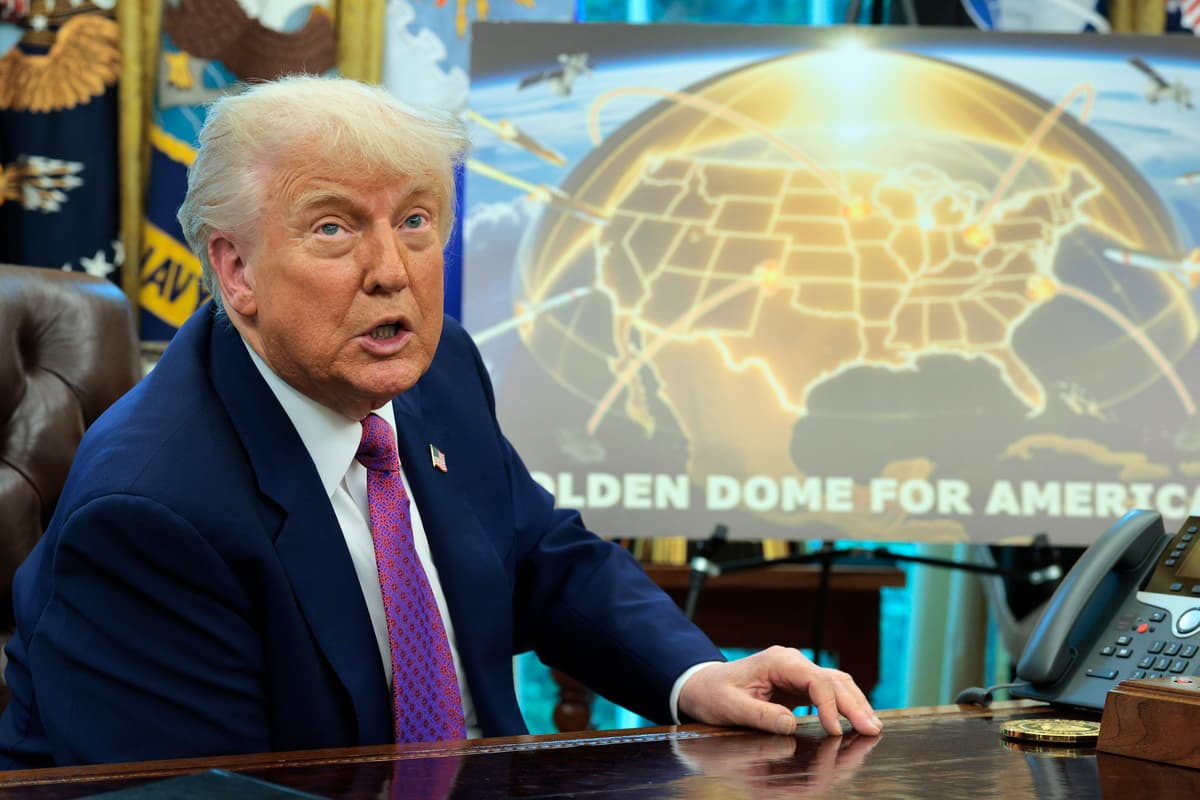
Trump’s Golden Dome Missile Shield Estimated to Cost $1.2 Trillion
Why It Matters
At $1.2 trillion, the Golden Dome could consume a sizable share of the defense budget, reshaping priorities for U.S. security spending. Its limited ability to deter major powers raises questions about cost‑effectiveness and strategic value.
Key Takeaways
- •CBO estimates Golden Dome costs $1.2 trillion over 20 years
- •Acquisition alone exceeds $1 trillion, far above $185 billion budget request
- •Four‑tier architecture includes space, upper/lower interceptors, and dispersed sites
- •System cannot counter large‑scale attacks from peer powers like China
- •Funding gaps may force reliance on other accounts and contractor subsidies
Pulse Analysis
Missile defense has long been a cornerstone of U.S. strategic planning, from early Patriot batteries to the Israeli‑inspired Iron Dome concept. The Golden Dome proposal expands that legacy into a four‑tier system—space‑based sensors, upper and lower interceptor layers, and a network of dispersed launch sites—intended to shield the continental United States, Alaska and Hawaii from ballistic, cruise and hypersonic threats. While the architecture promises comprehensive coverage against limited attacks, it stops short of countering a coordinated, peer‑level barrage, a shortfall that has shaped congressional skepticism.
The CBO’s $1.2 trillion price tag, with over $1 trillion earmarked for acquisition, starkly contrasts the administration’s $185 billion FY‑2027 allocation. When spread across a 20‑year horizon, the annual outlay rivals the entire procurement budgets of major services, potentially crowding out modernization projects such as next‑generation aircraft and cyber capabilities. Lawmakers like Sen. Jeff Merkley have framed the cost as a taxpayer giveaway to defense contractors, intensifying the political debate over fiscal responsibility versus perceived security gains.
Strategically, the Golden Dome’s limited deterrence against near‑peer adversaries raises questions about its long‑term relevance. Without integrating research and development for emerging technologies—directed energy, AI‑driven targeting, and resilient communications—the system may become obsolete as adversaries advance their own missile arsenals. Policymakers will need to weigh whether a massive, static shield justifies the expense or whether a more flexible, layered approach that leverages existing platforms and future tech offers a better return on investment.
Trump’s Golden Dome missile shield estimated to cost $1.2 trillion
Comments
Want to join the conversation?
Loading comments...