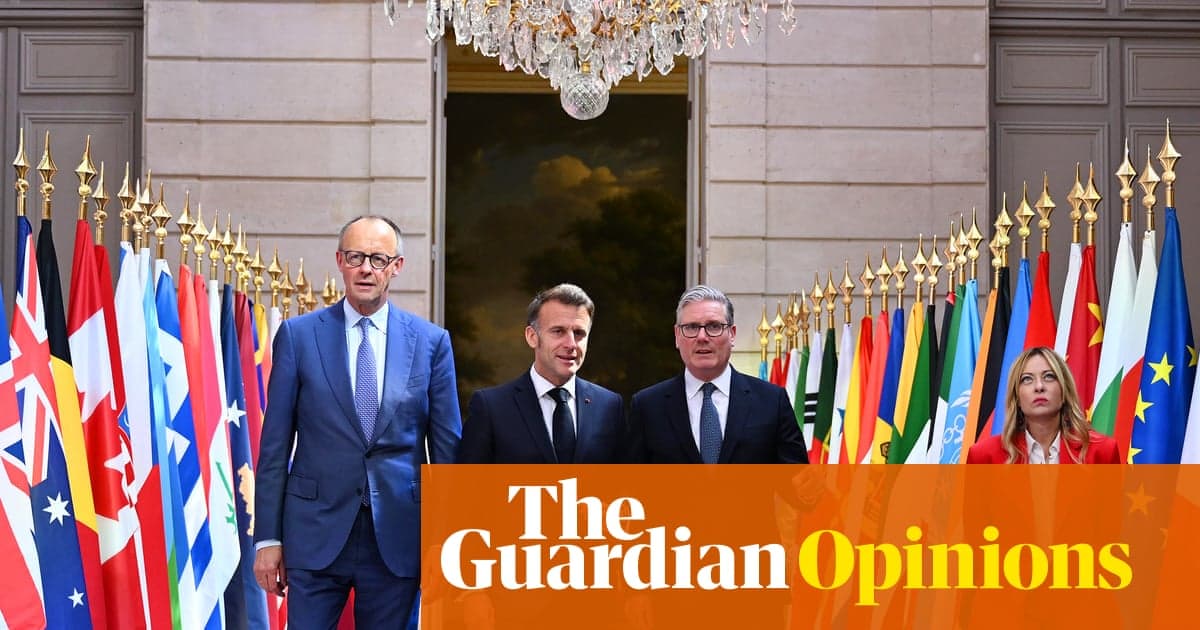
Trump’s Tantrums over Nato Are Prompting European Leaders to Think the Unthinkable | Paul Taylor
Why It Matters
The shift threatens the transatlantic security architecture and could reshape European defence spending, industrial policy, and strategic autonomy, while forcing NATO to reconsider burden‑sharing and command structures.
Key Takeaways
- •Trump’s troop pullout from Germany sparks EU security contingency planning.
- •Germany aims to become Europe’s strongest conventional army by 2039.
- •France seeks nuclear deterrent extension to non‑nuclear EU partners.
- •EU’s Article 42.7 tabletop drill tests mutual‑assistance without NATO.
- •US arms shortages accelerate European defence industry capacity challenges.
Pulse Analysis
Donald Trump’s increasingly confrontational stance toward NATO—culminating in a partial troop withdrawal from Germany and public denigration of allies—has unsettled European capitals. The president’s willingness to withhold airspace and logistical support for operations such as the planned “Operation Epic Fury” forces policymakers to confront the prospect of a sudden American disengagement. In response, senior leaders from France, Germany, the United Kingdom and other EU states have accelerated contingency planning, treating the United States less as a guarantor and more as a potential variable in continental security calculations.
Berlin has unveiled its first post‑World‑War military strategy, targeting the title of Europe’s strongest conventional force by 2039, while Paris is negotiating a limited nuclear‑deterrent sharing arrangement with seven non‑nuclear EU members. The EU’s Article 42.7 mutual‑assistance pact was put to a tabletop test, mapping out rapid deployment procedures that deliberately sidestep NATO’s Article 5 framework. Yet European planners acknowledge glaring gaps: satellite ISR, integrated air‑and‑missile defence, and strategic airlift remain heavily dependent on U.S. assets, underscoring the urgency of home‑grown capabilities.
The convergence of Trump‑driven uncertainty, a protracted war in Ukraine, and U.S. arms shortages is accelerating a push for European strategic autonomy. Defence ministers in France, Germany and the United Kingdom are lobbying for a permanent European defence union that could operate alongside NATO but retain independent command and logistics structures. Such a framework would reshape procurement, channel billions into a fragmented European defence industry, and potentially redefine the transatlantic alliance’s burden‑sharing formula. If the United States continues to wobble, Europe’s ability to fill the vacuum will become a decisive factor in continental stability.
Trump’s tantrums over Nato are prompting European leaders to think the unthinkable | Paul Taylor
Comments
Want to join the conversation?
Loading comments...