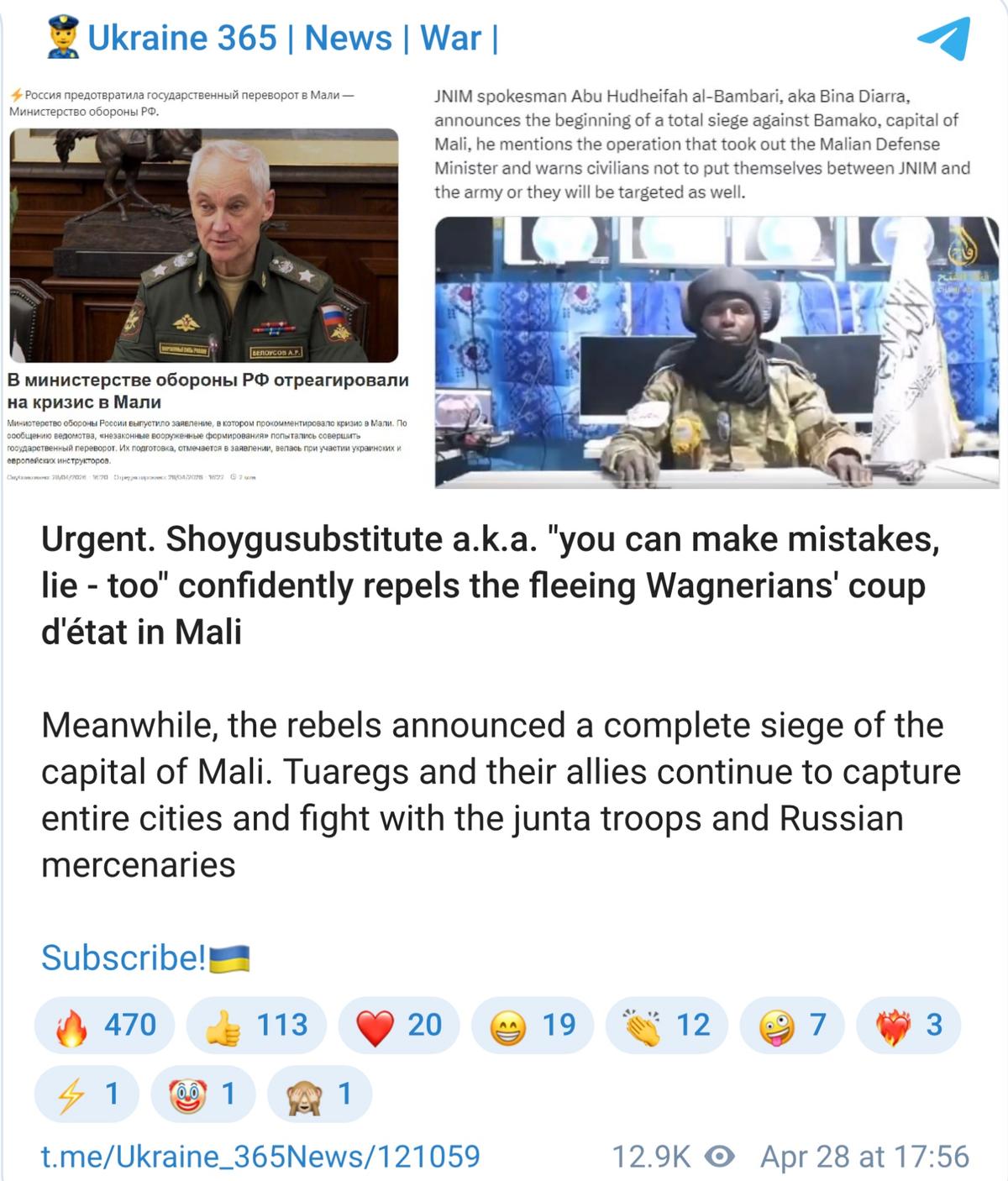
Tuareg and Allied Militias Successfully Combatting Russian Backed Regime and Russian Forces in Mali; Siege of the Capital Announced

Key Takeaways
- •Tuareg-led FLA and JNIM seized Kidal, pushing Russian forces north
- •Russia’s “African Corps” withdrew from Intahak mine and Ber city
- •Militia announced total siege of Bamako, heightening capital’s security risk
- •Mali’s junta leader evacuated; defense minister killed in explosion
- •Conflict undermines Russian PMC influence, threatens West African mining projects
Pulse Analysis
The latest clash in Mali underscores a rapid shift in the Sahel’s power balance. After a coordinated offensive beginning April 25, the Front for the Liberation of Azawad and the al‑Qaeda affiliate JNIM overran Kidal, a strategic base that had anchored Russia’s African Corps in the region. Russian officials framed the outcome as a defensive success, yet the withdrawal from the Intahak gold mine and the city of Ber reveals a tangible contraction of Moscow‑backed security assets. This development not only disrupts the operational footprint of Russian private‑military contractors but also signals a broader retreat from a contested theater where logistical costs have risen sharply.
For the Russian defense industry, the Mali setback raises questions about the viability of its overseas PMC model. Companies that have long leveraged contracts with African regimes now face heightened reputational and financial risk as local actors demonstrate the capacity to repel foreign mercenaries. The loss of a key mining hub further threatens revenue streams tied to resource extraction, prompting Russian firms to reassess exposure and potentially redirect assets toward more stable markets in the Middle East or Eastern Europe. Analysts predict a slowdown in new PMC contracts across the continent as governments weigh the political fallout of aligning with a force perceived as vulnerable.
Investors and multinational corporations monitoring West African mining projects must factor the escalating security volatility into their risk assessments. The siege of Bamako could disrupt supply chains, delay project timelines, and increase insurance premiums for operations spanning gold, uranium, and lithium deposits. Moreover, the power vacuum may invite rival state actors or local warlords, complicating diplomatic engagement. Stakeholders are advised to diversify exposure, strengthen on‑the‑ground security protocols, and stay attuned to evolving alliances that could reshape the region’s investment landscape.
Tuareg and Allied Militias Successfully Combatting Russian Backed Regime and Russian Forces in Mali; Siege of the Capital Announced
Comments
Want to join the conversation?