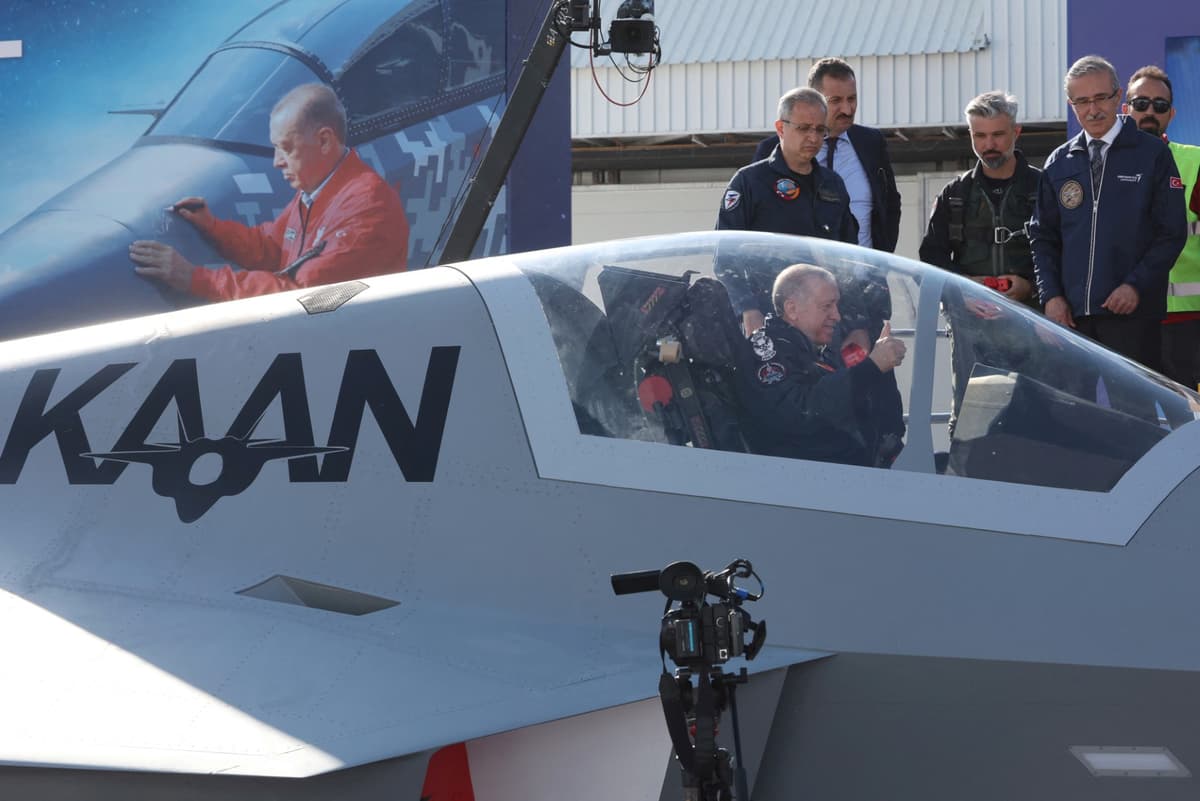
Turkey’s KAAN Joins India’s AMCA as Yet Another “Indigenous” Fighter Jet To Be Powered by U.S. Engines
Companies Mentioned
Why It Matters
The reliance on U.S. engines highlights a strategic vulnerability for Turkey’s defense autonomy and gives Washington leverage over Ankara’s advanced fighter program. It also signals that other “indigenous” jet projects worldwide remain dependent on foreign engine technology.
Key Takeaways
- •Turkey's KAAN to receive GE F110 engines costing ~$700 million
- •US Congress approval pending; Trump administration fast‑tracks engine sale
- •KAAN joins India AMCA, South Korea KF‑21, Sweden Gripen using US engines
- •Turkey developing TF35000 and Güçhan turbofan to replace foreign powerplants
Pulse Analysis
The KAAN program represents Turkey’s most ambitious effort to re‑enter the elite club of nations fielding a next‑generation stealth fighter. While the airframe and avionics are being domestically designed, the decision to use General Electric’s F110 afterburning turbofan underscores a pragmatic trade‑off: developing a high‑performance engine from scratch would cost billions and take decades. The $700 million engine package, accelerated by the Trump administration, mirrors a pattern seen in India’s AMCA, South Korea’s KF‑21 and Sweden’s Gripen, where “indigenous” labels mask deep reliance on U.S. propulsion technology.
Strategically, the dependence on American engines subjects Turkey’s fighter program to U.S. export controls and congressional oversight, a legacy of the 2019 F‑35 suspension after Ankara purchased Russia’s S‑400 system. Turkish officials publicly assert that the KAAN will eventually transition to a home‑grown TF35000 engine and the newly unveiled 42,000‑lbf Güçhan turbofan, aiming to reduce that vulnerability. However, the timeline for a reliable indigenous powerplant remains uncertain, and interim reliance on GE engines could affect delivery schedules, cost overruns, and Turkey’s bargaining power in future negotiations with Washington.
The broader implication for the global defense market is a reaffirmation that true engine sovereignty remains elusive for most emerging fighter programs. U.S. manufacturers like GE benefit from a steady stream of export orders, while partner nations gain access to proven performance at the expense of strategic autonomy. As Turkey pushes its engine development, the success—or failure—of the TF35000 will influence whether other countries accelerate their own engine R&D or continue to accept the trade‑off of foreign‑sourced propulsion. In the meantime, the KAAN’s near‑term reliance on U.S. engines keeps Washington’s leverage intact and shapes the competitive dynamics of next‑generation fighter procurement.
Turkey’s KAAN Joins India’s AMCA as Yet Another “Indigenous” Fighter Jet To Be Powered by U.S. Engines
Comments
Want to join the conversation?
Loading comments...