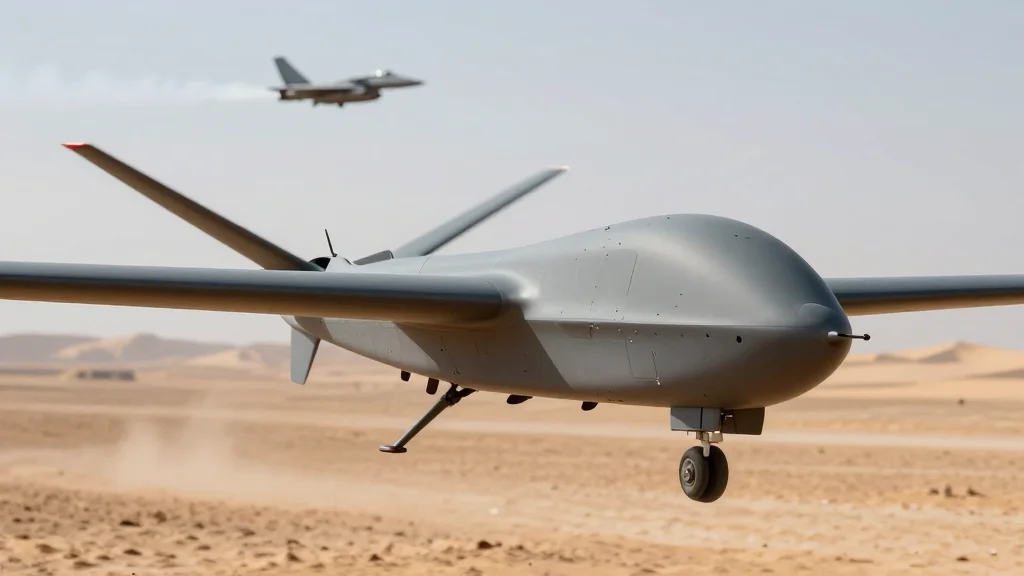
Turkish AKINCI Drone Allegedly Downs French Rafale in Sudan, Raising Fighter Vulnerability Concerns

Companies Mentioned
Why It Matters
The alleged shoot‑down challenges the long‑standing belief that modern fighters are largely immune to low‑cost unmanned threats. A confirmed loss would force air forces to rethink force‑mix decisions, potentially accelerating investments in electronic counter‑measures, directed‑energy weapons, and more resilient aircraft designs. It also underscores how proxy conflicts can serve as testing grounds for emerging technologies, with real‑world combat data influencing procurement cycles in NATO and allied nations. Beyond doctrine, the incident could tilt the balance of the global defense market. A verified kill would boost the credibility of Turkish loitering‑munition platforms, positioning them as viable alternatives to expensive missile systems. At the same time, it could erode confidence in high‑end fighter sales, prompting buyers to demand integrated survivability packages or to diversify their air combat capabilities with cheaper, more expendable platforms.
Key Takeaways
- •Turkish AKINCI loitering munition allegedly downed a French Rafale over Sudan.
- •French officials have not confirmed the loss; investigations are underway.
- •The AKINCI system carries the EREN missile, claimed to have a 200‑kg warhead and 30 km range.
- •If verified, the incident would be the first fighter shot down by a loitering munition, prompting doctrinal reassessment.
- •Potential market impact includes heightened demand for loitering munitions and increased scrutiny of Rafale export contracts.
Pulse Analysis
The Rafale‑AKINCI claim arrives at a moment when the cost‑per‑kill equation is being rewritten. Historically, air superiority has hinged on speed, altitude and sophisticated avionics—attributes that have insulated fighters from low‑tech threats. However, the proliferation of inexpensive, precision‑guided loitering munitions erodes that shield, especially in congested, low‑altitude battlefields like Sudan where radar coverage is fragmented and rules of engagement are fluid. Nations that have invested heavily in fifth‑generation platforms may now face a strategic dilemma: continue to pour resources into ever‑more capable jets, or pivot toward a hybrid force structure that blends manned aircraft with swarms of autonomous weapons.
From a market perspective, Turkey’s defense sector stands to gain a credibility boost that could translate into new contracts across Africa, the Middle East and even parts of Southeast Asia. The AKINCI’s advertised ability to strike high‑value airborne targets at stand‑off distances makes it attractive to states that lack the budget for a full fleet of modern fighters but still need credible air‑defence deterrence. Conversely, Dassault Aviation may need to bundle Rafale sales with advanced self‑protection suites—such as infrared counter‑measures, directed‑energy laser systems, or integrated loitering‑munition detection—to reassure wary customers.
Looking ahead, the incident could catalyze a regulatory response. International bodies may push for clearer rules on the deployment of autonomous weapons in civil wars, while NATO could accelerate the development of standardized counter‑UAS doctrines. In the short term, the key question remains verification: a confirmed kill would force a rapid re‑evaluation of air‑combat doctrine; a refutation would still leave the strategic conversation about loitering munitions’ growing role in modern warfare very much alive.
Turkish AKINCI Drone Allegedly Downs French Rafale in Sudan, Raising Fighter Vulnerability Concerns
Comments
Want to join the conversation?
Loading comments...