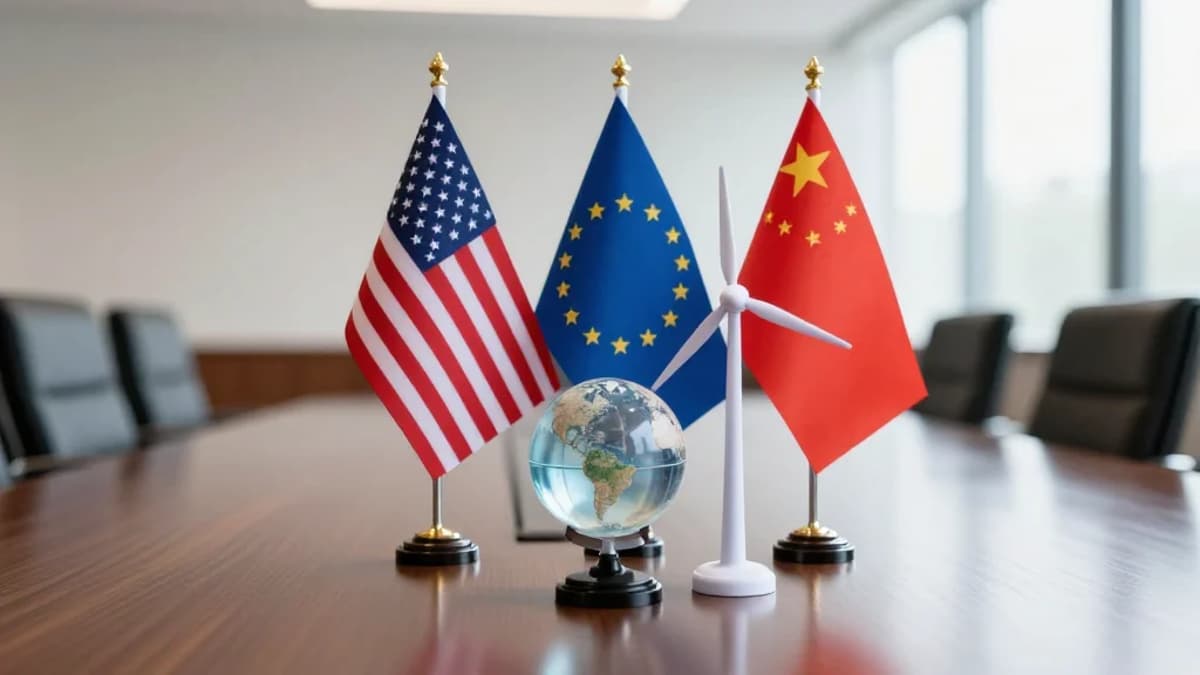
Two Americas on Display in Munich
Why It Matters
The split signals potential friction in coordinating responses to major geopolitical threats, affecting global stability and market confidence.
Key Takeaways
- •MSC highlights divergent US policy approaches.
- •European leaders stress unity against Russian aggression.
- •US internal politics create alliance uncertainty.
- •China’s influence discussed amid NATO concerns.
- •Climate security gains prominence on agenda.
Pulse Analysis
The Munich Security Conference (MSC) remains the premier gathering where NATO members, EU officials, and U.S. policymakers shape the security agenda. Since its inception in 1963, the event has symbolized a reliable transatlantic bond, offering a venue for candid dialogue on crises from the Middle East to cyber threats. This year’s gathering, however, diverged from tradition as participants confronted an increasingly polarized American political landscape, prompting questions about the alliance’s cohesion.
American representation at MSC displayed a "Two Americas" narrative: senior officials from the Biden administration advocated multilateralism and climate security, while other delegations echoed more nationalist, unilateral approaches reminiscent of previous administrations. The discord manifested in separate press briefings and conflicting statements on Russia’s war in Ukraine and China’s assertiveness in the Indo‑Pacific. European leaders, wary of mixed signals, called for consistent U.S. commitment, emphasizing that policy volatility could undermine joint deterrence strategies and economic sanctions regimes.
Looking ahead, the schism observed in Munich could reshape NATO’s strategic planning. Allies may seek to diversify security partnerships, investing in autonomous defense capabilities and deepening cooperation with non‑U.S. partners on climate resilience and technology standards. For businesses, the uncertainty translates into heightened risk assessments for supply chains and defense contracts. Maintaining a unified transatlantic front will be crucial for managing geopolitical volatility, ensuring that the post‑World II security architecture remains robust and adaptable.
Two Americas on Display in Munich


Comments
Want to join the conversation?
Loading comments...