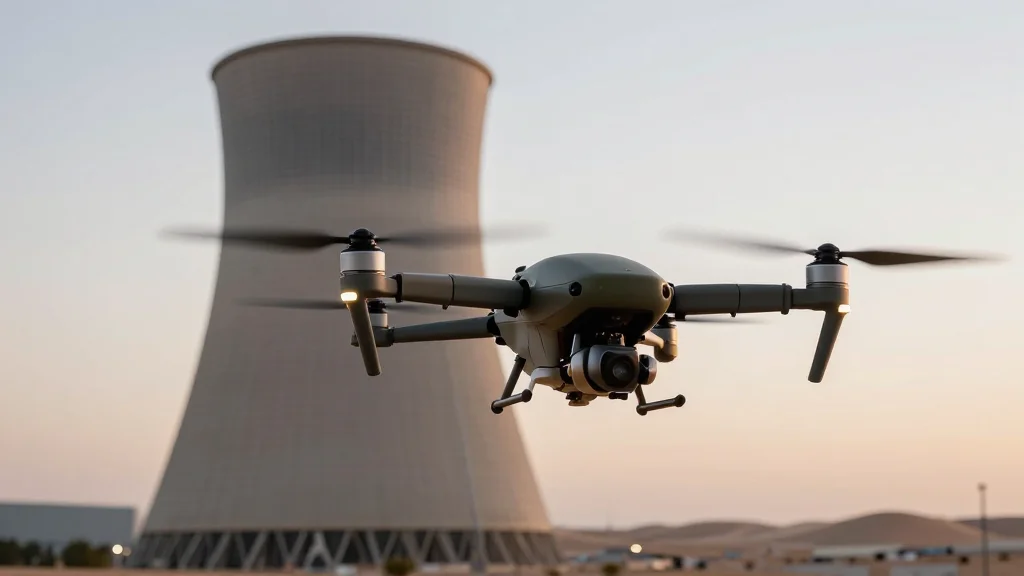
UAE Blames Iraq‑Based Iran‑Backed Militias for Barakah Nuclear Plant Drone Attack

Why It Matters
The Barakah incident highlights a new frontier in asymmetric warfare: the use of low‑cost drones to threaten nuclear infrastructure. A successful strike on a civilian reactor could have catastrophic environmental and geopolitical consequences, prompting a reassessment of defense postures around all nuclear sites worldwide. Moreover, the attribution to Iran‑backed militias underscores how proxy networks can extend conflicts beyond traditional battlefields, complicating diplomatic efforts and increasing the risk of inadvertent escalation among major powers. For the defense industry, the attack accelerates demand for advanced counter‑UAS (unmanned aerial system) technologies, integrated radar‑laser systems, and hardened critical‑infrastructure protections. Nations with nuclear assets are likely to invest heavily in layered air‑defense solutions, creating market opportunities for firms specializing in detection, interception, and cyber‑hardening of plant control systems.
Key Takeaways
- •UAE says drones that hit Barakah nuclear plant originated from Iraq, implicating Iran‑backed militias.
- •The strike damaged a peripheral generator but caused no injuries or radioactive release.
- •IAEA chief Rafael Grossi warned a direct hit could cause a "very high rate of radioactivity" to the environment.
- •UN Security Council held an emergency session to condemn the attack and discuss nuclear security safeguards.
- •U.S. President Donald Trump signaled willingness to give Iran a few days for negotiations before resuming strikes.
Pulse Analysis
The Barakah drone strike is a watershed moment for nuclear security, illustrating how the diffusion of commercial UAVs can erode the traditional protective bubble around civilian reactors. Historically, nuclear facilities have relied on layered physical security and air‑defense assets designed to counter conventional aircraft and missiles. The emergence of small, low‑observable drones forces a paradigm shift: defense planners must now integrate rapid‑response counter‑UAS systems, AI‑driven detection, and electronic warfare suites capable of neutralizing threats within seconds.
From a geopolitical perspective, the incident re‑energizes the debate over proxy warfare in the Gulf. Iran’s ability to leverage Iraqi militias as de‑facto extensions of its strategic toolkit blurs the line between state and non‑state aggression, complicating attribution and response. This ambiguity benefits Tehran, allowing plausible deniability while still exerting pressure on regional adversaries. For the United States and its allies, the challenge lies in calibrating a response that deters further attacks without triggering a broader conflict that could jeopardize global energy markets.
Looking ahead, the defense market is poised for a surge in counter‑drone investments. Companies offering integrated radar‑laser‑electronic warfare platforms are likely to see heightened demand from Gulf states, NATO members, and even non‑aligned nations with nuclear assets. Simultaneously, policymakers will need to craft legal frameworks that address the use of autonomous weapons against civilian infrastructure, balancing security imperatives with international humanitarian law. The Barakah episode may well become a case study in how emerging technologies reshape the rules of engagement around the world’s most sensitive facilities.
UAE Blames Iraq‑Based Iran‑Backed Militias for Barakah Nuclear Plant Drone Attack
Comments
Want to join the conversation?
Loading comments...