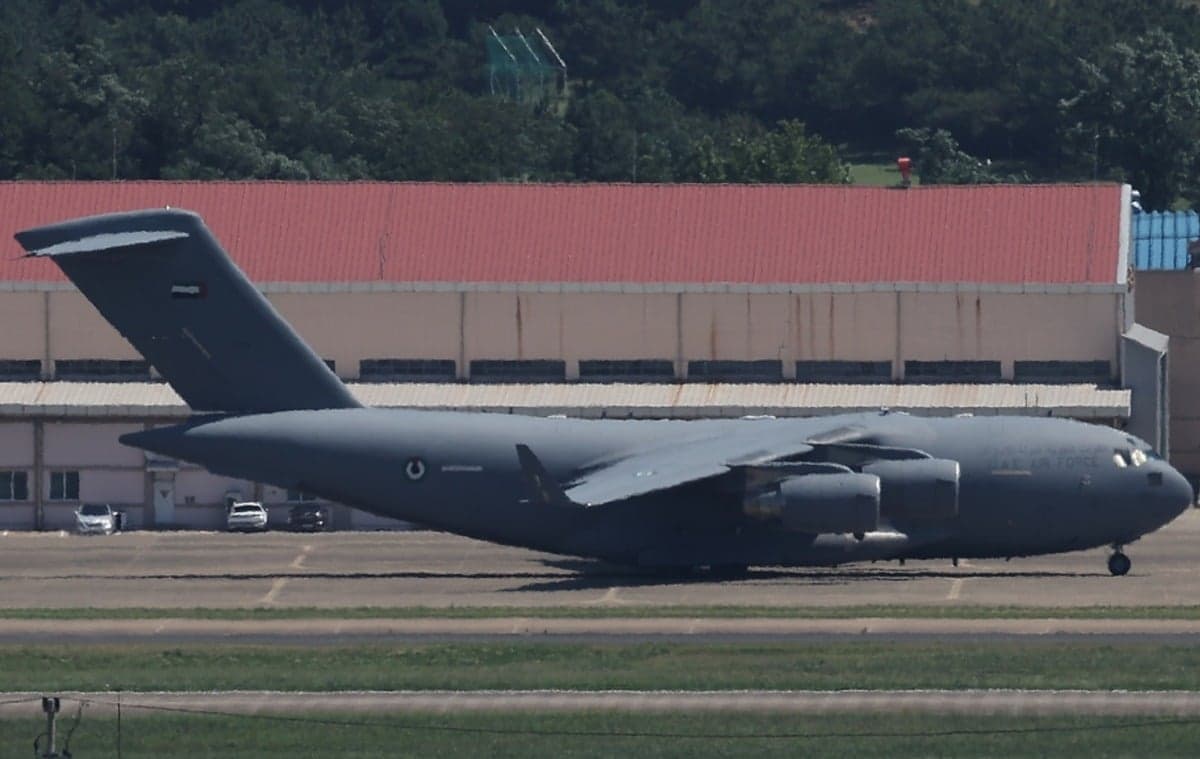
UAE Bypasses Hormuz Blockade with Emergency Korean Missile Airlift
Companies Mentioned
Why It Matters
The move shows how a chokepoint can force costly, rapid logistics while the Cheongung‑II’s proven combat performance boosts South Korea’s defense export credibility.
Key Takeaways
- •Eight UAE C‑17s airlifted a full Cheongung‑II battery and missiles.
- •Two deployed batteries achieved ~96% intercept success against Iranian attacks.
- •Airlift cuts delivery time by about one month versus sea shipment.
- •Cheongung‑II offers Patriot‑like capability at lower cost per battery.
- •Successful combat use spurs new procurement interest from Saudi Arabia, Iraq, others.
Pulse Analysis
The closure of the Strait of Hormuz has forced the United Arab Emirates to rethink traditional military logistics. Rather than waiting for ships to navigate a waterway that now carries roughly 20% of global oil shipments, Abu Dhabi chartered eight C‑17 Globemaster III aircraft to transport a complete Cheongung‑II battery from Daegu Air Force Base. Each C‑17 can haul up to 77,500 kg, but moving an entire air‑defence system requires multiple sorties, underscoring the substantial financial and operational commitment the UAE is willing to make to maintain its defensive posture.
Beyond the logistics, the Cheongung‑II’s combat debut has been a game‑changer. The two batteries already deployed in the Gulf intercepted more than 60 Iranian missiles and drones, achieving a 96% success rate—performance comparable to the U.S. Patriot but at a markedly lower unit cost. This real‑world validation has elevated the system’s reputation, positioning it as a cost‑effective alternative for nations seeking layered air‑defence without the price tag of Western platforms. The battery’s medium‑range capability, engaging targets up to 50 km away, fills a critical gap for Gulf states facing both aircraft and short‑range ballistic threats.
South Korea stands to reap significant export benefits. The $3.5 billion contract for ten batteries, the largest guided‑weapons export in its history, is now gaining traction in Saudi Arabia, Iraq, and other undisclosed markets. Successful field use often triggers a cascade of inquiries, turning a proven system into a commercial catalyst. As regional tensions persist, the Cheongung‑II’s proven reliability could reshape the Middle East’s defence procurement landscape, reinforcing South Korea’s position as a leading supplier of advanced, affordable missile‑defence technology.
UAE bypasses Hormuz blockade with emergency Korean missile airlift
Comments
Want to join the conversation?
Loading comments...