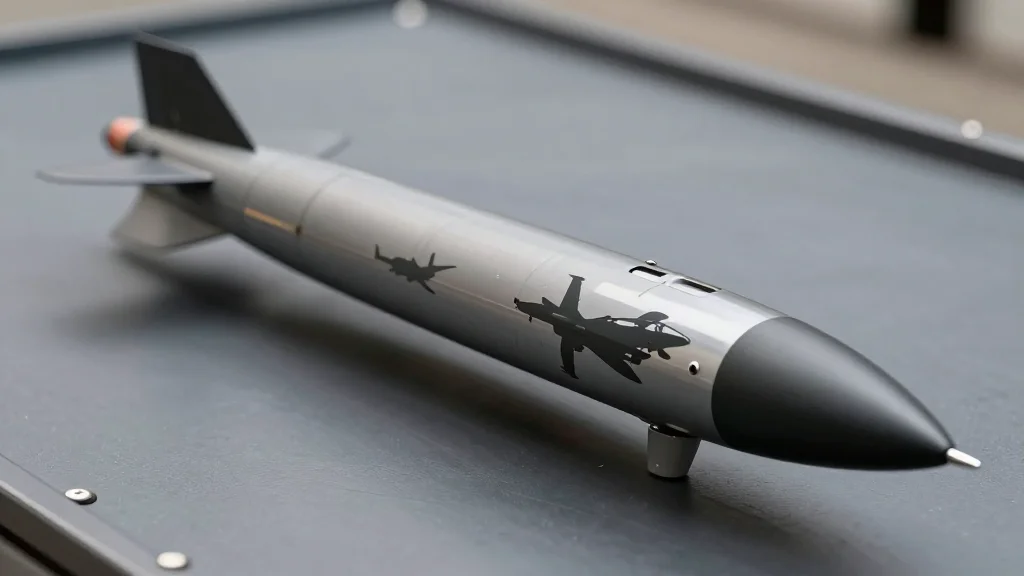
UK and France Sign MoU to Develop Meteor Missile Successor
Why It Matters
The collaboration aims to preserve NATO air superiority and streamline European defence procurement, ensuring both nations stay ahead of rapidly evolving aerial threats. It also signals deeper industrial integration that could reduce costs and accelerate innovation across allied air forces.
Key Takeaways
- •UK and France launch 12‑month missile successor study
- •Meteor currently equips RAF Typhoons and French Rafales
- •Study aims to define technologies for next‑gen air‑to‑air weapon
- •Joint Complex Weapons Portfolio Office will manage missile projects
- •Initiative strengthens NATO air superiority and European defence industry
Pulse Analysis
The Meteor missile has become a cornerstone of European air combat, delivering beyond‑visual‑range capability to the RAF’s Typhoon fleet and the French Air Force’s Rafale jets. Its active‑radar homing and adaptive guidance have set a high bar for performance, but emerging sensor suites, hypersonic threats, and contested electronic environments demand a fresh solution. By initiating a focused study, the UK and France are acknowledging that incremental upgrades will no longer suffice; a fundamentally new architecture will be required to maintain credible deterrence and operational flexibility in future battle spaces.
Embedded within the Lancaster House 2.0 framework, the UK‑France MoU reflects a strategic shift toward joint industrial development and shared risk. The creation of a Complex Weapons Portfolio Office signals a commitment to harmonise procurement, reduce duplicate R&D spend, and leverage the combined expertise of national defence firms such as MBDA, BAE Systems, and Airbus. This collaborative model not only streamlines the path from concept to production but also positions Europe to compete more effectively against U.S. and Asian missile programs, potentially attracting additional partners like Germany or Sweden to the development pipeline.
For NATO, the initiative bolsters collective air superiority by ensuring member states can field interoperable, cutting‑edge weaponry. The study’s outcomes—ranging from advanced seeker technologies to AI‑driven target discrimination—could set new standards for allied air‑to‑air engagements. Moreover, the partnership may unlock export opportunities, as allied nations seek compatible systems for their own fleets. In an era where rapid technological turnover defines strategic advantage, the UK‑France effort exemplifies how coordinated defence innovation can safeguard security while delivering economic efficiencies.
UK and France sign MoU to develop Meteor missile successor
Comments
Want to join the conversation?
Loading comments...