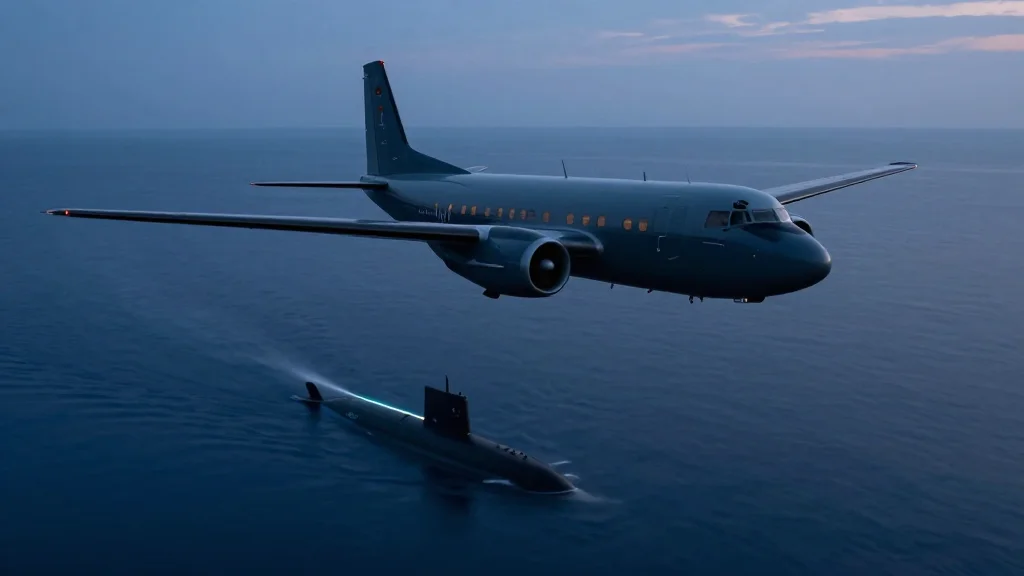
UK and Norway Track Russian Submarines Threatening Atlantic Cables

Why It Matters
The operation underscores the strategic importance of undersea infrastructure, a domain that has become a focal point for great‑power competition. As data and energy flows increasingly rely on submarine cables, any disruption could have cascading effects on economies, military communications and civilian life. By demonstrating the ability to detect and deter Russian undersea activity, the UK and Norway reinforce NATO’s collective security posture and signal that hybrid threats will be met with coordinated, high‑tech responses. Furthermore, the episode may accelerate calls within the UK for a larger naval budget and a clearer defence investment roadmap. The visibility of the operation provides political ammunition for advocates of a 3 % of GDP defence spending target, while also prompting NATO allies to assess their own undersea surveillance capabilities. In a broader sense, the incident illustrates how regional flashpoints—such as the Iran conflict—can be leveraged by adversaries to probe vulnerabilities elsewhere, reinforcing the need for a multi‑theater, integrated defence strategy.
Key Takeaways
- •UK and Norway tracked an Akula‑class attack submarine and two GUGI research subs for a month in the North Atlantic.
- •Operation involved 500 British personnel, a Type 23 frigate, RFA Tidespring, Merlin helicopters and over 50 RAF P‑8 Poseidon sorties.
- •Russian submarines were monitoring critical undersea cables that carry 99 % of global data traffic.
- •Defence Secretary John Healey warned Putin that any attempt to damage the cables will not be tolerated.
- •The incident reignited debate in the UK over defence spending, with calls to raise the budget to 3 % of GDP.
Pulse Analysis
The month‑long tracking mission reflects a shift in NATO’s threat calculus from conventional ship‑to‑ship engagements to a focus on the undersea domain. Historically, anti‑submarine warfare (ASW) has been a reactive discipline, but the deployment of persistent aerial assets, sonobuoys and allied coordination indicates a proactive posture aimed at denying adversaries the cover of the deep. This evolution is driven by the recognition that modern conflict can be waged through data disruption, and that Russia’s GUGI program is specifically designed to exploit that vulnerability.
Politically, the operation serves multiple purposes. Domestically, it provides the UK government with a tangible success story to counter criticism over recent naval shortfalls, such as the delayed deployment of HMS Dragon to the Mediterranean. Internationally, it reinforces the message that NATO members will not cede the high‑north to covert Russian activity, even as attention is diverted to crises in the Middle East. The joint nature of the mission—British, Norwegian and allied forces working in concert—demonstrates that the alliance can marshal resources quickly when a silent threat emerges.
Looking ahead, the episode may catalyze investment in undersea surveillance networks, including more P‑8 Poseidon squadrons, autonomous underwater vehicles and expanded sonar arrays. It also raises the prospect of formalizing rules of engagement for submarine incursions near civilian infrastructure, an area that remains legally ambiguous. As Russia continues to blend espionage, cyber‑operations and kinetic threats, NATO’s ability to detect, deter and, if necessary, respond to undersea incursions will become a litmus test for the alliance’s relevance in the 21st‑century security environment.
UK and Norway Track Russian Submarines Threatening Atlantic Cables
Comments
Want to join the conversation?
Loading comments...