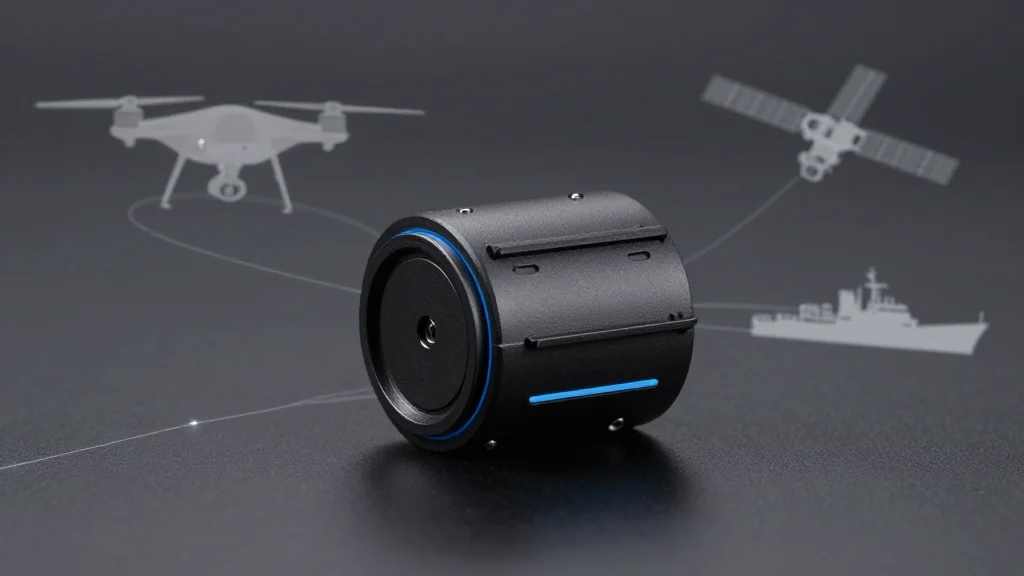
UK Dstl Develops AIM to Unify Messaging Across Military Systems
Why It Matters
AIM addresses the growing complexity of multi‑vendor battlefield networks, improving command speed and reducing mission‑critical failures. Its adoption could set a new interoperability benchmark for allied forces and defense contractors.
Key Takeaways
- •AIM provides a government‑owned messaging standard for military platforms.
- •Compact messages ensure reliable transmission over limited bandwidth in contested environments.
- •Publish‑subscribe model reduces data translation errors and bandwidth usage.
- •Live Texas demo showed single operator controlling sensors, drones, and missiles.
- •Dstl will release the AIM standard to industry by mid‑May 2026.
Pulse Analysis
Modern combat increasingly relies on a mosaic of sensors, unmanned platforms, and precision weapons sourced from multiple vendors. Integrating these assets has historically been hampered by proprietary data formats and fragile communications links, leading to delays and potential errors in high‑tempo operations. Dstl’s Assured Intent Messaging (AIM) tackles this challenge by establishing a single, government‑owned messaging standard that can be embedded across legacy and next‑generation systems, streamlining the command‑and‑control chain.
At the technical core, AIM leverages ultra‑compact message packets optimized for low‑bandwidth, high‑interference environments typical of contested airspace. Its publish‑subscribe model, borrowed from Internet of Things (IoT) architectures, ensures that only relevant data reaches each subsystem, dramatically cutting unnecessary traffic and eliminating the need for costly format translations. This design not only boosts reliability when networks are degraded but also reduces the computational load on edge devices, extending operational endurance for drones and missile platforms.
The successful Texas demonstration, where one operator orchestrated sensors, uncrewed systems, and ground‑launched missiles, underscores AIM’s practical viability. By releasing the standard to industry in mid‑May, Dstl positions the UK as a leader in interoperable defense communications, encouraging NATO allies and commercial suppliers to adopt a common protocol. Coupled with the existing SAPIENT framework for sensor integration, AIM could catalyze a broader shift toward modular, plug‑and‑play battlefield architectures, accelerating innovation cycles and enhancing coalition effectiveness.
UK Dstl develops AIM to unify messaging across military systems
Comments
Want to join the conversation?
Loading comments...