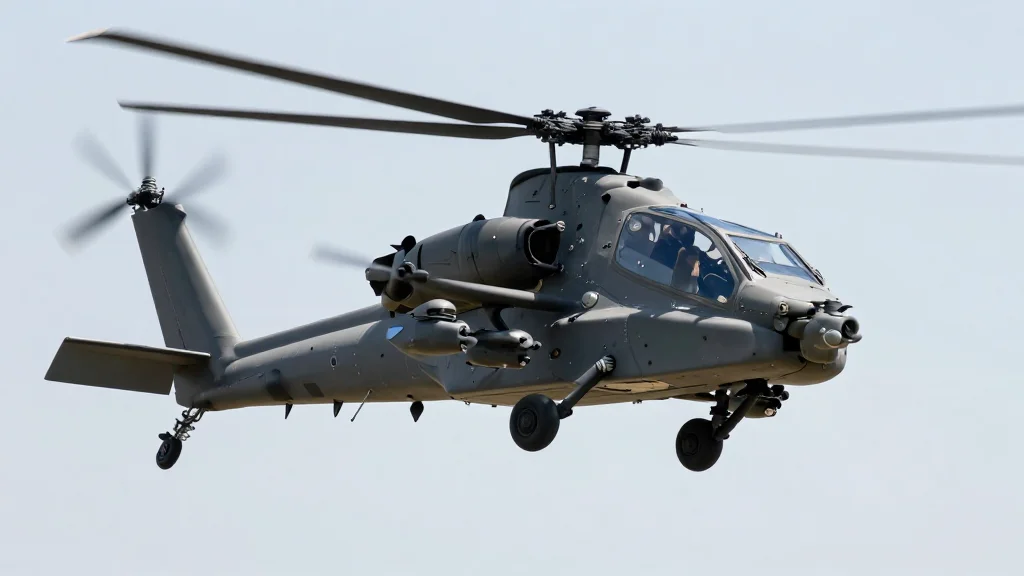
UK MoD Allocates £10 Million to Develop Autonomous Drones for Apache Helicopters

Companies Mentioned

Why It Matters
Project NYX represents the UK’s first large‑scale investment in autonomous wing‑man drones for a manned attack helicopter, a capability that could redefine how air power is projected in contested environments. By embedding AI‑driven decision loops while retaining human authority over lethal force, the programme seeks to balance operational effectiveness with ethical safeguards, a model other NATO members are watching closely. The initiative also bolsters the domestic defence industrial base, creating high‑skill jobs and fostering partnerships that could spill over into civilian aerospace sectors. If the prototypes meet performance goals, the British Army could field a force multiplier that multiplies the combat reach of each Apache crew, potentially reducing the number of manned aircraft required for the same mission set. This would have downstream effects on training pipelines, maintenance footprints, and overall force structure, accelerating the UK’s transition toward a more autonomous, network‑centric battlefield.
Key Takeaways
- •£10 million ($13.3 million) MoD investment announced on May 15, 2026 for Project NYX.
- •Four firms – Anduril Industries UK, BAE Systems, Tekever, and Thales UK – selected to develop autonomous loyal‑wingman drones.
- •Target IOC for the Apache‑compatible drone kit set for 2030.
- •Program follows a “Command Rather Than Control” model, keeping lethal weapon release under human control.
- •Prototype selection expected by autumn 2026, with design reviews over summer 2026.
Pulse Analysis
Project NYX is more than a niche technology experiment; it is a strategic hedge against the growing anti‑access capabilities of near‑peer adversaries. By 2030, the Royal Air Force and Army will likely face integrated air defence networks that can saturate traditional manned platforms. Autonomous wing‑men provide a low‑cost, expendable layer that can probe, jam, and draw fire, preserving the high‑value Apache crews for decisive strikes. This mirrors similar efforts in the United States, where the Army’s Future Vertical Lift (FVL) program is exploring loyal‑wingman concepts for the Future Attack Reconnaissance Aircraft (FARA).
The MoD’s multi‑vendor approach mitigates risk and encourages rapid iteration, but it also fragments the technology base. Success will depend on the ability of the selected firms to converge on interoperable data links, common AI decision frameworks, and shared safety standards. The involvement of Anduril – a US‑origin firm with a strong AI portfolio – may accelerate software development, yet it raises questions about supply‑chain sovereignty and export controls, especially if the kits eventually incorporate US‑origin components.
Looking ahead, the real test will be the transition from prototype to fielded system. If the 2026 design reviews validate the autonomous flight envelope and the 2030 IOC is achieved on schedule, the UK could set a template for other NATO members to adopt similar MUM‑T kits across legacy platforms. Conversely, delays or capability shortfalls could reinforce skepticism about autonomous weapon systems and prompt a re‑evaluation of the “Command Rather Than Control” doctrine. Either outcome will shape defence procurement strategies and the broader debate over AI in lethal contexts for years to come.
UK MoD Allocates £10 Million to Develop Autonomous Drones for Apache Helicopters
Comments
Want to join the conversation?
Loading comments...