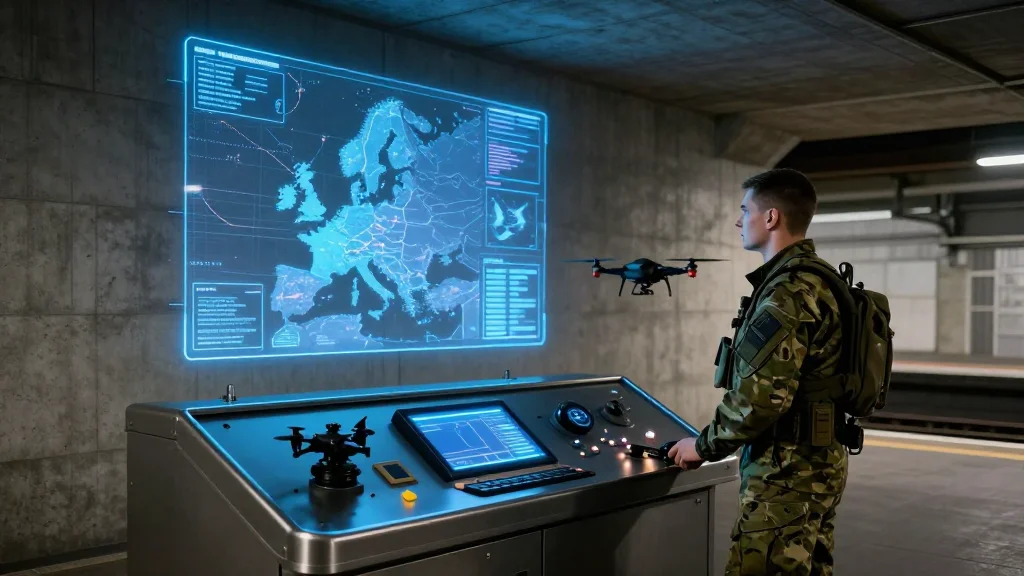
UK Wargames AI-Driven NATO Conflict with Russia
Companies Mentioned
Why It Matters
The drill showcases NATO’s push to integrate AI into large‑scale operations, signaling a shift in deterrence strategy against an increasingly sophisticated Russian threat. It also pressures member states, especially the U.K., to fund the digital infrastructure required for rapid, high‑precision warfare.
Key Takeaways
- •NATO simulates 2030 Estonia conflict using AI-driven targeting tools
- •Exercise tests rapid deployment of up to 100,000 troops on Eastern flank
- •AI system ASGARD, built with Palantir, automates weapon assignment
- •Scenario includes cyberattacks, disinformation, and electromagnetic drone warfare
- •U.K. urges more funding for digital backbone and AI capabilities
Pulse Analysis
The latest NATO wargame, staged beneath London’s Charing Cross station, underscores a strategic pivot toward AI‑enhanced warfare as the alliance confronts a resurgent Russia. By projecting a 2030 conflict in the Baltics, planners are aligning training timelines with anticipated technological maturity, ensuring that future forces can operate at the speed of data‑driven decision cycles. This forward‑looking posture reflects broader NATO and EU commitments to boost defense budgets and modernize command structures ahead of the decade’s end.
Central to the exercise was the deployment of ASGARD, an AI‑driven targeting platform co‑developed with U.S. tech firm Palantir. The system automates weapon allocation, prioritizing high‑value targets while conserving expensive munitions, and integrates electromagnetic and drone warfare modules. Such capabilities aim to compress the OODA loop—observe, orient, decide, act—allowing commanders to respond to fast‑moving threats faster than traditional human‑centric processes. The inclusion of cyber‑and information‑warfare scenarios further illustrates how AI will be leveraged across kinetic and non‑kinetic domains, mirroring the hybrid tactics observed in Ukraine.
Strategically, the drill sends a clear signal to both allies and adversaries: NATO is prepared to field a digitally networked, AI‑enabled force capable of rapid escalation if Article 5 is triggered. British Lieutenant General Mike Elviss’s call for heightened investment in the digital backbone highlights a funding gap that could constrain future readiness. As NATO members scramble to meet the 2030 readiness benchmark, the exercise serves as both a rehearsal and a policy lever, urging governments to prioritize AI research, data infrastructure, and joint training to maintain credible deterrence in an increasingly contested security environment.
UK wargames AI-driven NATO conflict with Russia
Comments
Want to join the conversation?
Loading comments...