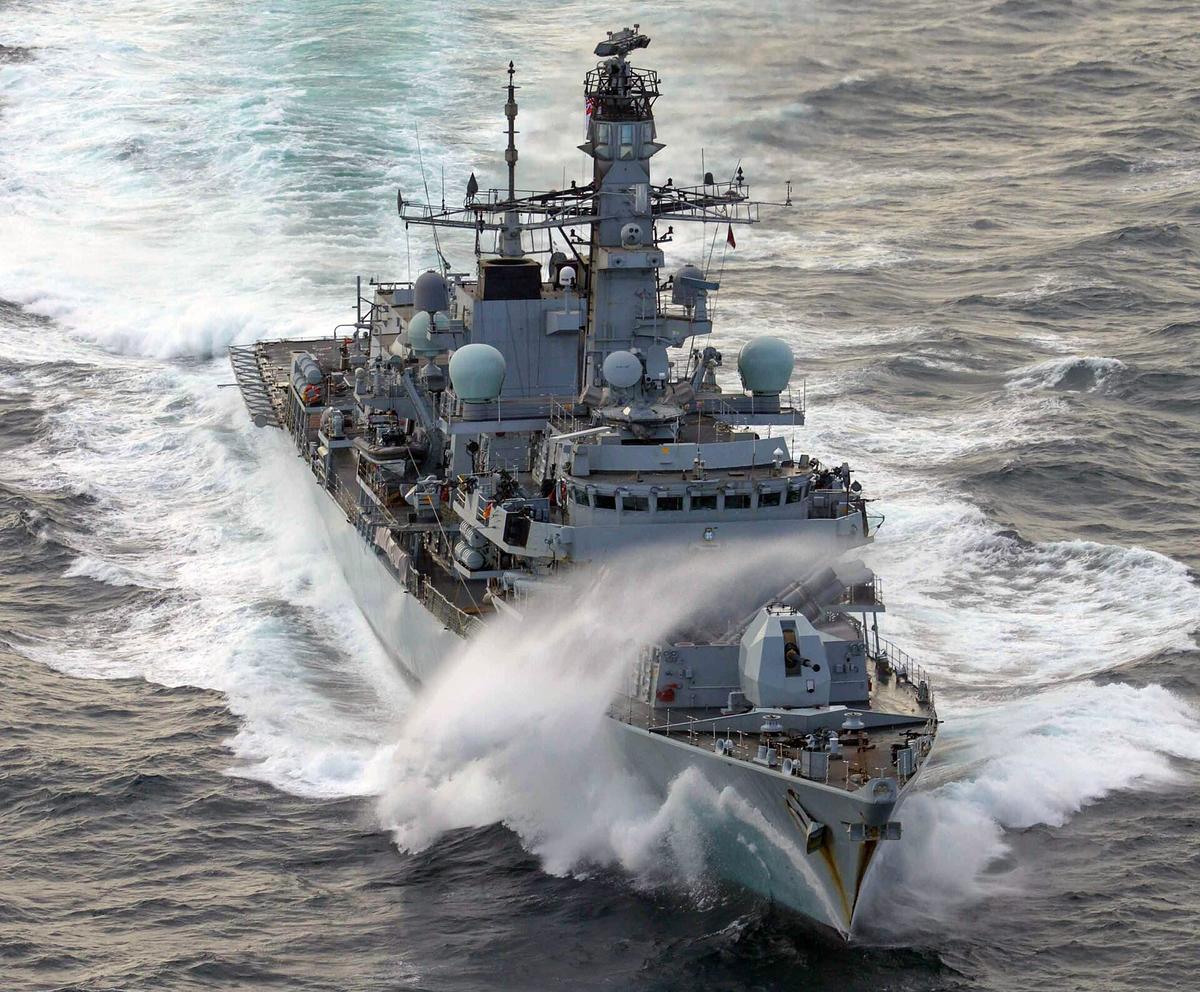
UK Warships Uncover Secret Russian Submarine Operation Near British Waters (PHOTO)
Why It Matters
The detection highlights growing Russian undersea threats to vital communications infrastructure and underscores the need for heightened NATO maritime surveillance. It also demonstrates the UK’s capability to coordinate multi‑service, multinational responses to covert adversary actions.
Key Takeaways
- •Russian Akula-class submarine tracked near UK territorial waters
- •Royal Navy deployed HMS St Albans, RFA Tidespring, Merlin helicopters
- •Operation identified GUGI units targeting undersea infrastructure
- •UK and Norway coordinated to monitor Russian undersea activity
- •Russian vessels withdrew after failing to complete covert mission
Pulse Analysis
The North Atlantic has become a contested arena as Russian naval deployments near the United Kingdom surge. Ministry of Defence data show a 30 % rise in Russian vessel encounters over the past two years, reflecting Moscow’s broader strategy to test NATO’s maritime vigilance. Undersea fibre‑optic cables, which carry more than 99 % of global data traffic, are especially vulnerable, prompting Western planners to treat any covert submarine activity as a potential threat to critical communications infrastructure. The recent detection of an Akula‑class attack submarine underscores how Russia is probing the UK’s defensive perimeter under the guise of routine patrols.
The Royal Navy responded with a layered task force that included the Type‑23 frigate HMS St Albans, the auxiliary tanker RFA Tidespring, and Merlin‑armed helicopters, while the RAF dropped sonobuoys to maintain continuous acoustic surveillance. Working in tandem with Norwegian maritime authorities, British forces mapped the submarine’s trajectory from the High North into international waters adjacent to the English Channel and North Sea. Analysts link the operation to GUGI, Russia’s Main Directorate of Deep Sea Research, which specializes in mapping and, if required, sabotaging undersea infrastructure during conflict. All identified Russian assets withdrew after failing to achieve secrecy.
The episode sends a clear signal to NATO allies that under‑sea domains are now front‑line battlefields. Persistent tracking capabilities demonstrate the UK’s commitment to safeguarding trans‑Atlantic data routes and deterring hostile interference. However, the episode also highlights the resource intensity of such monitoring—thousands of miles sailed and multi‑service coordination—suggesting that future engagements may demand even more integrated sensor networks and allied data‑sharing agreements. For defense contractors, the incident fuels demand for advanced sonar, autonomous underwater vehicles, and cyber‑resilient communication systems that can operate in contested maritime environments.
UK warships uncover secret Russian submarine operation near British waters (PHOTO)
Comments
Want to join the conversation?
Loading comments...