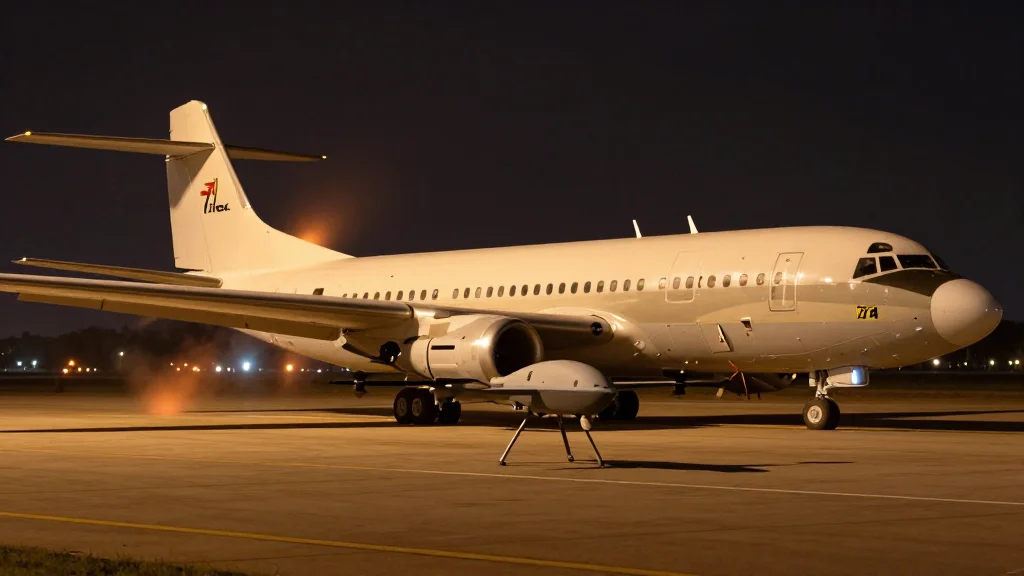
Ukraine Burns Two Russian Tu-142 Naval Patrol Planes in Taganrog
Why It Matters
Eliminating two Tu‑142s weakens Russia’s maritime surveillance and anti‑submarine reach in the Black Sea, while demonstrating Ukraine’s ability to target high‑value assets deep inside Russian territory.
Key Takeaways
- •Ukraine's FP‑1/2 drones carry up to 100 kg warheads.
- •Two Tu‑142 Bear‑F aircraft destroyed at Taganrog airfield.
- •Tu‑142s lack a production line, making each loss critical.
- •Strike proves Ukraine can conduct deep‑strike operations inside Russia.
- •Taganrog's repair facilities face repeated Ukrainian drone attacks.
Pulse Analysis
The May 29‑30 strike on Taganrog marks a notable escalation in Ukraine’s drone‑focused campaign against Russian air assets. By employing FP‑1 and FP‑2 class drones—small, low‑observable platforms that can deliver a 100 kg warhead—Ukrainian forces were able to penetrate deep into Russian airspace and hit two Tu‑142 Bear‑F aircraft while they were parked on the tarmac. The visual evidence released by the Unmanned Systems Forces shows the aircraft igniting almost instantly after impact, confirming the effectiveness of the kinetic payloads against large, slow‑moving targets.
For Russia, the loss of two Tu‑142s is more than a symbolic blow; these aircraft provide critical long‑range maritime patrol, acoustic and magnetic submarine detection, and serve as communication relays for naval operations across the Black Sea and adjacent waters. With no domestic production line, each platform represents a multi‑year investment in airframe, avionics, and specialized sensors. Their removal reduces the Russian Navy’s situational awareness, potentially hampering anti‑submarine warfare and fleet coordination at a time when the Black Sea remains a contested theater.
Strategically, the Taganrog attack illustrates Ukraine’s growing proficiency in deep‑strike drone warfare, a capability that forces Russia to reconsider the security of its rear‑area installations. Repeated strikes on the city’s aviation repair plants, including the recent destruction of an A‑60 laser aircraft, suggest a systematic effort to erode Russia’s aerospace maintenance infrastructure. As Kyiv refines drone guidance, payload, and launch tactics, Moscow may need to invest heavily in air‑defense layers, hardened shelters, and rapid repair capabilities to mitigate further attrition. The evolving drone dynamic could reshape the conflict’s operational calculus, emphasizing asymmetric tools over conventional force projections.
Ukraine burns two Russian Tu-142 naval patrol planes in Taganrog
Comments
Want to join the conversation?
Loading comments...