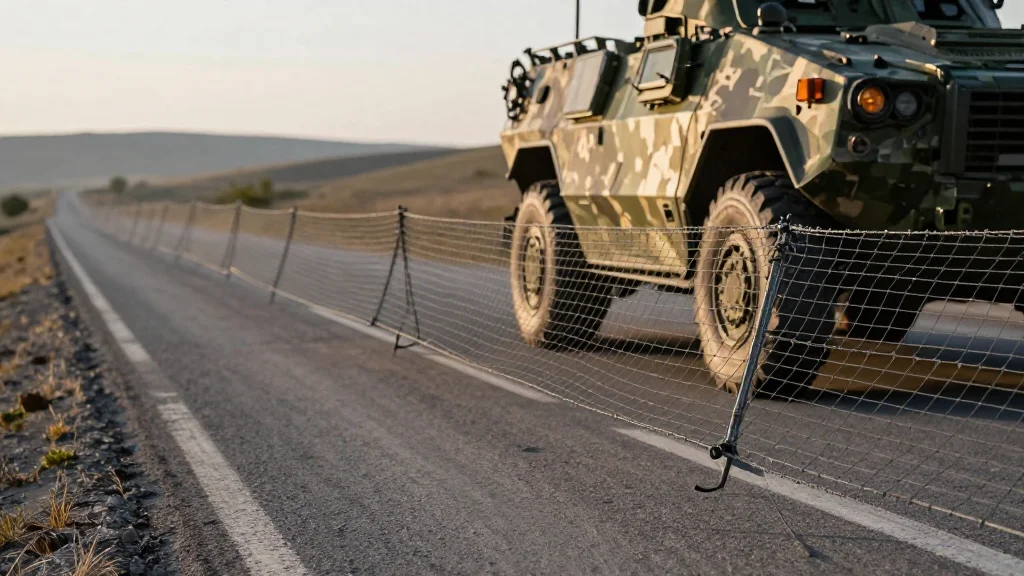
Ukraine Deploys 822 Km of Anti‑Drone Netting on Frontline Roads

Why It Matters
The deployment of 822 km of anti‑drone netting marks a decisive move by Ukraine to safeguard its logistical lifelines against a weapon that has reshaped the conflict. By turning readily available civilian mesh into a defensive asset, Kyiv demonstrates how low‑cost innovations can offset the technological edge of an adversary. The netting not only protects vital supply routes but also forces Russian forces to adapt their drone tactics, potentially slowing the tempo of attacks and buying critical time for Ukrainian units on the ground. Beyond the immediate battlefield, the program signals to Western partners that their material donations can be quickly integrated into effective defensive measures. This could encourage further aid in the form of non‑lethal equipment, expanding the toolkit for nations confronting drone‑heavy threats. The success of Ukraine's netting strategy may also influence defense planning in other regions where budget constraints limit access to high‑end counter‑UAV systems.
Key Takeaways
- •822 km (510 miles) of anti‑drone netting installed on frontline roads in 2024
- •131 miles of heavy‑duty netting laid in May alone
- •Installation rate increased to 5.2 miles per day, up from 2.4 miles per day in 2025
- •At least 720 miles of netting deployed over the past two years
- •Netting largely sourced from repurposed farming/fishing mesh donated by Western allies
Pulse Analysis
Ukraine's netting campaign illustrates a pragmatic response to the drone proliferation that has defined the war's recent phases. By leveraging inexpensive, readily available materials, Kyiv sidesteps the procurement delays and cost barriers associated with high‑tech counter‑UAV platforms. This approach aligns with a broader trend in modern conflicts where low‑tech solutions—such as improvised barriers, acoustic deterrents, and civilian‑grade sensors—are layered with sophisticated systems to create a multi‑tiered defense.
Historically, physical obstacles have been a staple of defensive doctrine, but the digital age has seen them eclipsed by electronic and kinetic solutions. Ukraine's reversal of that trend underscores the limitations of electronic warfare in environments saturated with unjammable, fiber‑optic drones. The netting acts as a hard kill mechanism that does not rely on signal interception, making it resilient against adversaries that can spoof or jam radio frequencies. As a result, the netting not only protects assets but also forces Russian operators to allocate more resources to either develop larger, more powerful drones capable of breaking through or to invest in alternative delivery methods.
Looking forward, the netting model could be exported to other theaters where budget constraints and the prevalence of low‑cost UAVs intersect. Nations in Africa, the Middle East, and Southeast Asia facing insurgent drone threats may adopt similar tactics, especially if Western donors continue to supply surplus agricultural mesh. For Ukraine, sustaining the current installation pace will depend on a steady flow of material and the ability to repair breaches quickly. If the netting proves durable enough to withstand repeated attacks, it could become a permanent fixture of the country's defensive architecture, shaping how future conflicts balance high‑tech and low‑tech counter‑drone measures.
Ukraine Deploys 822 km of Anti‑Drone Netting on Frontline Roads
Comments
Want to join the conversation?
Loading comments...