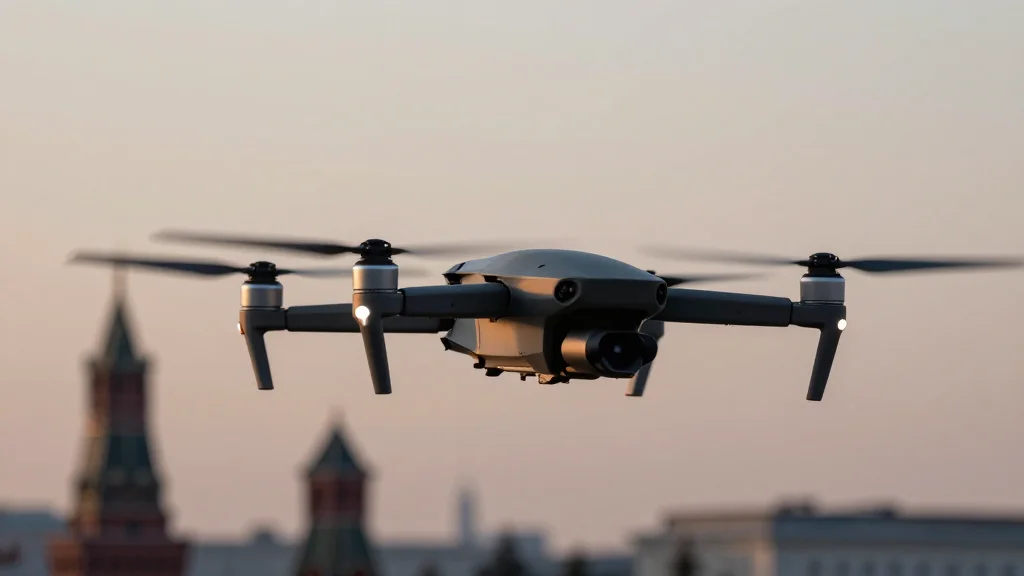
Ukraine Deploys Over 550 Drones in Massive Strike on Russian Regions

Why It Matters
The massive drone strike marks a turning point in the Russia‑Ukraine war, illustrating how unmanned systems can be employed for strategic coercion beyond tactical strikes. By targeting civilian infrastructure and densely populated areas near Moscow, Ukraine signals its willingness to bring the conflict to the Russian heartland, potentially reshaping public opinion and diplomatic calculations in Moscow. For defense planners worldwide, the episode highlights the urgency of developing layered air‑defence architectures capable of handling high‑volume UAV swarms. The rapid escalation in drone production on both sides suggests that future conflicts may feature autonomous or semi‑autonomous aerial attacks as a core component of warfare, prompting NATO and other allies to reassess procurement priorities for counter‑UAV sensors, directed‑energy weapons, and electronic‑attack suites.
Key Takeaways
- •Ukraine launched 556 drones in a nine‑hour operation targeting over a dozen Russian regions.
- •Russian Ministry of Defence reported shooting down all drones; at least three civilians killed.
- •President Zelenskyy framed the strike as retaliation for Russian attacks on Ukrainian civilians.
- •Russia aims to produce up to 500 drones per day by early 2027, with 55% strike drones and 45% decoys.
- •Jet‑powered Geran drones, capable of 600 km/h and 1,000 km range, are entering limited operational use.
Pulse Analysis
The sheer scale of the Ukrainian drone barrage forces a reassessment of how UAVs are integrated into modern warfighting. Historically, drones have been used for reconnaissance or limited strike missions; today, they are being marshaled as mass‑attack weapons capable of overwhelming even sophisticated air‑defence grids. This shift mirrors trends seen in the 2022‑2023 conflicts in the Middle East, where swarms of cheap, expendable drones have proven effective against high‑value targets.
From a strategic perspective, Kyiv’s decision to strike near Moscow serves multiple purposes: it imposes a psychological cost on the Russian populace, pressures the Kremlin domestically, and signals to Western allies that Ukraine can project power beyond its borders. The operation also tests the logistical limits of Ukraine’s UAV supply chain, which has been bolstered by Western aid and indigenous production. If Kyiv can sustain such high‑tempo operations, it may compel Russia to divert air‑defence assets away from the front lines, potentially easing pressure on Ukrainian ground forces.
For Russia, the reported production capacity of 500 drones per day by 2027 underscores a commitment to saturate Ukrainian defenses with sheer volume. However, the effectiveness of sheer numbers is contingent on the quality of guidance, electronic‑warfare resilience, and the ability to evade increasingly capable counter‑UAV systems. The emergence of faster, jet‑powered platforms like the Geran series adds a new dimension, compressing reaction times and challenging existing radar and missile interceptors. Both sides are now in a technological arms race where AI‑driven detection, directed‑energy weapons, and networked defence systems will likely determine who can dominate the skies in the next phase of the conflict.
Ukraine Deploys Over 550 Drones in Massive Strike on Russian Regions
Comments
Want to join the conversation?
Loading comments...