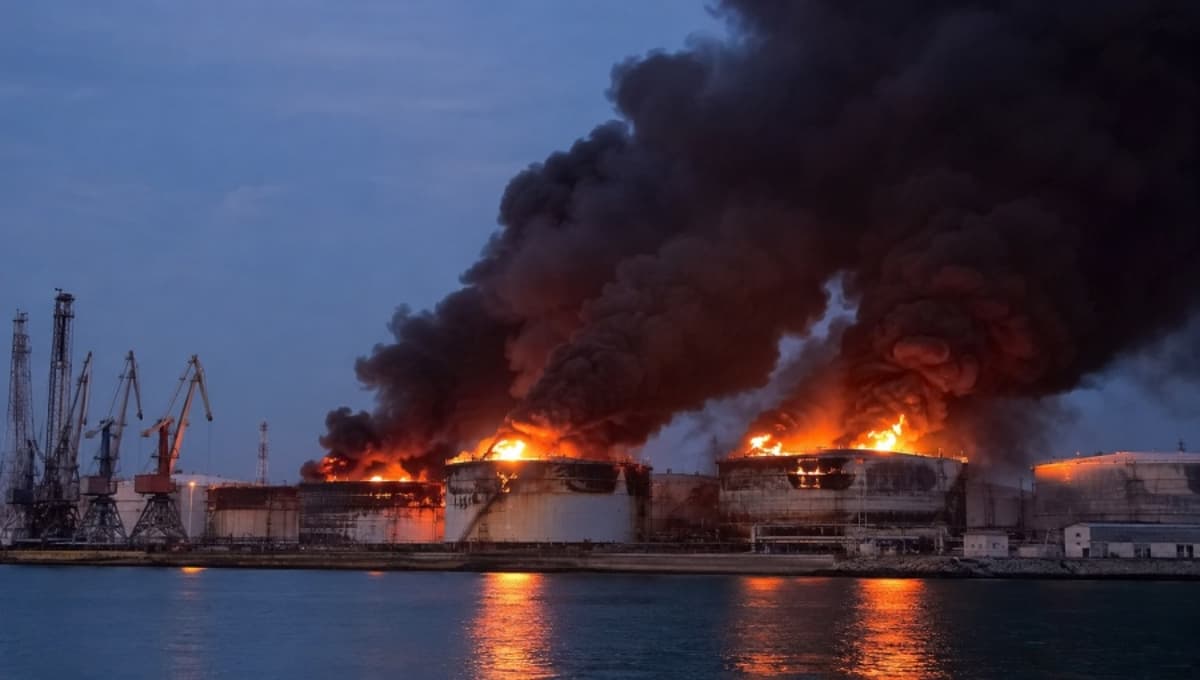
Ukraine Drones Hit St Petersburg Oil Terminal as Russia's SPIEF Investment Forum Kicks Off
Why It Matters
The strike highlights the vulnerability of Russia’s energy logistics, pressuring domestic fuel supplies and forcing a strategic pivot to crude exports, which could reshape global oil markets and affect investors watching SPIEF.
Key Takeaways
- •50 drones traveled 500 km, 30 flights delayed over two hours
- •St Petersburg terminal handles 12.5 million tonnes annually
- •Refinery throughput down ~10% year‑on‑year, fueling domestic shortages
- •Crude exports rose to 3.46 million bpd, highest since war began
- •German business delegation signals softening of sanctions stance
Pulse Analysis
The June 3 drone raid on St Petersburg’s oil terminal came at a symbolic moment, coinciding with the launch of Russia’s flagship St Petersburg International Economic Forum. Ukrainian long‑range UAVs covered roughly 500 km, with officials confirming 50 drones intercepted and a massive fire igniting at one of the country’s largest fuel storage sites. The immediate fallout included a blanket air‑space shutdown, delaying or diverting about 30 inbound flights and underscoring the logistical challenges any delegate now faces when traveling to the city. The visual of black smoke over the Gulf of Finland served as a stark reminder that even high‑profile diplomatic gatherings cannot escape the war’s spillover effects.
Beyond the dramatic optics, the attack compounds a broader trend of declining refinery throughput in Russia. Official data show a roughly 10% year‑on‑year drop in refined‑product output, straining domestic gasoline and diesel supplies and prompting the Kremlin to tighten export bans on jet fuel and gasoline. To offset the shortfall, Russian oil firms have accelerated crude shipments, pushing seaborne exports to an average of 3.46 million barrels per day—about 120,000 bpd higher than in 2025 and the highest level since the conflict began. While the value of these shipments hovered around $2.24 billion per week, the shift signals a strategic pivot from value‑added refined products to bulk crude, altering revenue streams and market dynamics.
The geopolitical reverberations are equally significant. SPIEF’s guest list this year includes leaders from the Global South, a sizable German business delegation, and, for the first time in years, a U.S. official, suggesting a tentative softening of the sanctions regime. The presence of high‑profile figures amid security concerns signals Russia’s intent to project resilience and attract investment despite the ongoing energy disruptions. For investors and policymakers, the convergence of military pressure on energy infrastructure and the tentative diplomatic outreach at SPIEF signals a volatile but pivotal moment for Russia’s integration into global markets.
Ukraine drones hit St Petersburg oil terminal as Russia's SPIEF investment forum kicks off
Comments
Want to join the conversation?
Loading comments...