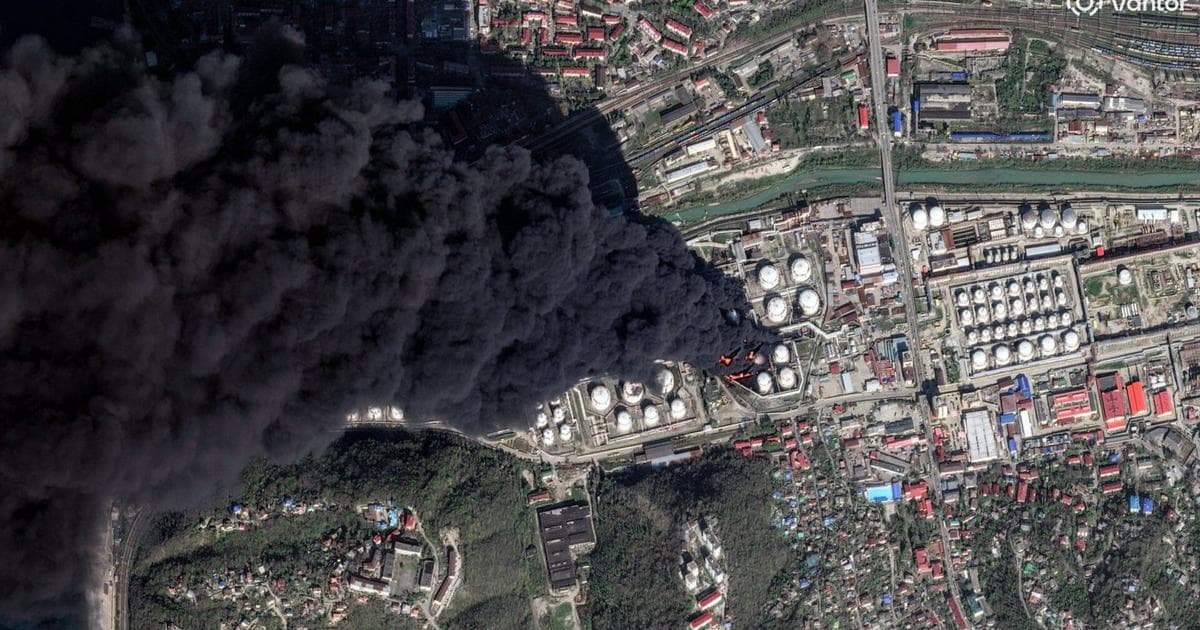
Ukraine Is Hitting Oil Facilities Deep Inside Russia. Soaring Fuel Prices Could Blunt the Impact
Why It Matters
Disrupting Russia’s oil exports threatens a key revenue stream for the Kremlin, while the environmental fallout could erode domestic support and strain Russia’s ability to sustain its military campaign.
Key Takeaways
- •Ukrainian drones struck Tuapse refinery, Ust‑Luga terminal, and Perm pump station
- •Strikes aim to cut Russia's oil export revenues, a war‑funding source
- •Zelensky claims attacks have cost Russia at least $7 billion this year
- •Rising global oil prices have offset some revenue losses for Moscow
- •Environmental fallout includes toxic rain, benzene spikes, and wildlife contamination
Pulse Analysis
Ukraine’s deep‑strike drone capability has evolved dramatically since 2022, now reaching targets over 1,500 km inside Russian territory. By hitting high‑value nodes such as the Tuapse refinery on the Black Sea and the Ust‑Luga terminal on the Baltic, Kyiv is forcing Moscow to allocate scarce air‑defense assets far from the front lines. The attacks showcase a blend of off‑the‑shelf technology and domestic engineering, proving that relatively simple systems can threaten sophisticated export infrastructure that was previously considered secure.
Economically, the strikes intersect with a volatile global oil market. While Russia’s crude exports rose to 7.1 million barrels per day in March, export revenues nearly doubled—from $9.7 billion to $19 billion—thanks to price spikes triggered by the Iran‑related crisis and a partial easing of U.S. sanctions. Zelensky’s $7 billion loss estimate reflects direct damage and reduced throughput, yet the surge in oil prices has cushioned Moscow’s budget, limiting the immediate fiscal impact. Analysts warn that sustained drone pressure could eventually erode profit margins, especially if Western policies further tighten sanctions on spare‑parts supplies.
Beyond finance, the environmental and political repercussions are significant. Fires at Tuapse released benzene and other carcinogens, prompting “black rain” and contaminating coastal ecosystems, which could fuel public discontent in regions like St. Petersburg. Russian officials downplay the damage, but images of oily wildlife and polluted streets circulate widely, challenging the narrative of a victorious war. As the ecological toll becomes clearer, domestic pressure may rise, potentially influencing Kremlin calculations about defending distant oil assets versus prioritizing civilian safety.
Ukraine is hitting oil facilities deep inside Russia. Soaring fuel prices could blunt the impact
Comments
Want to join the conversation?
Loading comments...