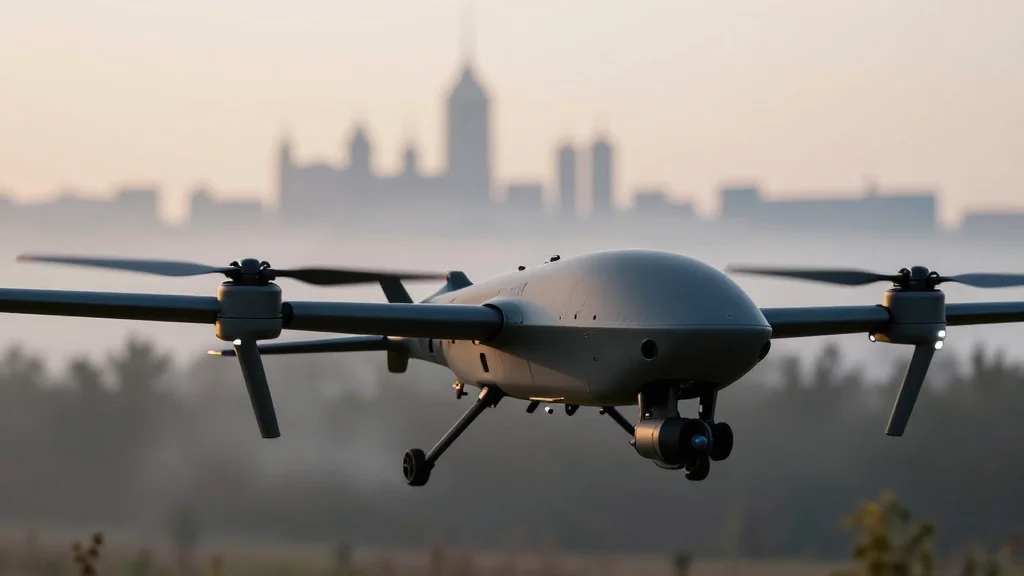
Ukraine Launches Biggest Drone Strike on Moscow Region, Killing at Least Four

Why It Matters
The Moscow‑region drone raid demonstrates Ukraine’s evolving capability to strike deep inside Russian territory, challenging the long‑standing perception of Russia’s air‑defence invulnerability. By employing a mix of domestically modified UAVs, Kyiv reduces its reliance on external arms supplies and showcases a model of indigenous innovation that could be replicated by other nations facing similar asymmetrical threats. The strike also forces Russia to reallocate air‑defence assets from the front lines to its own heartland, potentially easing pressure on Ukrainian forces in the east. On a broader scale, the incident underscores the accelerating role of unmanned systems in modern warfare. As both sides field larger drone swarms, the risk of civilian casualties rises, prompting urgent calls for clearer norms and counter‑drone technologies. The episode may accelerate NATO’s investment in integrated air‑defence and electronic‑warfare solutions, shaping defence procurement priorities for years to come.
Key Takeaways
- •Ukraine’s drone raid on Moscow region killed at least four civilians.
- •President Zelenskyy called the strike a justified response to Russia’s war.
- •The operation used a mix of modified commercial and locally produced UAVs.
- •Russia responded with over 500 drones and 20 missiles against Ukrainian targets.
- •The attack forces Russia to divert air‑defence resources to protect its own cities.
Pulse Analysis
The Moscow‑region strike marks a watershed moment in the Ukraine‑Russia war, not because of the casualty count but because it shatters the myth of an impenetrable Russian air‑defence shield. For years, analysts assumed that Kyiv could only threaten Russian assets near the front lines. This operation proves that a determined, resource‑constrained force can leverage cheap, adaptable UAVs to punch through sophisticated layers of defence, especially when those layers are stretched thin by a protracted conflict.
From a strategic perspective, the raid forces Moscow into a defensive posture that could dilute its offensive capabilities on the battlefield. Every SAM battery and radar unit redeployed to protect Moscow is one less asset available to support Russian advances in the Donbas. Moreover, the psychological impact of a direct strike on the capital cannot be understated; it signals to Russian citizens and the international community that the war is no longer confined to a distant border.
Looking ahead, the key question is whether Ukraine can sustain this level of deep‑strike capability. The answer will hinge on its ability to mass‑produce reliable drones, integrate them with real‑time intelligence, and protect them from Russian electronic‑warfare measures. For the West, the lesson is clear: investment in counter‑UAV technologies and joint air‑defence architectures will become a priority, not just for NATO members but for any nation that may face similar asymmetric threats. The Moscow raid is a preview of a future where the battlefield extends far beyond the front line, and where drones become the primary instrument of strategic coercion.
Ukraine launches biggest drone strike on Moscow region, killing at least four
Comments
Want to join the conversation?
Loading comments...