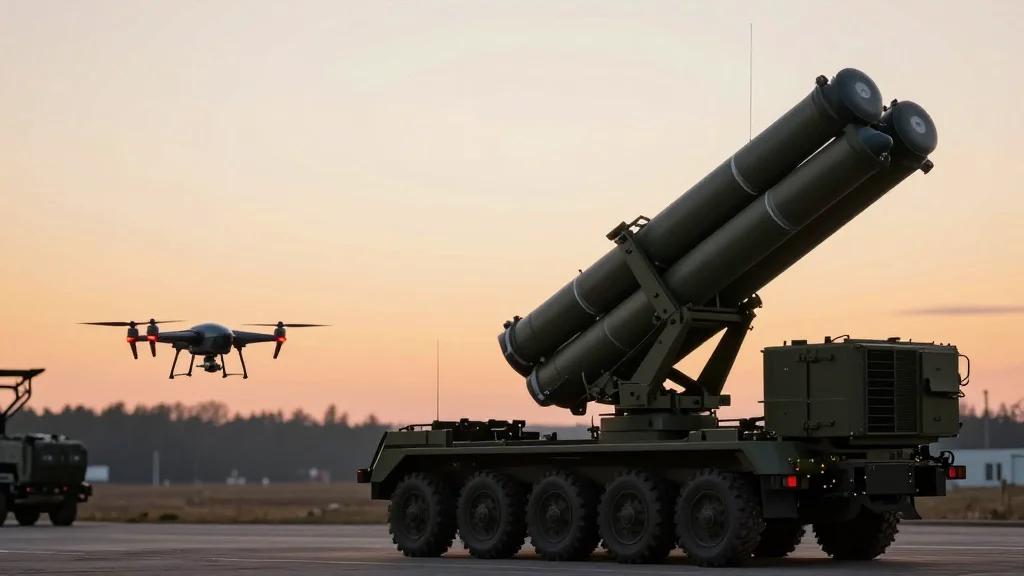
Ukraine Says Russia's Air‑Defence Missiles Are Running Low Amid Drone Surge

Why It Matters
The reported missile shortage signals a potential tipping point in the air‑war over Ukraine, where cheap, expendable drones are outpacing the ability of traditional air‑defence systems to respond. A sustained imbalance could force Russia to divert resources from other fronts, weakening its overall combat effectiveness and altering the strategic calculus for both sides. For NATO and allied defence planners, the development underscores the urgency of fielding scalable, cost‑effective counter‑drone technologies. It also raises questions about the resilience of legacy missile stockpiles and the need for rapid‑production capabilities in future conflicts where unmanned systems dominate the battlefield.
Key Takeaways
- •Oleksandr Syrskyi warned that Russia faces a missile shortage to counter Ukrainian drones.
- •ISW recorded at least ten Ukrainian long‑range strikes on Russian targets in the last two weeks.
- •Rybar blog highlighted the physical impossibility of mass‑producing Pantsir missiles quickly.
- •RUSI noted depletion of both legacy and high‑end interceptors, including Patriot and THAAD.
- •Shortage may drive NATO to prioritize low‑cost, high‑volume counter‑drone solutions.
Pulse Analysis
Russia’s air‑defence dilemma reflects a broader shift in modern warfare: the proliferation of inexpensive, autonomous platforms is eroding the relevance of traditional, high‑cost missile systems. Historically, air‑defence doctrines hinged on a few high‑value interceptors capable of neutralising manned aircraft. The Ukrainian conflict has accelerated a transition toward a “swarm‑versus‑shield” paradigm, where sheer numbers of drones overwhelm point‑defence assets. This forces militaries to rethink logistics, moving from a scarcity‑based model—where each missile is a precious commodity—to a mass‑production, expendable‑interceptor approach.
From a market perspective, the shortage could catalyze a surge in demand for alternative technologies such as laser‑based systems, radio‑frequency jammers, and AI‑driven detection networks. Companies that have invested early in these areas stand to capture significant contracts from NATO members seeking to plug the gap left by dwindling missile stocks. Conversely, Russian defence firms may double‑down on legacy platforms, but without a scalable production line, they risk fielding an increasingly obsolete shield.
Strategically, the missile shortfall may constrain Russia’s ability to protect critical rear‑area infrastructure, potentially exposing supply lines and command nodes to further Ukrainian strikes. If Moscow cannot close the gap, it may be forced into a defensive posture that cedes initiative to Kyiv, reshaping the conflict’s trajectory and influencing future arms‑control negotiations. The coming months will be a litmus test for how quickly both sides can adapt to a battlefield where drones dominate and missiles become a scarce commodity.
Ukraine Says Russia's Air‑Defence Missiles Are Running Low Amid Drone Surge
Comments
Want to join the conversation?
Loading comments...